Park Hyatt Marrakech: A Contemporary Retreat Framed by the Atlas Mountains
– 4 min read

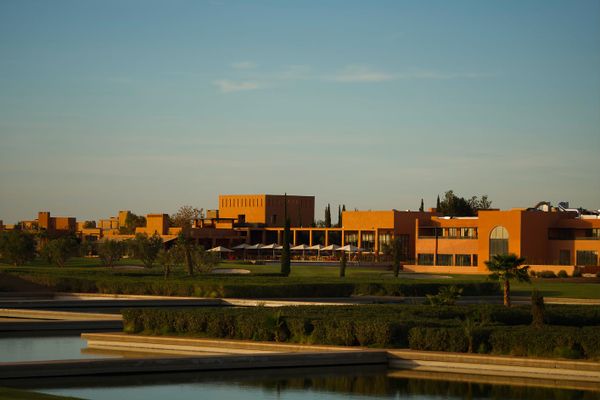
Marrakech has always existed between contrasts. The city moves between silence and intensity, tradition and reinvention, ritual and spontaneity. Park Hyatt Marrakech approaches this rhythm with restraint. Opened within the Al Maaden residential estate, around fifteen minutes from the medina, the property does not attempt to imitate the old city. Instead, it creates distance from it — physically and atmospherically — offering a quieter interpretation of Marrakech shaped by architecture, landscape and contemporary Moroccan culture.
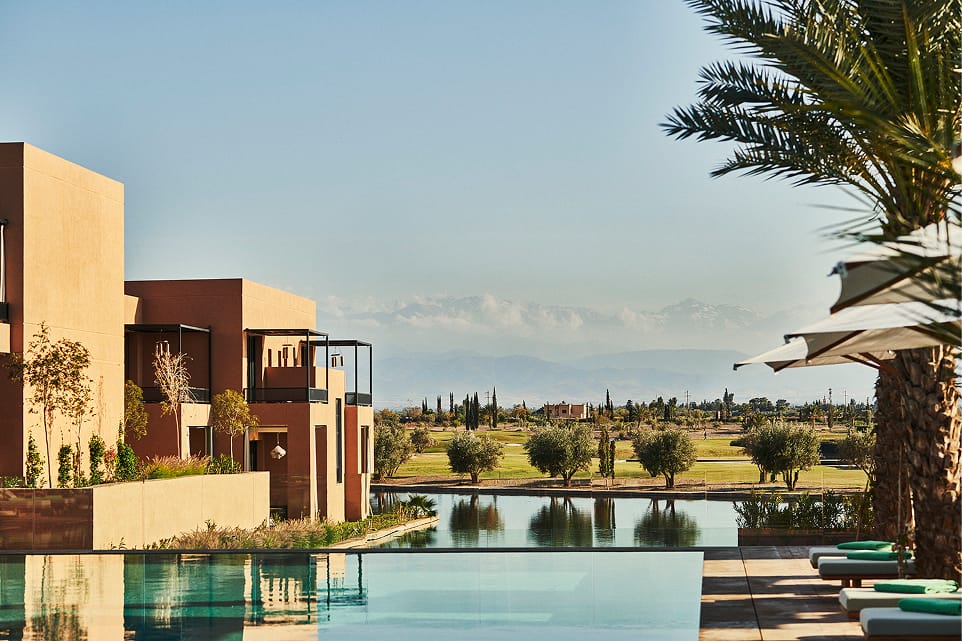
Spread across 7.5 hectares beside the Al Maaden golf course, the resort is structured around sixteen low-rise douars inspired by traditional Moroccan villages. Pathways lined with jasmine, palm and laurel trees connect patios, pools and shaded terraces, while the Atlas Mountains remain visible from almost every angle of the property. The setting feels intentionally open. There is space between buildings, long sightlines toward the mountains, and a sense that nature was allowed to dictate the pace of the design rather than the other way around.
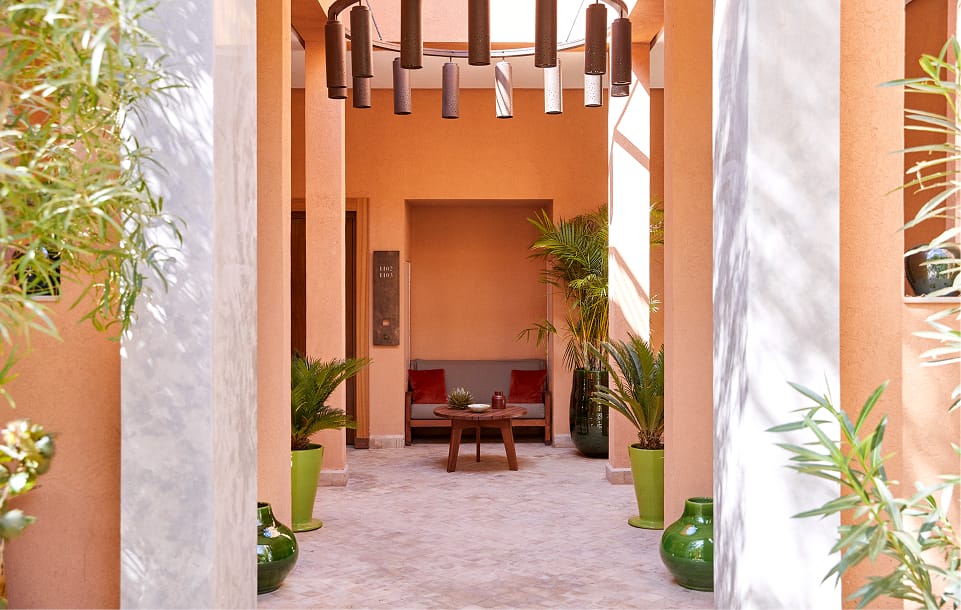
The architecture, created by Imaad Rahmouni, draws from vernacular Moroccan forms without slipping into nostalgia. Rahmouni, who previously collaborated with Philippe Starck before establishing his own practice between Paris and Marrakech, reinterprets local craftsmanship through cleaner lines and quieter materials. Mashrabiya screens filter light across corridors and patios. Ochre-toned plaster walls echo the colour of the surrounding earth. Marble, copper, carved plaster and zellige appear throughout the hotel, though always with moderation.
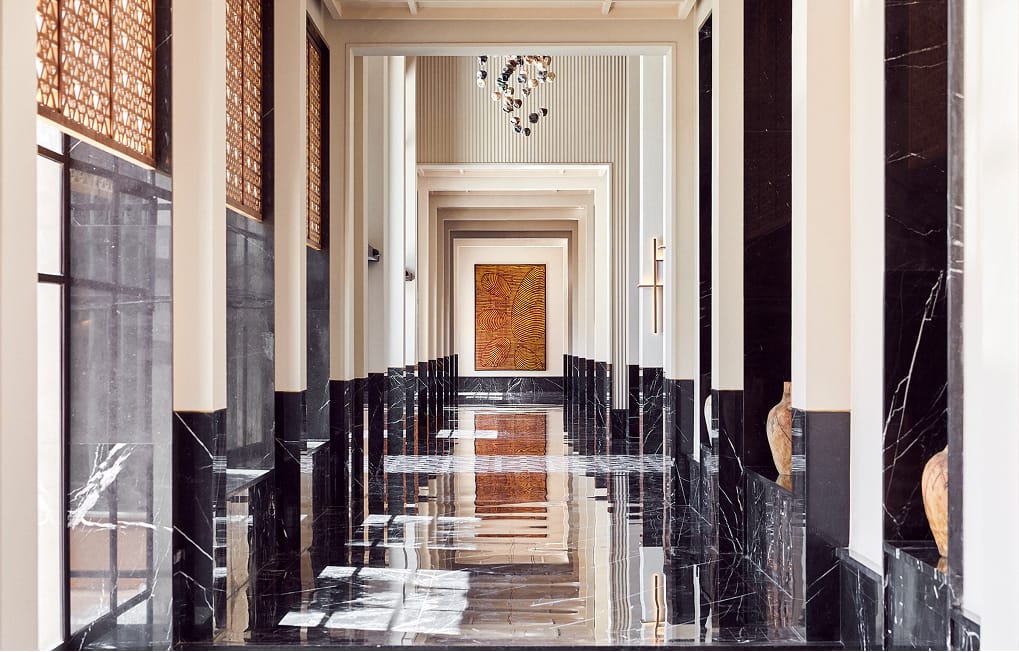
The arrival sequence sets the tone immediately. Guests pass through a monumental marble entrance before entering a double-height lobby framed by sculptural brass chandeliers and views stretching toward the Atlas range. The effect is not theatrical. It feels composed, almost meditative, particularly in the early morning when sunlight moves slowly across the stone floors and geometric shadows begin to form through the latticework screens.
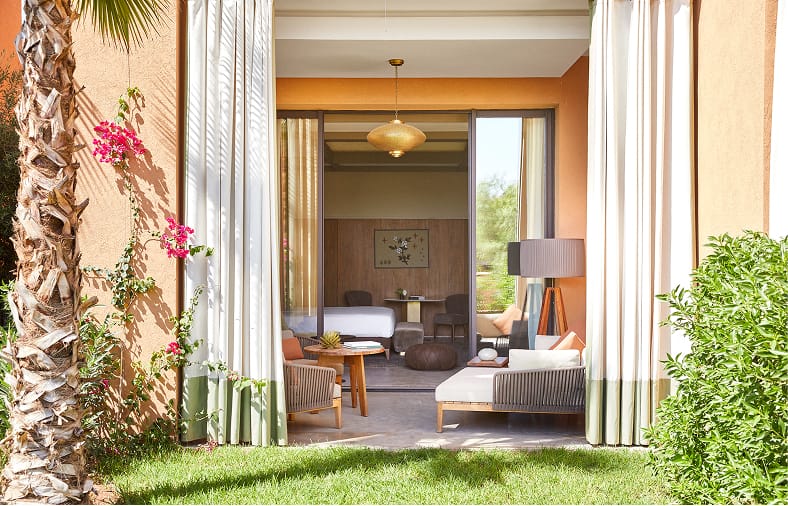
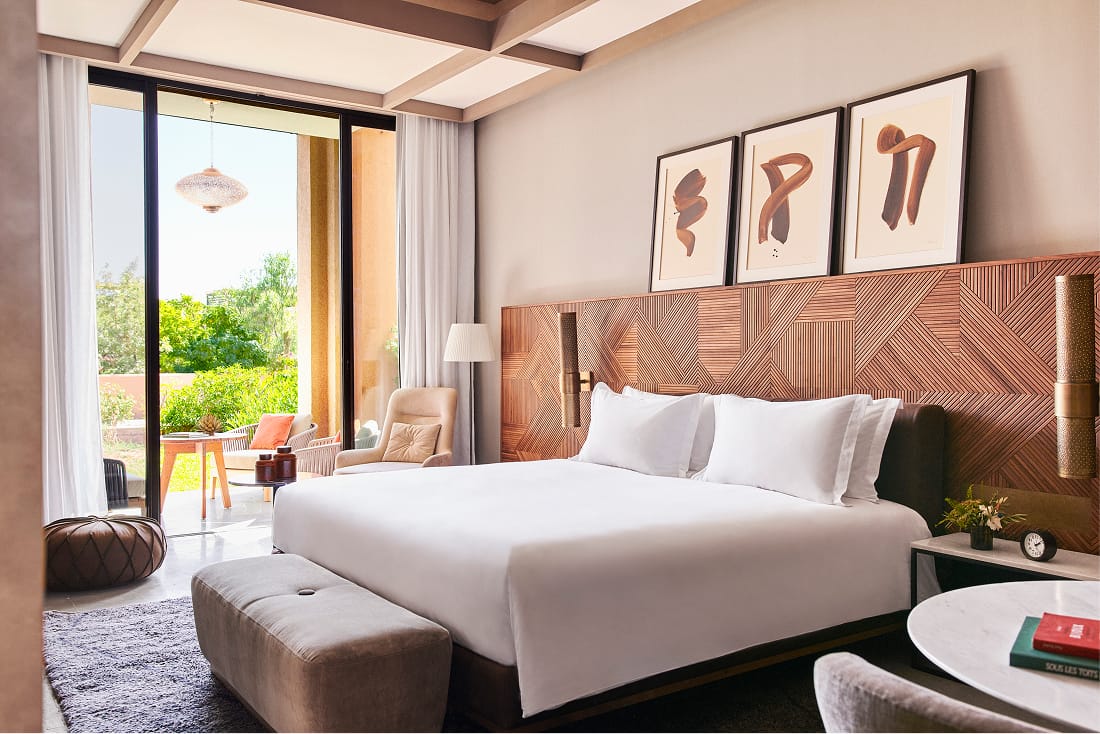
The resort includes 130 rooms and suites, many among the largest in Marrakech, ranging from 55 to 350 square metres. Interiors avoid decorative excess in favour of warmth and texture. Berber rugs woven in southern Morocco, brass lighting, hand-finished woodwork and abstract artworks by Moroccan artist Khadija Tnana create spaces that feel residential rather than overtly hotel-like. Several suites include private pools and hammams, while floor-to-ceiling windows open onto terraces facing gardens, golf greens or the mountains beyond.
A Moroccan proverb says, “He who does not travel does not know the value of men.” At Park Hyatt Marrakech, this idea appears not through performance, but through detail. Craftsmanship remains visible everywhere: in the stonework, ceramics, woven textiles and hand-shaped copper elements integrated into the architecture.
Art also plays a central role in the identity of the property. More than 700 artworks and objects were commissioned specifically for the hotel through a collaboration with the Ifitry artists’ residence near Essaouira, founded by visual artist Mostapha Romli. Paintings, ceramics, installations and sculptural works appear across public spaces and guestrooms, creating a dialogue between Moroccan contemporary art and the surrounding landscape. One of the most striking interventions hangs above the lobby: hundreds of suspended ceramic forms resembling a constellation suspended in motion.
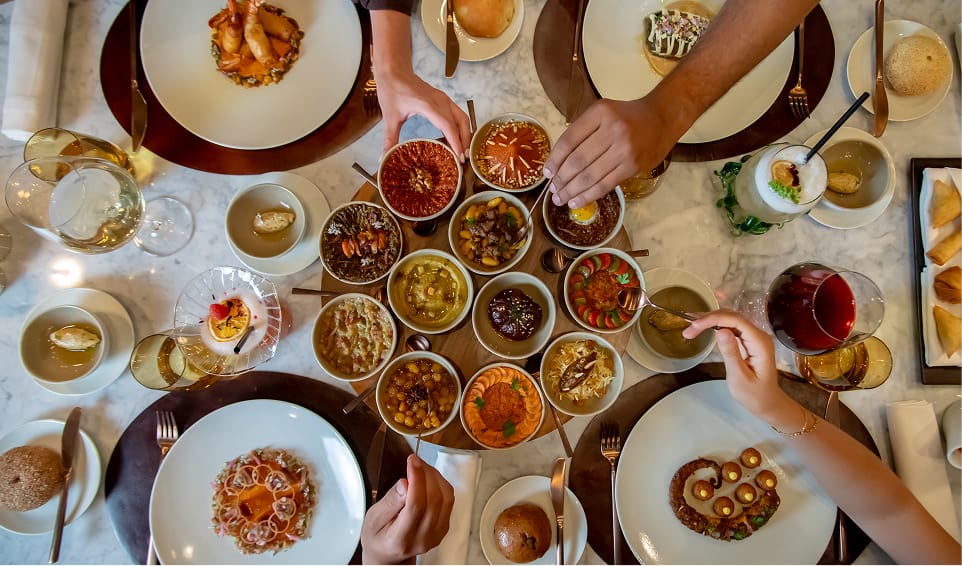
The culinary direction reflects a similarly layered approach to Moroccan identity. Executive Chef Issam Rhachi, born and raised in Marrakech, combines classical French technique with recipes and flavours rooted in the medina where he grew up. At Tfaya, the hotel’s main restaurant, Moroccan dishes are reworked with precision rather than complication. Lobster mechoui arrives with black garlic, saffron and preserved lemon. Tuna lahrour transforms a familiar street-food sandwich into a structured composition of consommé, pickled onion and crisp textures. Pastry chef Oussama Sadiq approaches desserts with equal attention, reducing sugar levels while preserving the richness associated with Moroccan pastry traditions.
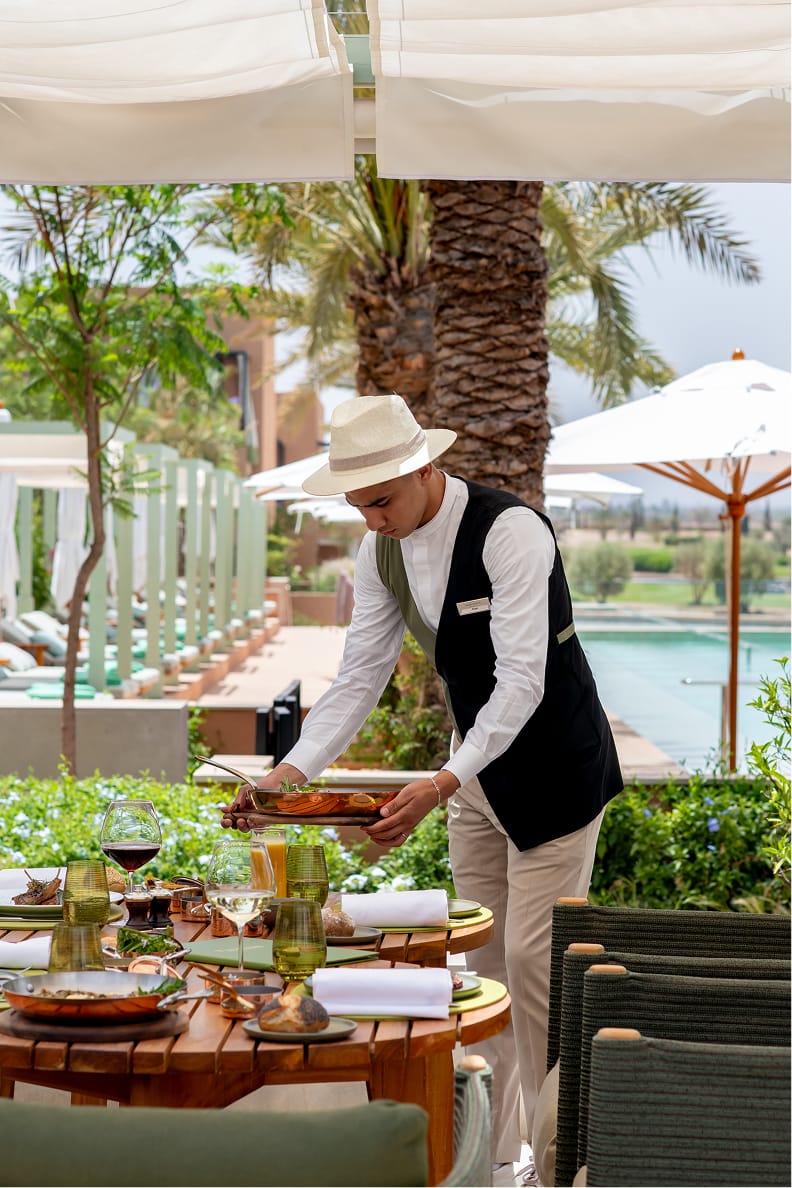
Elsewhere, Pavilion Terrace & Pool shifts toward Mediterranean and Nikkei influences, served beside the resort’s softly coloured pools and shaded outdoor lounges. The atmosphere throughout the hotel changes noticeably with the light. Mornings feel quiet and expansive; evenings become slower, warmer and more social, particularly around the terraces facing the mountains at sunset.
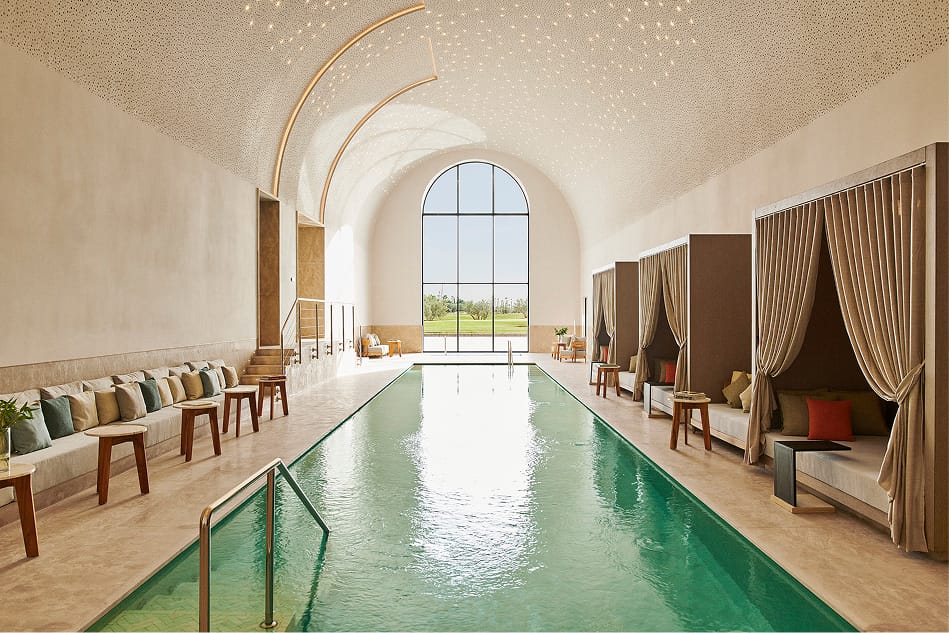
The spa occupies 2,200 square metres overlooking the golf course and Atlas Mountains. Designed around the sequence of the traditional hammam ritual, the space combines black marble treatment rooms, warm and cold bathing areas, a vaulted indoor pool and treatment cabins using products from Moroccan skincare specialist Nectarome and Australian wellness brand Sodashi. Yoga, meditation, boxing and pilates sessions are also integrated into the wellness programme.
Beyond the hotel itself, guests can access a broader cultural programme curated around Marrakech’s evolving creative scene. Private gallery visits, artisan workshops, guided medina tours and excursions into the Agafay desert or Atlas Mountains reflect the hotel’s effort to connect visitors with the region beyond its visual clichés.
Park Hyatt Marrakech succeeds because it understands restraint. The hotel does not compete with the noise of Marrakech. It steps away from it, creating a different perspective on the city and its traditions. In a destination often defined by intensity, that sense of calm becomes its most distinctive quality.