The View That Begins the Morning: Inside Hotel Terme Merano
– 4 min read

"The higher one goes, the purer the air becomes." — Goethe, Italian Journey, September 1786
The first thing you do in the morning at Hotel Terme Merano is walk to the window.
Not to check the weather. You go because it is difficult to believe a view can be this composed. The Alps come almost to the rooftops of the town. Vineyards green the sunlit slopes, with the occasional farmhouse set among them; bell towers rise over old Merano, and somewhere between the trees a pale old church sits on its rock as though left there by accident. The town does not seem to wake to the noise of its streets. It wakes to the breathing of the mountains. Merano has been receiving people who came here to feel better for more than a century and a half. The Habsburg court sent its convalescents to this valley in the 1830s, and the town has never entirely stopped being a place where recovery is the local trade.
And in that moment you understand that the hotel's real virtue was never going to be a star rating.
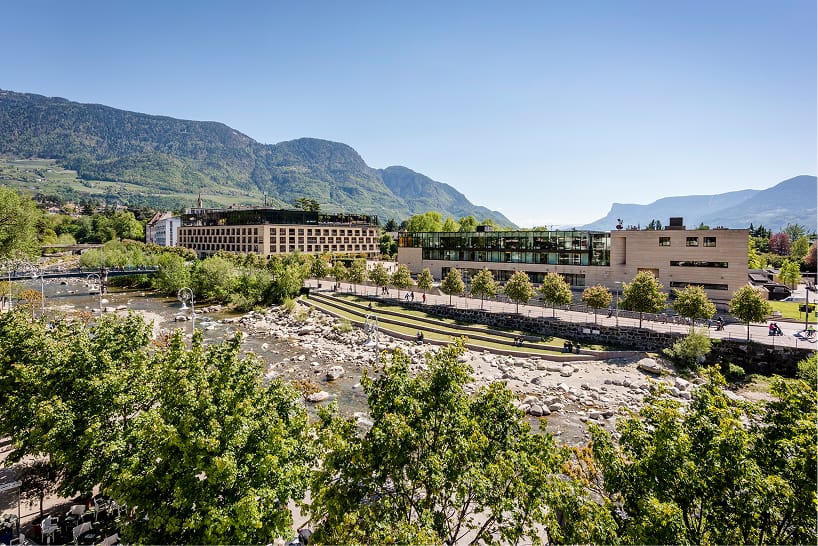
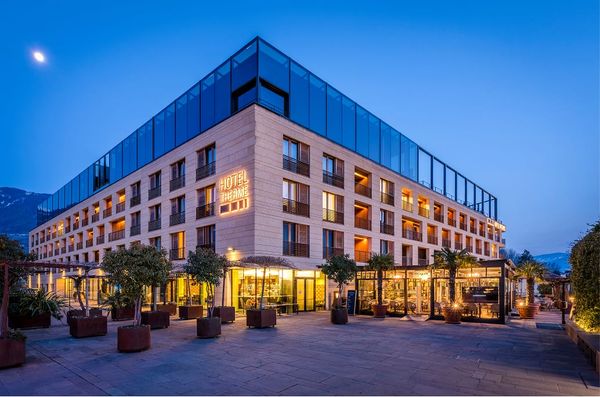
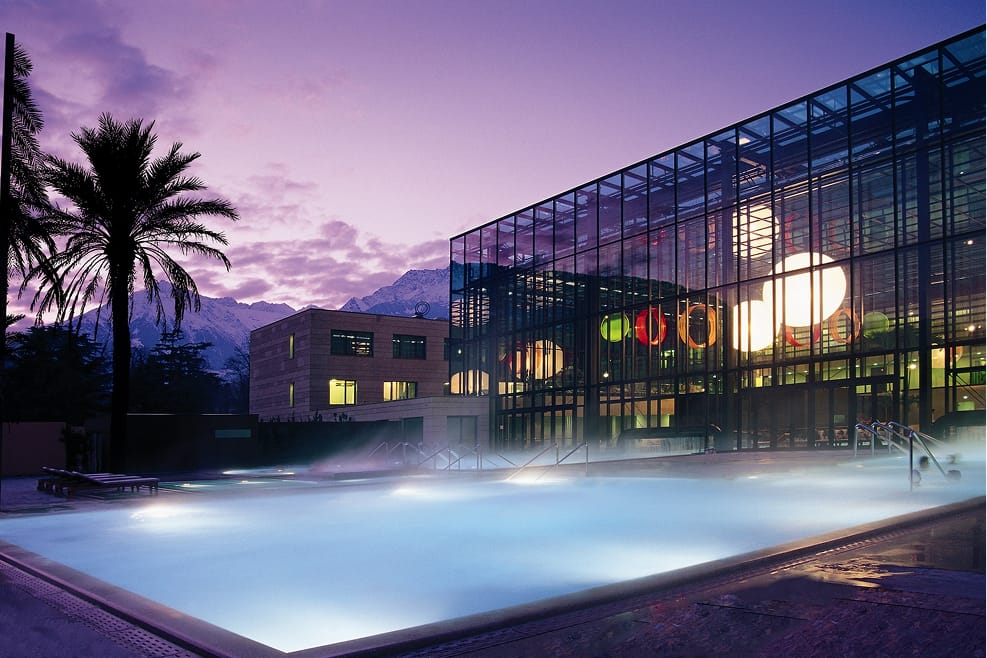
Hotel Terme Merano does not present itself as a grand hotel in the conventional sense. There is no gilt, no heavy drapery, no display of magnificence. The architect Matteo Thun chose another path. Glass, pale stone, wood, a great deal of air and natural light. Thun was born in Bolzano, an hour down the valley, and the material vocabulary here is South Tyrolean rather than international: larch, granite, the pale render of farmhouse walls. The building seems to dissolve into the surrounding park, reflecting the trees, the Passer river, and the changing Alpine sky.
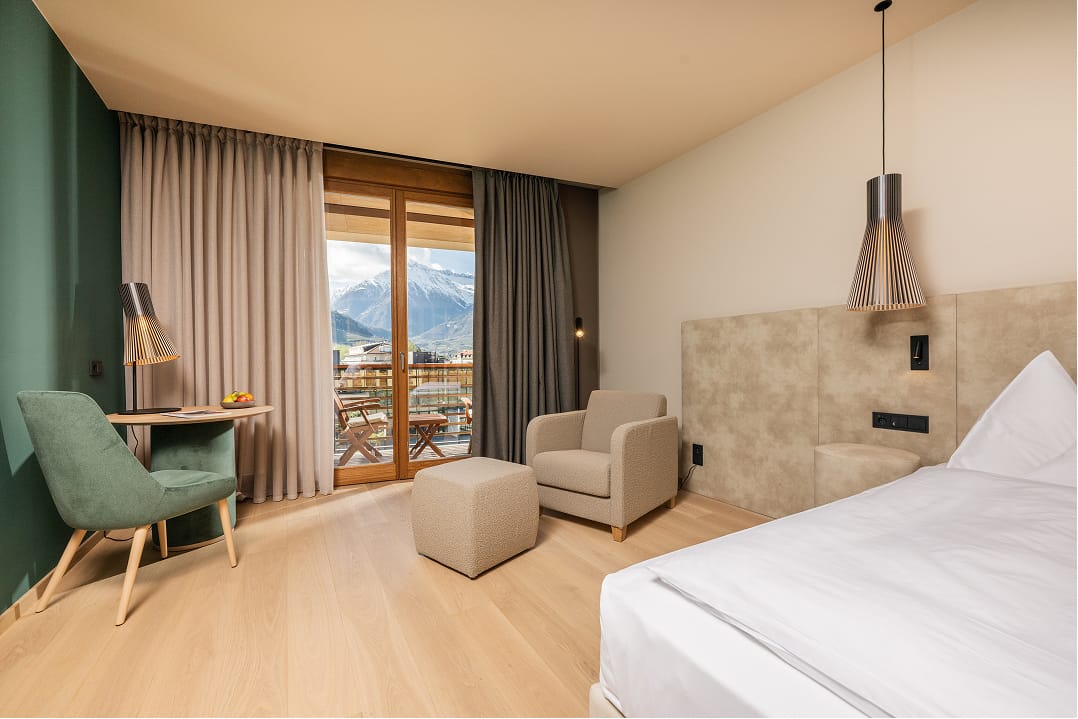
The interiors continue the same thought. Light wood, natural fabrics, quiet tones, large panoramic windows. There is little furniture, but each piece sits exactly where it should. A space like this is unexpectedly easy to rest in. It asks nothing of your attention. Instead, it lets you turn your attention, at last, to your own condition.
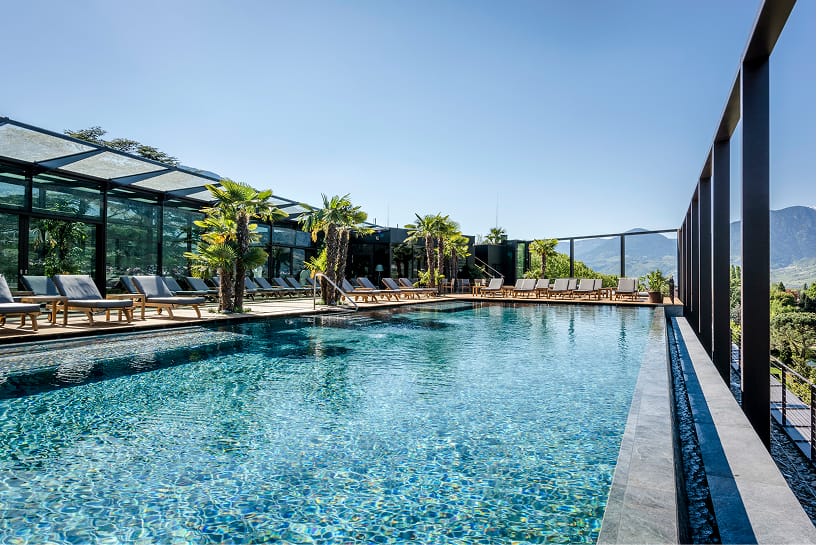
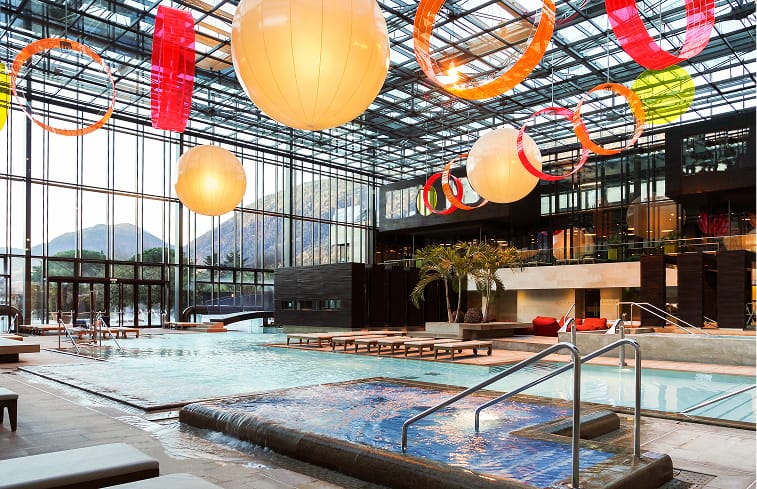
The hotel's genuine advantage is its connection to the thermal complex. An interior passage is enough to bring you among the pools, the saunas and the resting areas, fifteen of them indoors and more again outside in the park. You do not step into the street, change the rhythm of the day, or think about the time. The hotel and the baths read as a single space.
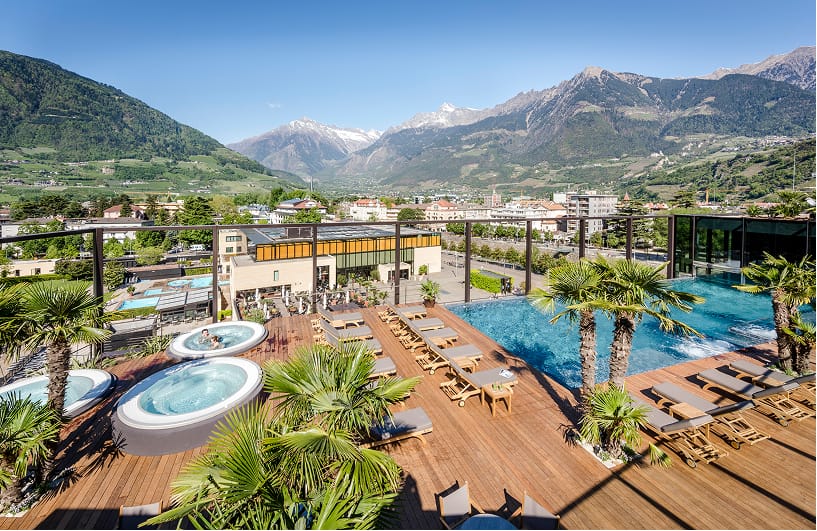
The outdoor pool in the Sky Spa is at its best early in the morning. Steam lifts slowly off the warm water, and behind it the dark green slopes of the Alps rise into view. Water and mountains seem to occupy the same dimension. In minutes like these you forget you are in a hotel. What remains is the sense of an unusual calm.
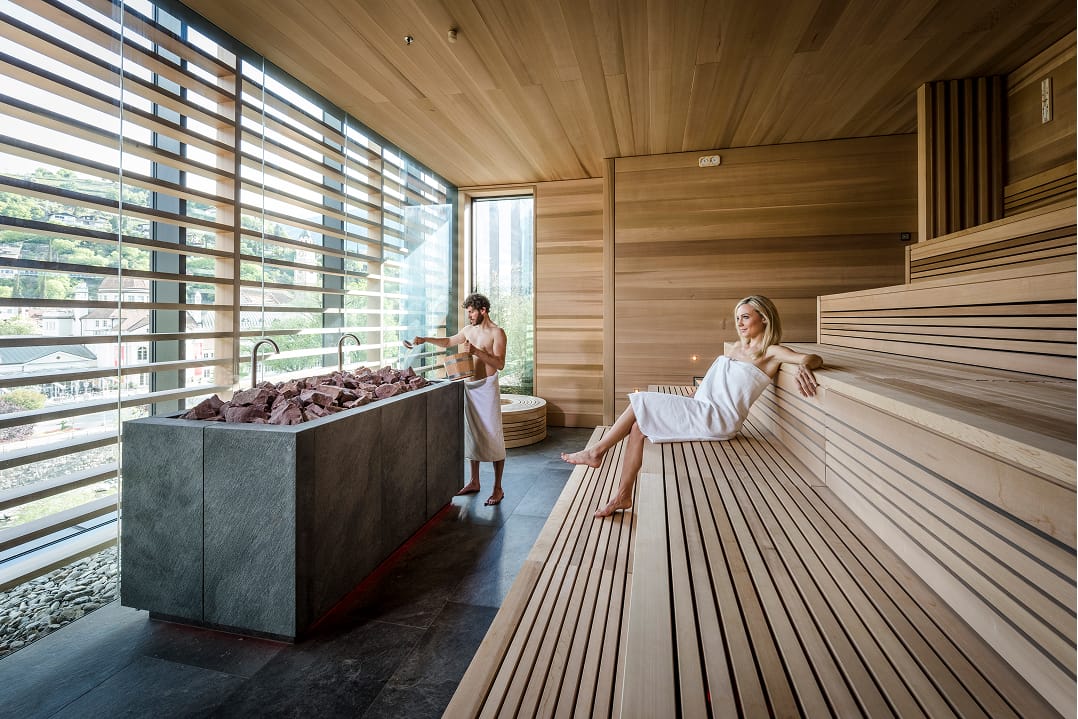
In the saunas there are aroma rituals with Alpine herbs. Mountain pine, arnica, hay from the high meadows: the same plants that South Tyrolean farming families have used at home for generations, and which the region's older pharmacies still sell by weight. At a certain point an attendant opens the door, and a cloud of hot steam drifts out into the resting hall. People raise their heads without meaning to, following it with their eyes. It is almost a piece of theatre, in which the steam, unexpectedly, becomes the principal actor.
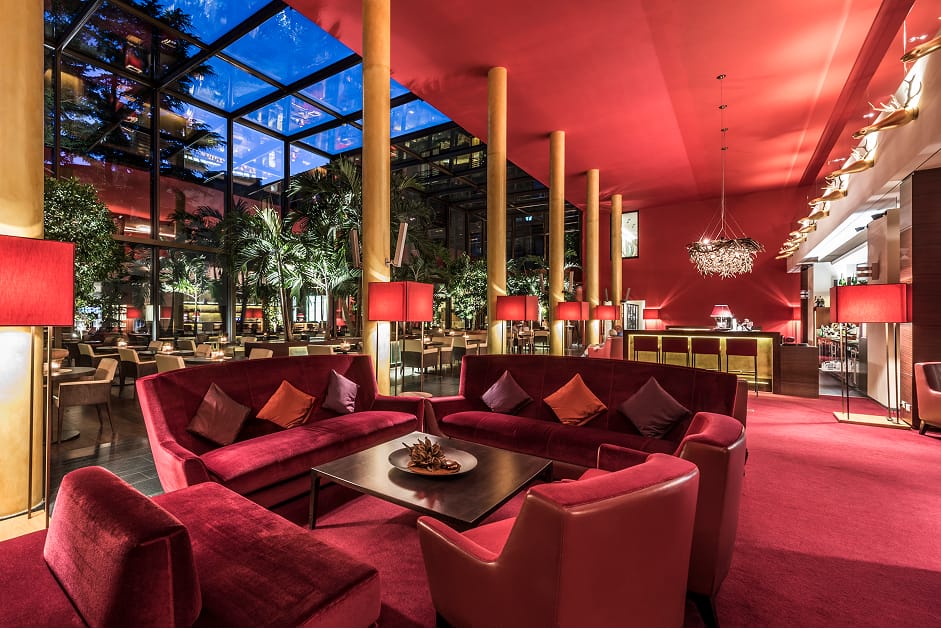
Breakfast follows the same philosophy. In place of an endless gastronomic spectacle, there is fresh bread, local cheese, seasonal fruit, good coffee, and the produce of South Tyrol. This is a border cuisine, and it does not pretend otherwise: rye Schüttelbrot alongside espresso, speck cured in valley air, apples from orchards that begin where the town ends. Merano has spoken German and Italian for a century, and eats in both languages. Exactly enough for a morning to begin quietly, rather than with the small ordeal of choosing among dozens of dishes.
The hotel is positioned so well that Merano opens up from the first few steps. A few minutes, and you are walking the Passer promenade, climbing the Tappeinerweg, or among the historic arcades of the old town. The Tappeinerweg was laid out by a local physician in the 1890s, on the principle that the walk itself was part of the cure. The town has agreed with him ever since. And in the evening you return, just as easily, to the place where the quiet, the water and the mountains are waiting again.
A good hotel rarely becomes the main object of a journey. Its task is to create a place you are reluctant to leave too early and glad to return to at the end of each day.
Leaving Hotel Terme Merano, you realise, unexpectedly, that what you will miss most is not the pools, and not the breakfasts.
It is the habit of walking to the window, first thing, every morning.


