Beyond the Product: why luxury is becoming a cultural experience

– 4 min read

As luxury brands move beyond products to create deeper cultural connections, Falconeri's collaboration with artist Eric Walsky in Basel offers a compelling example of how craftsmanship, creativity and materials can become a shared language.
Luxury has always maintained a close relationship with art. From collaborations with contemporary artists to foundations, exhibitions and cultural partnerships, fashion houses have long recognised the power of artistic expression to reinforce their identities and extend their influence beyond the product.
Today, the most interesting collaborations are those that reveal something meaningful about a brand's identity, creating connections between different creative disciplines through shared values, processes and philosophies.
When a collaboration is built around a genuine creative dialogue, art becomes more than a communication tool. It becomes another way of expressing what a brand stands for.
For decades, luxury brands have relied on craftsmanship, exceptional materials and heritage to communicate their value. These elements remain essential, but the way consumers experience and interpret them is changing.
An exceptional material can be appreciated for its quality. A beautifully crafted garment can be admired for its construction. Yet understanding the creative process behind an object introduces another dimension: it transforms appreciation into an emotional connection.
This is where art becomes particularly relevant.
Art invites people to look beyond the finished object and consider the ideas, decisions, experimentation and sensitivity involved in its creation. In many ways, the same principles apply to craftsmanship.
Both begin with a material. Both require knowledge, technique and an individual vision. Both involve a process of transformation through which something ordinary acquires a distinctive identity.
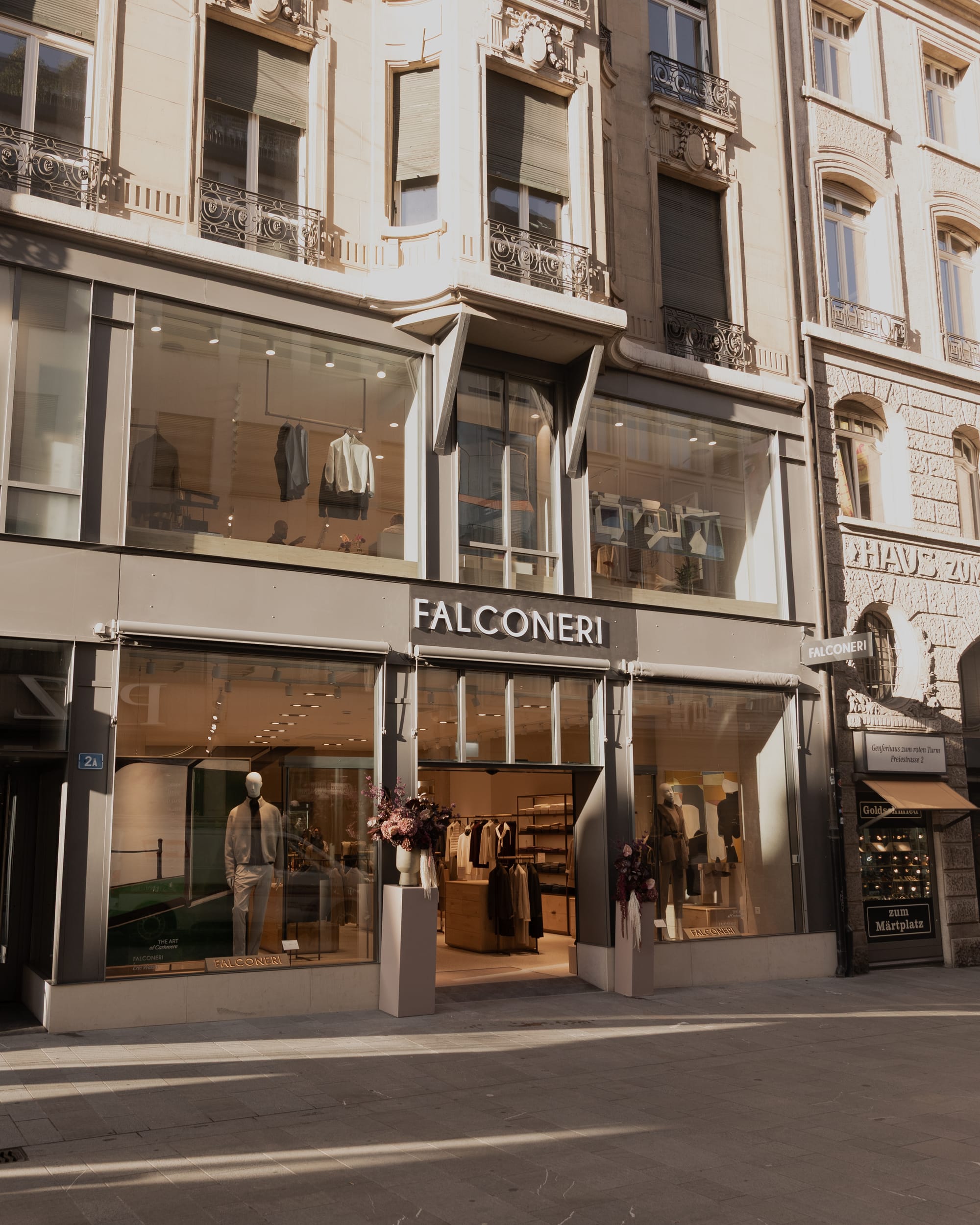
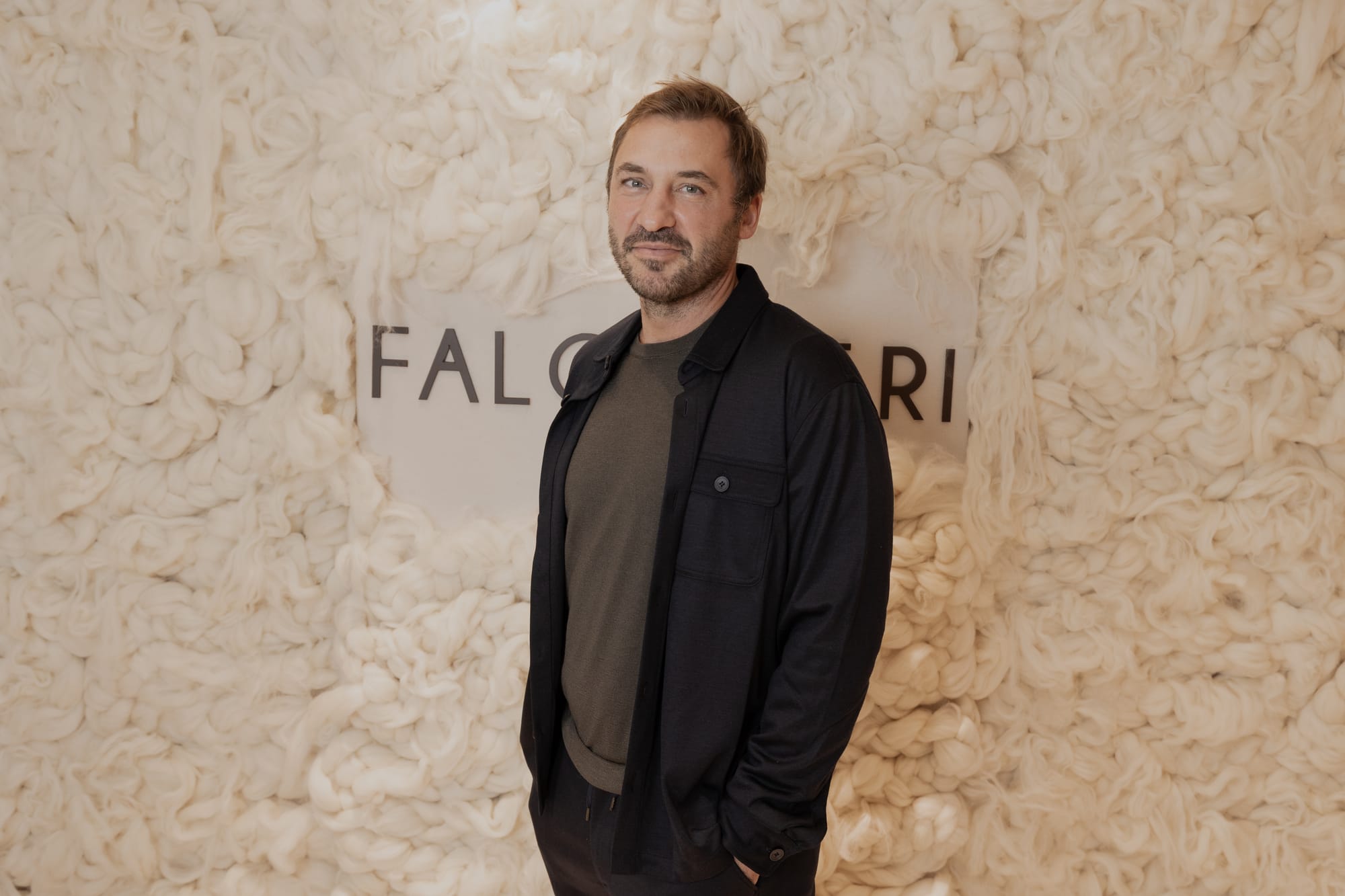
On 22 October 2026, Italian cashmere brand Falconeri celebrated the reopening of its newly expanded boutique in Basel with The Art of Cashmere, a collaboration with Swiss-American contemporary artist Eric Walsky.
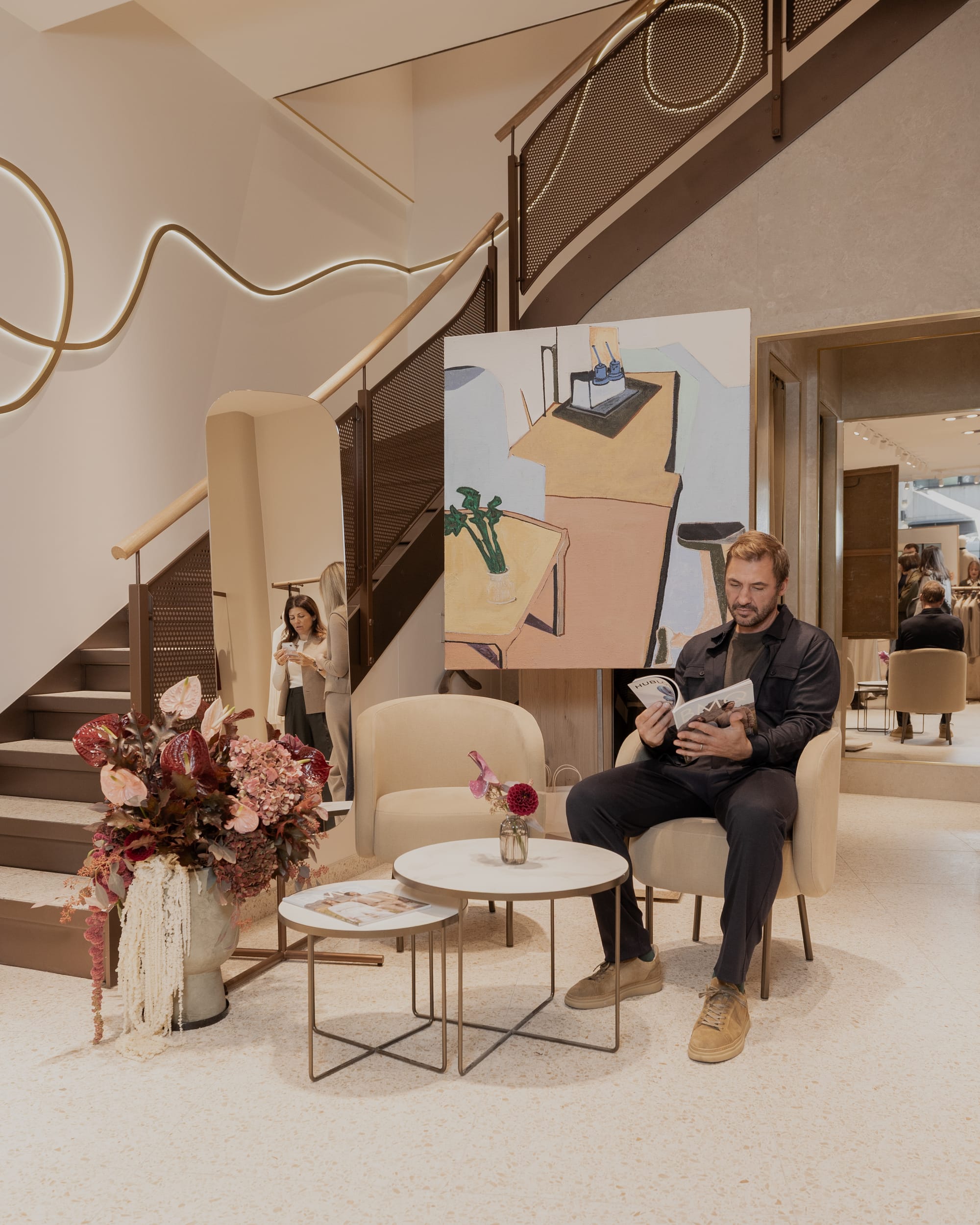
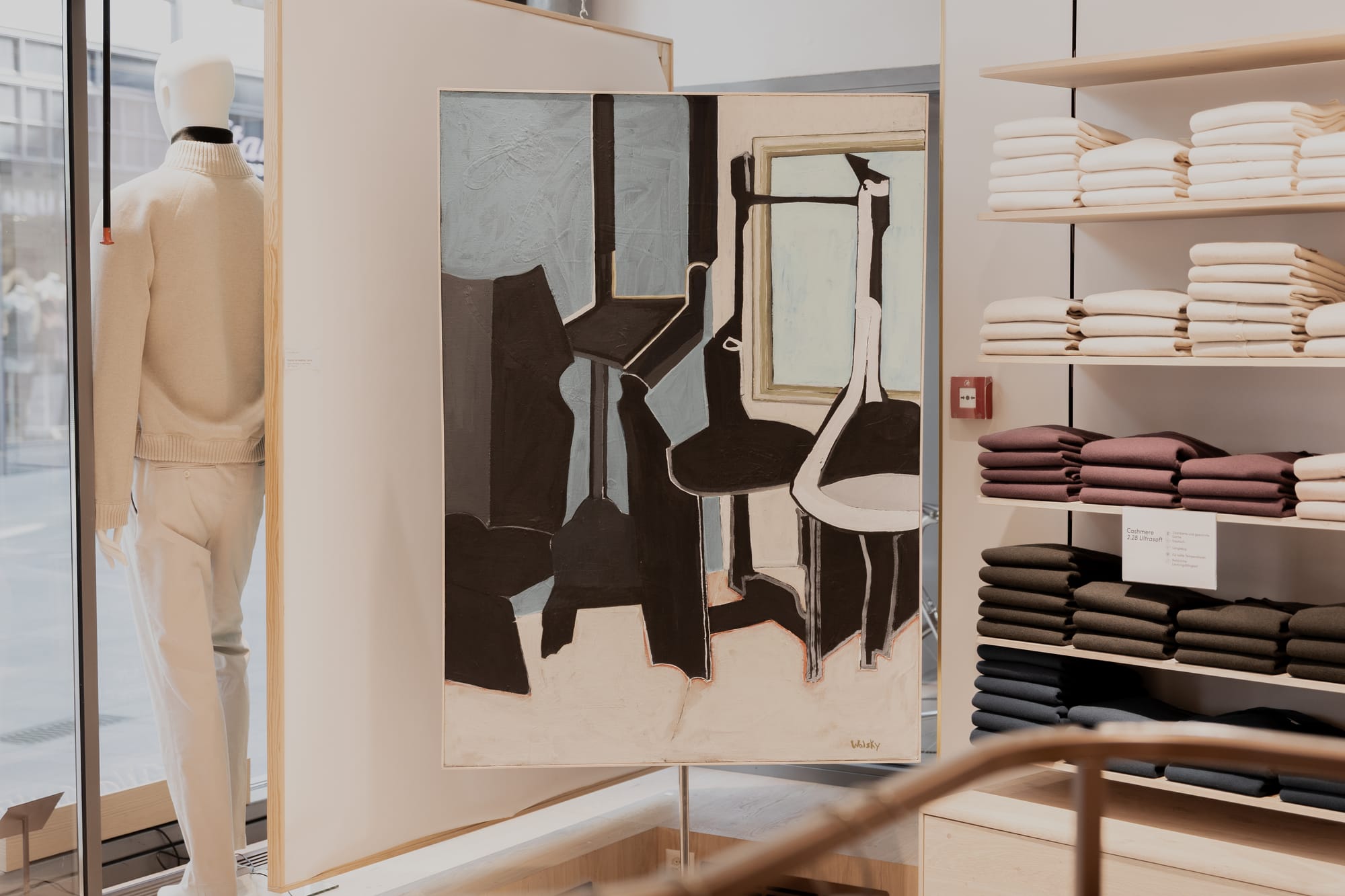
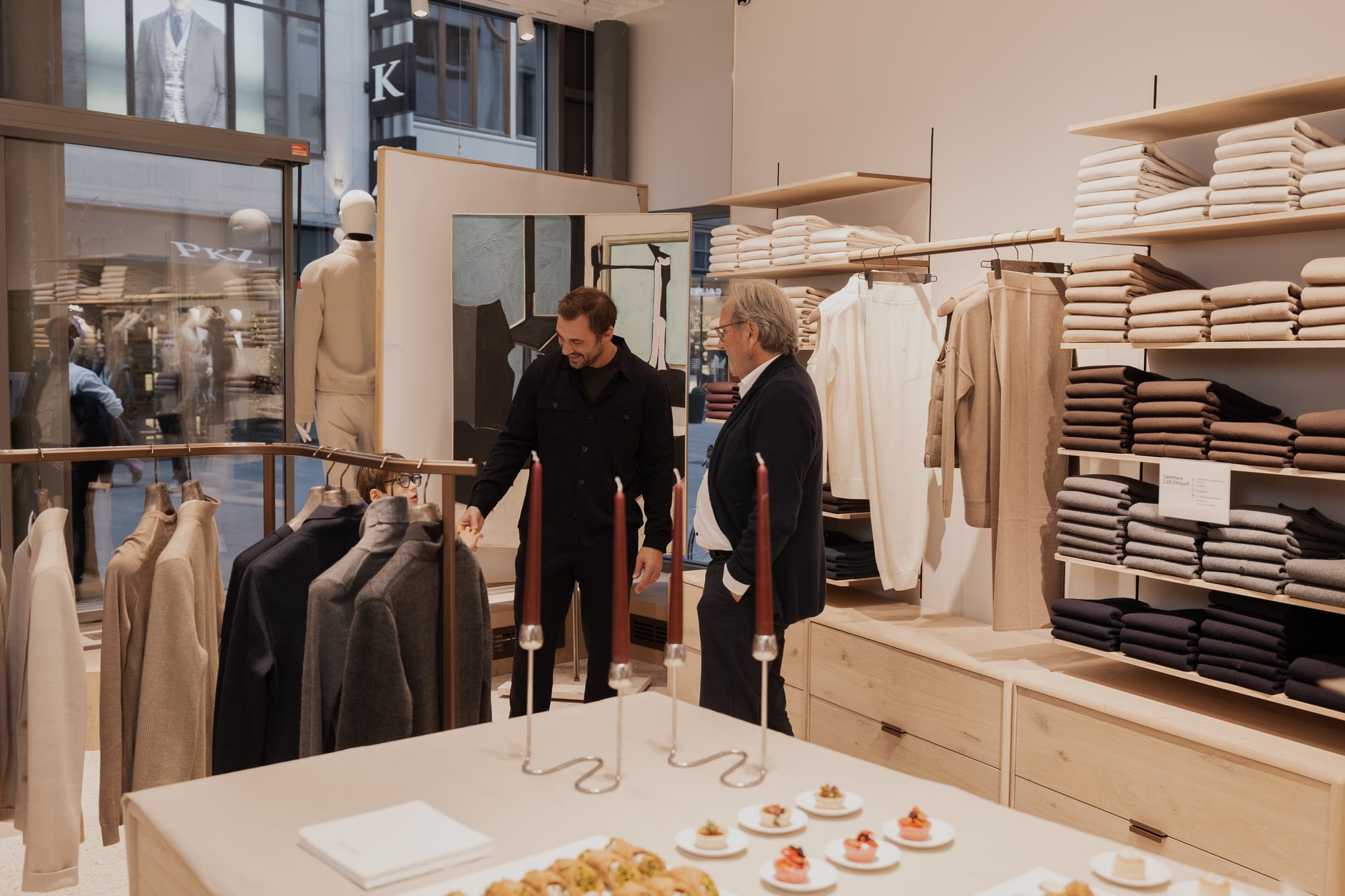
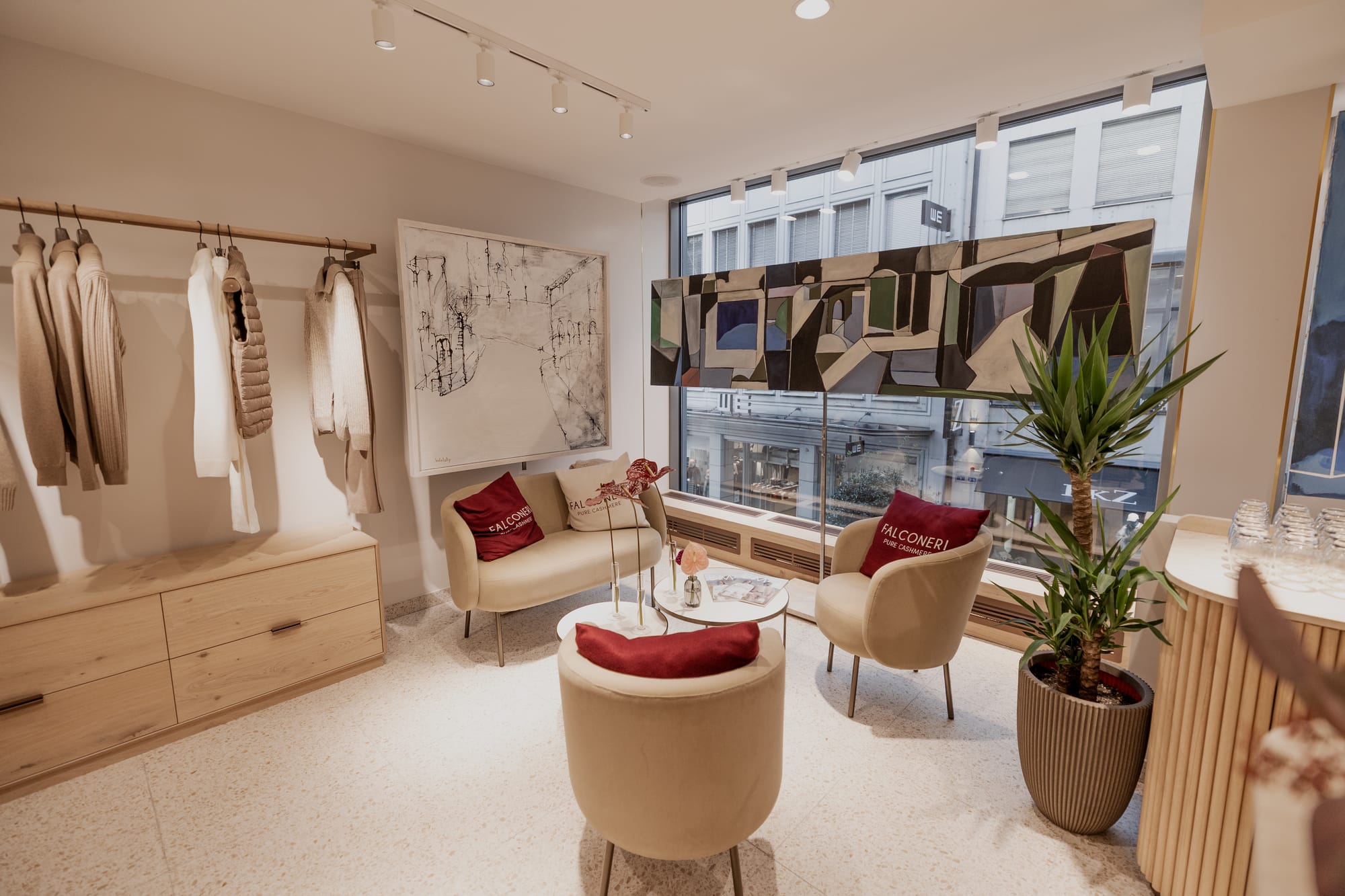
Located on Freie Strasse, in the heart of Basel, the two-floor boutique was transformed into an intimate exhibition space, where Walsky's paintings were presented alongside selected pieces from Falconeri's Fall/Winter 2026 collection.
The concept was built around a simple yet meaningful connection: a shared appreciation for creativity, craftsmanship and the transformation of materials.
At first glance, contemporary abstract painting and luxury cashmere may appear to belong to entirely different worlds. Yet both are shaped by the relationship between material, texture, colour and composition.
Walsky explores these elements through painting, creating works influenced by American Abstract Expressionism. Falconeri approaches them through fine natural fibres, Italian craftsmanship and the creation of garments that combine quality, comfort and timeless elegance.
Rather than treating art as decoration, the exhibition established a dialogue between the two disciplines. The colours and compositions of the paintings found visual echoes in the collection, while the garments offered another interpretation of texture, movement and material.
Two distinct creative expressions, connected by a common philosophy.
What makes this collaboration particularly interesting is its emphasis on the creative journey rather than simply the final result.
Eric Walsky's personal story offers an additional perspective. Born in Anchorage to an American father and a Swiss mother, Walsky spent a decade playing professional ice hockey before dedicating himself fully to painting.
His transition from professional sport to contemporary art reflects an unconventional path, but one in which discipline, persistence and experimentation play important roles.
These qualities are equally relevant to craftsmanship.
Behind a cashmere garment lies a sequence of decisions involving the selection of fibres, technical knowledge, construction, proportions and finishing. Behind a painting lies a different but equally deliberate process of exploration, composition and transformation.
In both cases, the finished object represents only the visible expression of something much deeper.
The Falconeri exhibition also reflects another important transformation in luxury retail.
The physical boutique is no longer simply a place where products are displayed and transactions take place. Increasingly, it can become an environment in which a brand's identity is experienced through different forms of expression.
During The Art of Cashmere, Falconeri's Basel boutique welcomed press representatives, content creators and selected guests for a morning presentation and an evening gathering.
Visitors were invited not only to discover the new space and the Fall/Winter collection, but also to explore Walsky's artistic universe and the relationship between his work and the brand.
A conventional boutique visit is primarily organised around the product. A cultural experience creates an opportunity for discovery, conversation and interpretation.
The brand becomes a host, a curator and a participant in a broader creative dialogue.
The relationship between fashion and art is likely to become increasingly important as luxury brands seek new ways to connect with audiences beyond traditional product communication.
But the real opportunity lies in moving beyond the idea of art as an aesthetic backdrop.
Art can help brands reveal their creative philosophy, celebrate the people and processes behind their products, and invite audiences to discover a different dimension of their identity.
The Art of Cashmere illustrates this approach on an intimate scale.
An Italian cashmere brand and a contemporary artist, working across different disciplines, find common ground in their appreciation of materials and the creative process.
The result is not simply an exhibition inside a boutique. It is an expression of how two creative worlds can enrich one another without losing their individual identities.
Ultimately, the most meaningful collaborations are not defined by the visibility they generate, but by the values they bring to life.
And when those values become something people can experience, craftsmanship becomes culture.