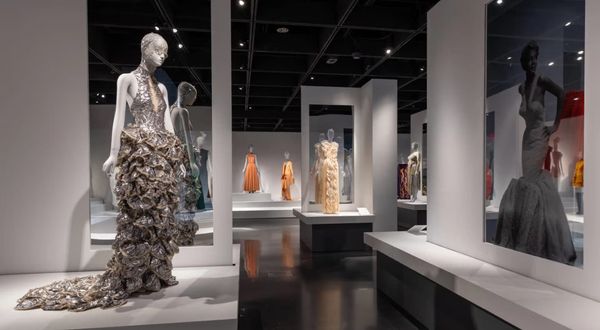
The Metropolitan Museum of Art will present extraORDINARY: Fashion and the Poetics of the Everyday at The Met Fifth Avenue from 9 May 2027 to 9 January 2028. The Costume Institute exhibition is planned as a close look at garments and materials that usually pass without ceremony: jeans, T-shirts, puffer coats, paper, plastic and metal.
For visitors, the useful promise is visual rather than theoretical. The show will examine how a change of cut, scale, construction or material can make a recognisable garment feel unfamiliar, while leaving enough of its original character intact to be read at a glance.
The announced exhibition is divided into two principal sections. “Familiar Forms” begins with clothing types most people already know; “Common Matter” starts with ordinary materials and found objects. Vogue's first look at the exhibition confirms that this split will move from archetypal clothes, including tees and jeans, to materials such as paper, aluminium and plastic.
That distinction offers a simple way to look. In the first section, notice what has happened to the outline of the garment. In the second, look closely at how an unassuming substance has been folded, joined, cut or assembled. The object may be familiar, but the labour is often concealed inside the result.
The opening gallery will feature garments from Undercover's autumn/winter 2024 collection, Watching a Working Woman. Jun Takahashi layered and joined familiar pieces so that cardigans, skirts and everyday outerwear carry the competing demands of a working life in their construction. The effect is worth watching at the seams: the clothes remain wearable and recognisable, yet their overlaps make the act of getting dressed part of the design.
A second example is deceptively plain. The announced checklist includes Matthieu Blazy's 2022–23 jeans for Bottega Veneta. On Bottega Veneta's official Winter 2022 collection page, the look reads as a white tank and relaxed denim. Vogue's preview identifies both pieces as leather. From a distance, the familiar codes remain intact; up close, material, finishing and trompe-l'oeil alter the experience of the outfit. It is an accessible lesson in why museum display can reward slower looking.
Common Matter
Here the starting point is not a garment type but material. The Met has announced three central groupings—paper, plastic and metal—alongside works incorporating cutlery, broken china and buttons. The point is not that an inexpensive or discarded material automatically makes an object significant. What matters is the craft required to turn a stubborn, fragile or familiar thing into a surface that can move with the body.
One confirmed example is a spring 2027 silverware bodice from Maison Margiela's official Spring Summer 2027 show archive. Spoons become overlapping units across the torso, so an object designed for the table gains another scale and rhythm. It is the sort of piece that should be read from both near and far: first as a metallic silhouette, then as dozens of recognisable utensils.
What is confirmed before the doors open
The exhibition is scheduled for 9 May 2027 through 9 January 2028 at The Met Fifth Avenue. Andrew Bolton is organising it with Stephanie Kramer and Emily Mushaben, and the scenographic design is by 1009. The Costume Institute Benefit is confirmed for 3 May 2027.
The red-carpet details are deliberately absent from this preview. The Associated Press reported that the Gala hosts and dress code will be announced later, and the complete exhibition checklist has not been released. Until then, the strongest reason to follow extraORDINARY is already clear: it proposes that visitors bring the same attention to a pair of jeans, a layered cardigan or a spoon that they might give to a couture gown.