Belvedere Mykonos: the Art of Belonging
– 7 min read

On a barren Cycladic island, a family mansion became a gathering place for painters, princesses, and restless spirits. Three decades later, it remains one of the few hotels in Greece where the past is not a theme but a living presence.
"You enter Greece as one might enter a dark crystal; the light deepens around you." — Lawrence Durrell
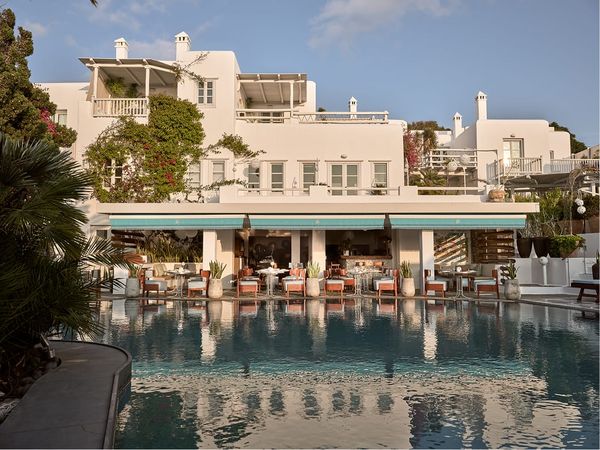
There is a quality to the light on Mykonos that resists description. By late afternoon, when the meltemi has spent itself and the Aegean lies flat as hammered tin, the hilltop above Chora becomes the kind of place where you stop walking and simply stand, adjusting your eyes to the clarity of things. This is where the Belvedere sits. Not in the town, not above it, but precisely at the point where Chora’s labyrinth of lanes gives way to open sky and a view that runs, without interruption, across rooftops and harbour masts to the sea beyond.
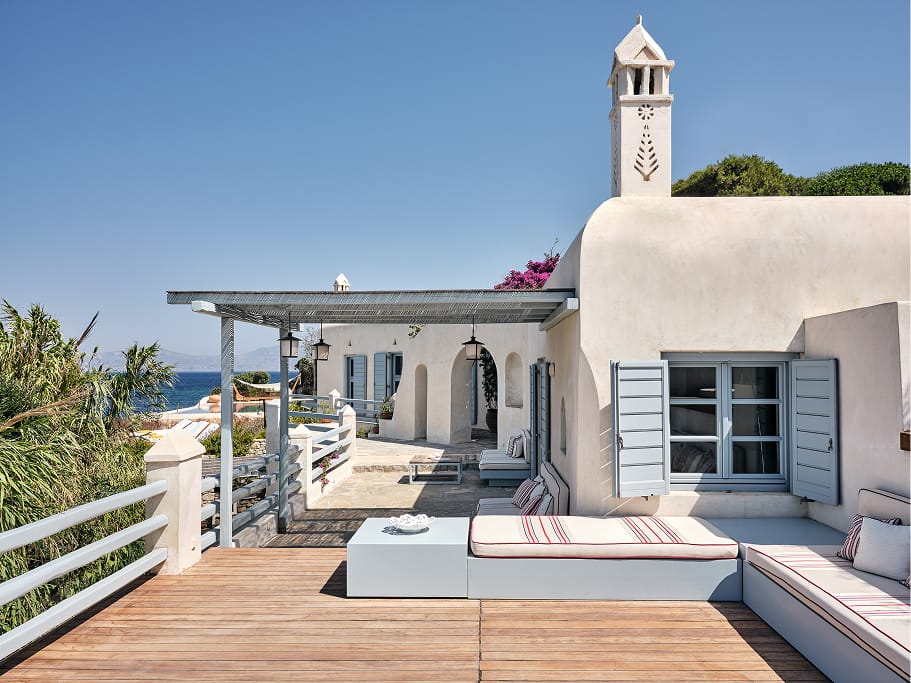
The hotel occupies a slope rather than a summit, and its whitewashed volumes step down the hillside in a way that echoes the domestic architecture of the town itself: low walls, stone paths, bougainvillea trained into curtains of magenta. From the street, you would not immediately identify it as a hotel. It looks more like a small neighbourhood, which is, in some sense, what it was always intended to be.
The story begins not with hospitality but with a garden. In the 1850s, a family erected a villa on this plot, one of the few fertile patches on an island otherwise defined by rock and wind. They called it Mansion Stoupa. Its pilasters and decorative flourishes, borrowed from urban residences on the mainland, must have looked startlingly out of place among the cubic geometry of Cycladic architecture. But the garden thrived. Cherry trees, grapevines, tall cypresses casting dense afternoon shade. On Mykonos, where vegetation is a form of defiance, the estate became a kind of legend in miniature.
For more than a century, Mansion Stoupa passed through the Campanis-Ioannidis family, serving as a summer residence and, from 1969 onward, as a guesthouse for the sort of travellers who arrived on the island not for its beaches but for its particular social atmosphere. French politicians, European artists. Then, in the early 1970s, an Italian-American painter named Piero Aversa made his first appearance on Mykonos and everything shifted.
Aversa was a figure from a vanished world: a painter collected by Katherine Hepburn and various Italian nobility, a man who designed wallpapers and fabrics, who had lived in Palm Beach and Rome. He turned Mansion Stoupa into his summer base and began hosting what the family’s records describe as Dionysian dinners. Wine flowed. The food was generous. The guest list mixed royalty with working artists. Princess Soraya of Iran signed the guestbook. The actor Hiram Keller stayed. Julie Andrews visited. What Aversa created, perhaps without fully intending to, was a prototype: a private home that functioned as a salon, a place where the social codes of the outside world were quietly suspended.
When Aversa died in 1990, the Ioannidis family reclaimed the mansion and found his guestbook, partially ruined but still legible. It read like a register of mid-century cosmopolitan life. That guestbook, and the culture it represented, became the foundation of what came next.
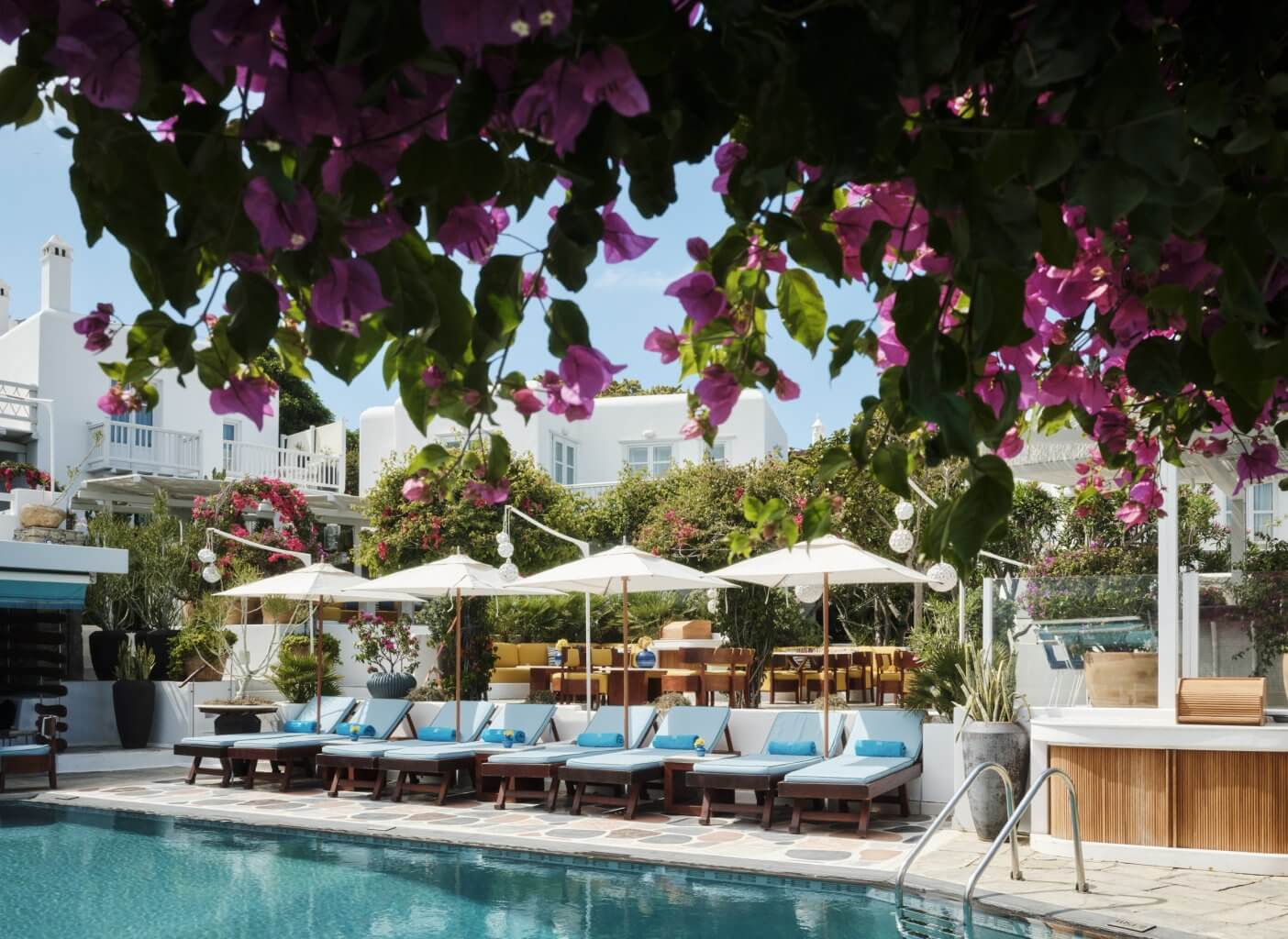
In May 1995, Sofia and Ilias Ioannidis converted the estate into a hotel, naming it Belvedere for the views. Residential blocks were arranged around a central pool, deliberately positioned as the social epicentre of the property. The layout reproduced, at a smaller scale, the sociable density of Chora's Matogiannia quarter, where life is conducted in public. The garden was left untouched. No one cut down the cypresses, which remain among the only specimens of their size on the island.
When the Ioannidis siblings took over in 1999, they reduced the number of rooms and expanded the communal spaces: cabanas, pergolas, an open-air bar beside the pool. The logic was Mediterranean. People come to the light and the air; the architecture should bring them together, not separate them. Cycladic minimalism governed the materials: stone, plaster, timber. No marble lobby, no chandelier.
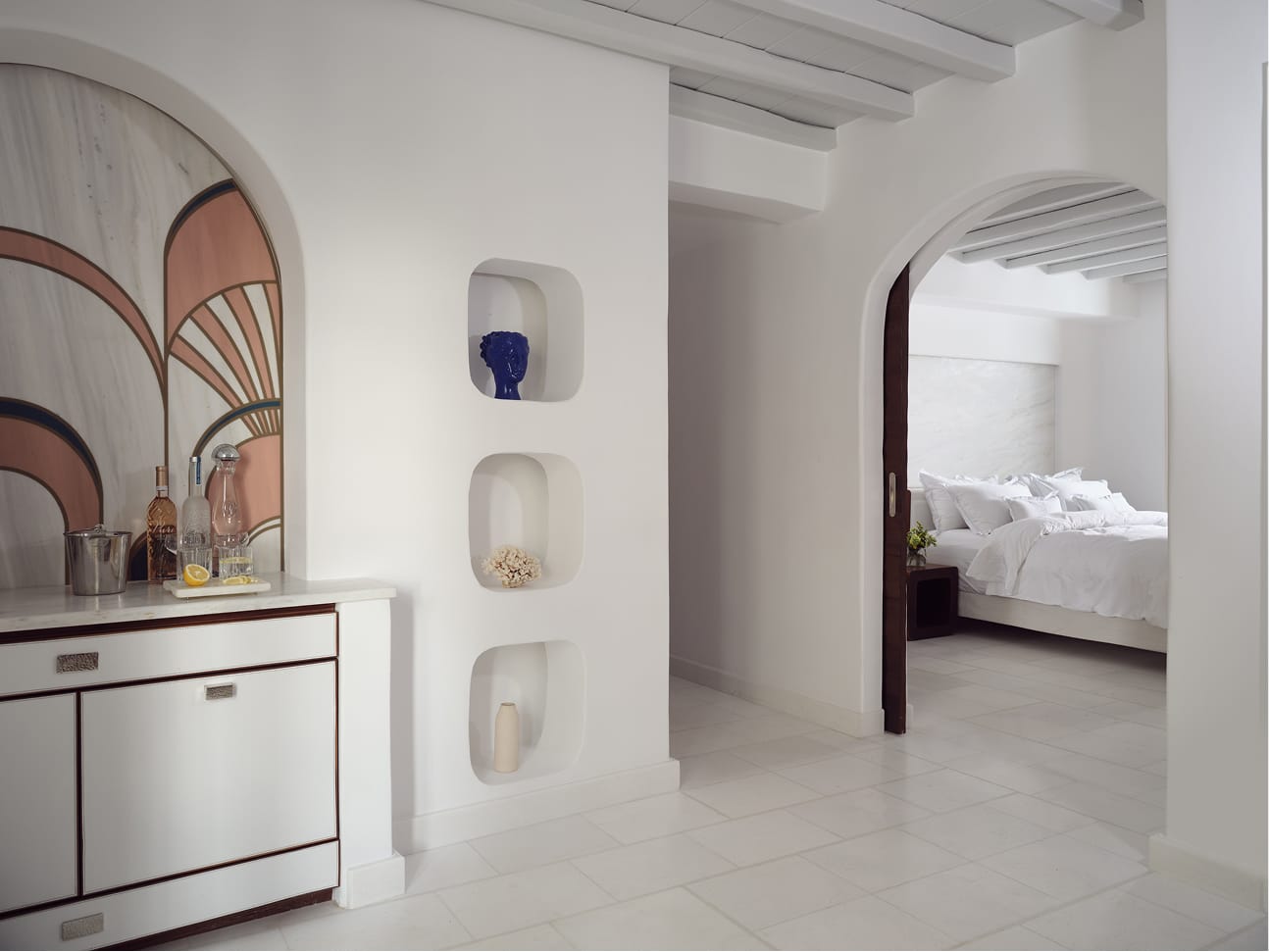
Between 2006 and 2010, architect Domna Ioannidis led a four-year renovation in collaboration with the New York-based Rockwell Group, mixing Italian stone against humble plaster, a Mexican handcrafted wood screen beside locally carved timber details. The Belvedere was not competing with the minimalist mega-resorts then multiplying across the Cyclades. It was pursuing something else: a hotel that felt lived-in, personal, slightly eccentric, the way a house feels when it has accumulated objects and associations across generations.
The Greeks have a word, φιλοξενία, philoxenia, which translates roughly as love of the stranger. It predates the hospitality industry by several thousand years and describes something closer to a moral obligation than a service standard. At Belvedere, this concept has a tangible quality. The staff know returning guests by name. The family is present, not as a brand narrative but as people who walk through the property, sit at the bar, remember what you drank last August. In a market where the word “boutique” has long since been emptied of meaning, the Belvedere remains genuinely family-operated, which produces an atmosphere that no design studio, however gifted, can manufacture.
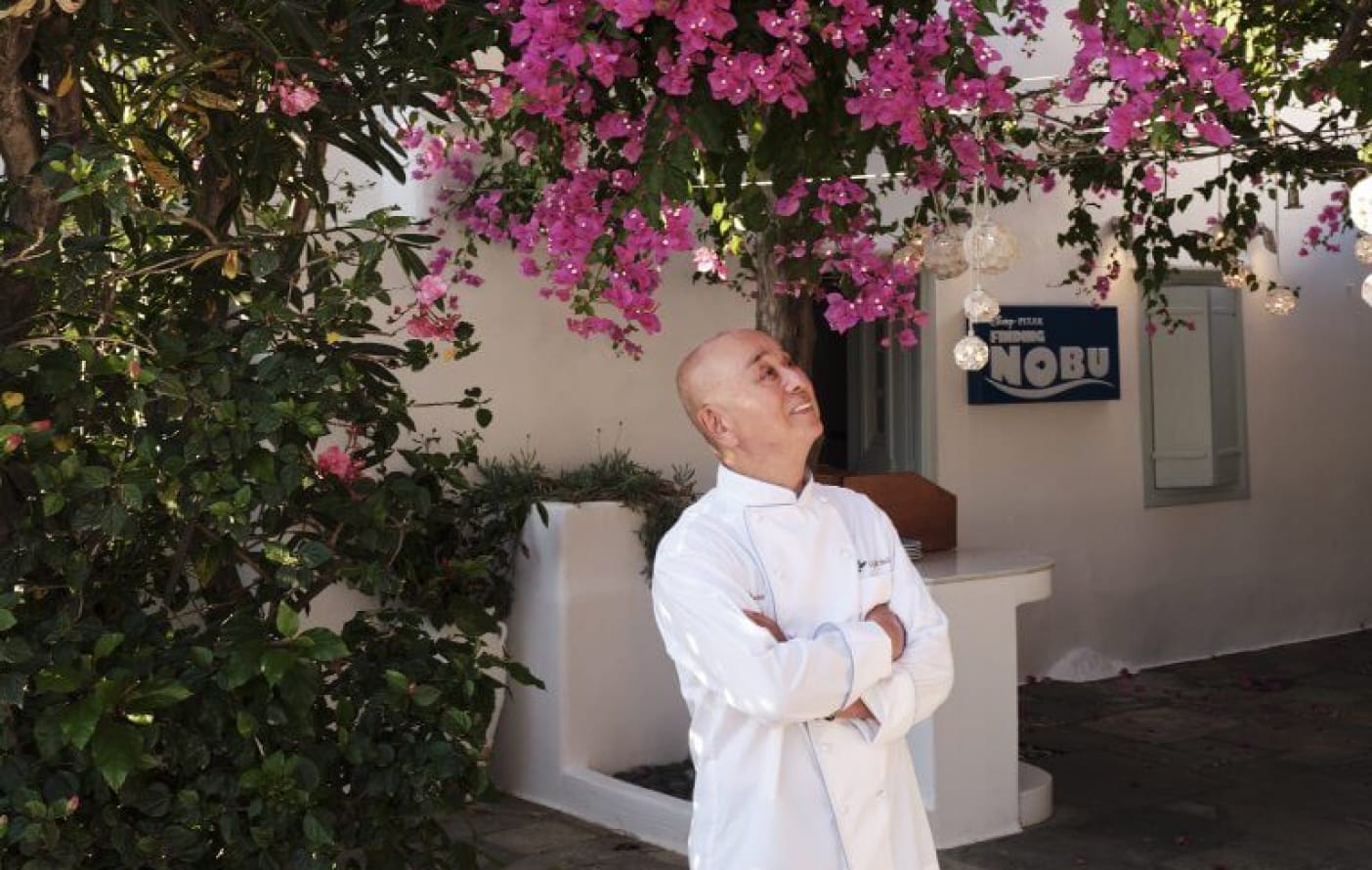
The most significant addition to the property arrived in 2003, when the Ioannidis siblings met chef Nobu Matsuhisa in London and persuaded him to open a restaurant inside Mansion Stoupa. It was a bold idea at a time when Japanese cuisine was still a novelty for most Greek diners. The hotel’s own records note that in the first season, guests would order bread with their sushi or ask for pasta. The reception, however, was immediate enough to make the arrangement permanent. Matsuhisa Mykonos became the first open-air Matsuhisa restaurant in the world, with an outdoor sushi bar that, two decades on, remains the only one of its kind in the group’s global portfolio.
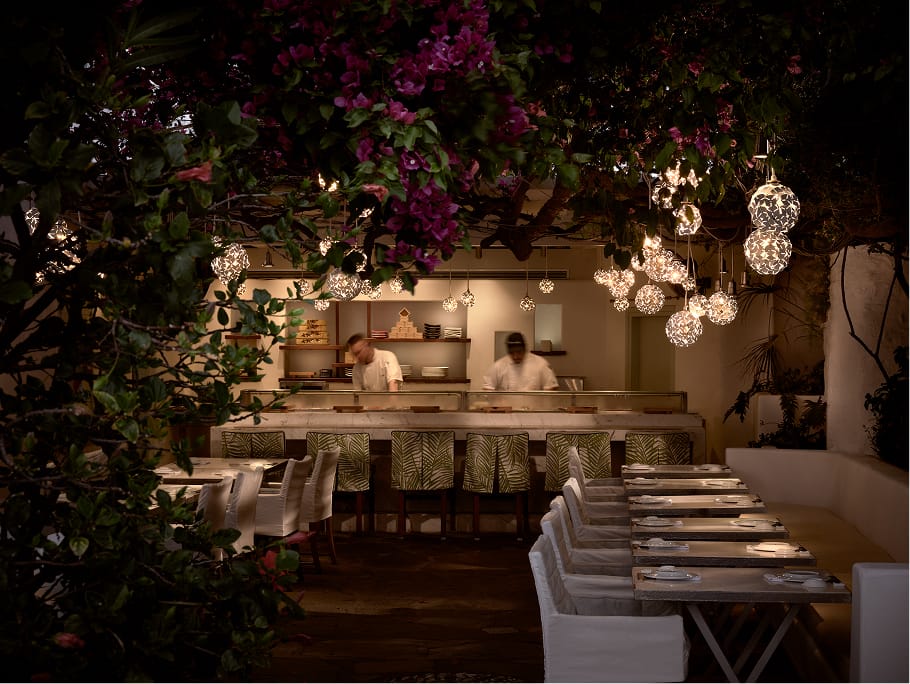
What the restaurant brought to the Belvedere was a gravitational pull. Sailboats and yachts travelling the Mediterranean circuit began routing through Mykonos specifically for the Matsuhisa. The terrace, set within the old mansion’s walls, operates from late April to mid-October. At dusk, when the Aegean light turns the colour of ripe apricot and the first plates of black cod in miso appear, the room has a particular energy: convivial, slightly theatrical, anchored in serious cooking. In 2023, the restaurant marked its twentieth anniversary with a week-long programme featuring Nobu Matsuhisa and former chefs from across the group’s global network, including the first open-air Omakase bar on the Belvedere terrace.
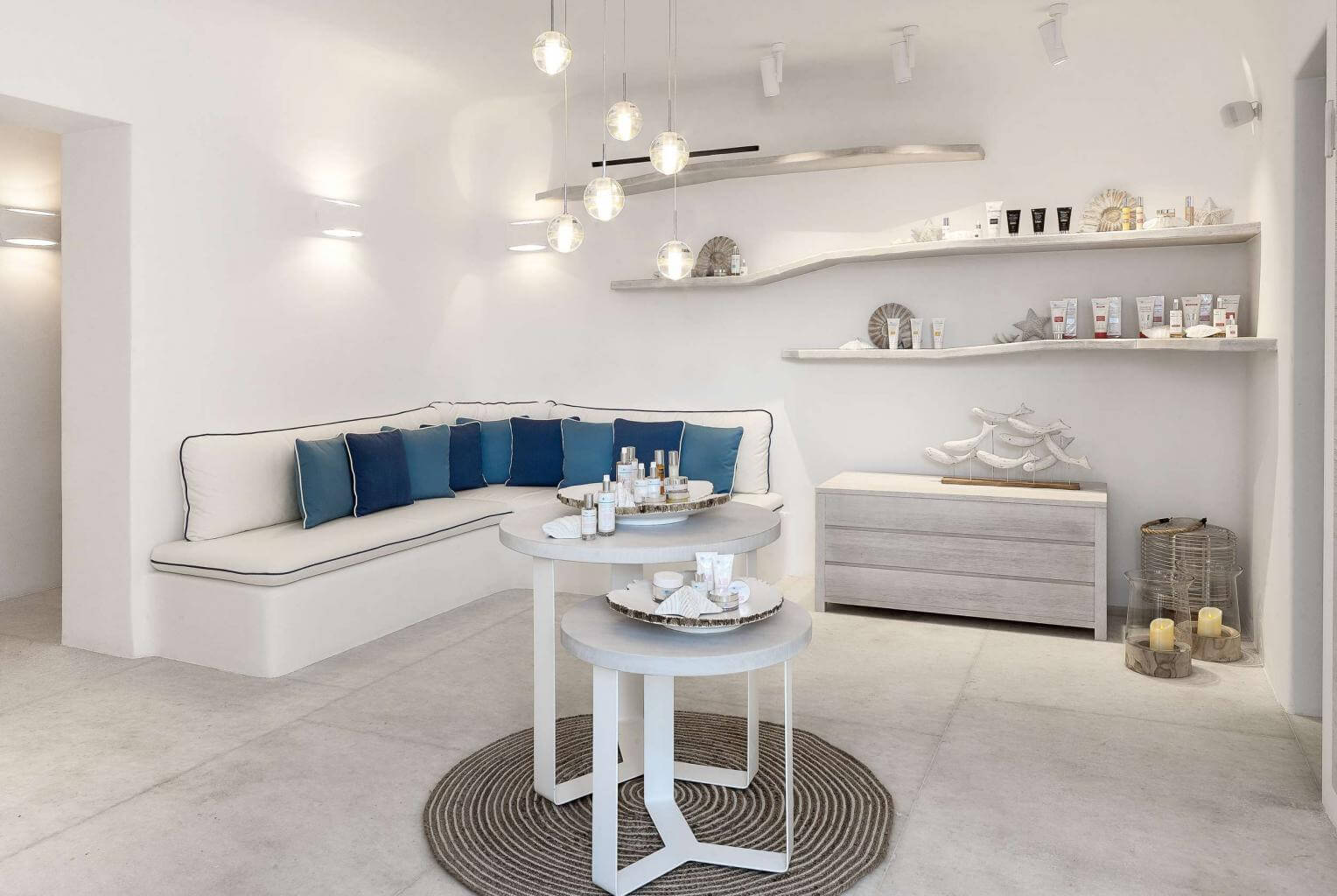
In 2015, a Six Senses Spa opened on site, designed by Domna Ioannidis. It is small, three treatment rooms and a couple’s suite with an exposed stone wall carved from the cliff. Its scale suits the property. The pool area, redesigned by Concept Boarding studio, serves as the hotel’s social nucleus from morning to late evening: breakfast at one end, cocktails at the Sunken Watermelon Bar at the other, and between them a day-long current of conversation, reading, swimming, and the particular Mykonian talent for doing nothing with great elegance.
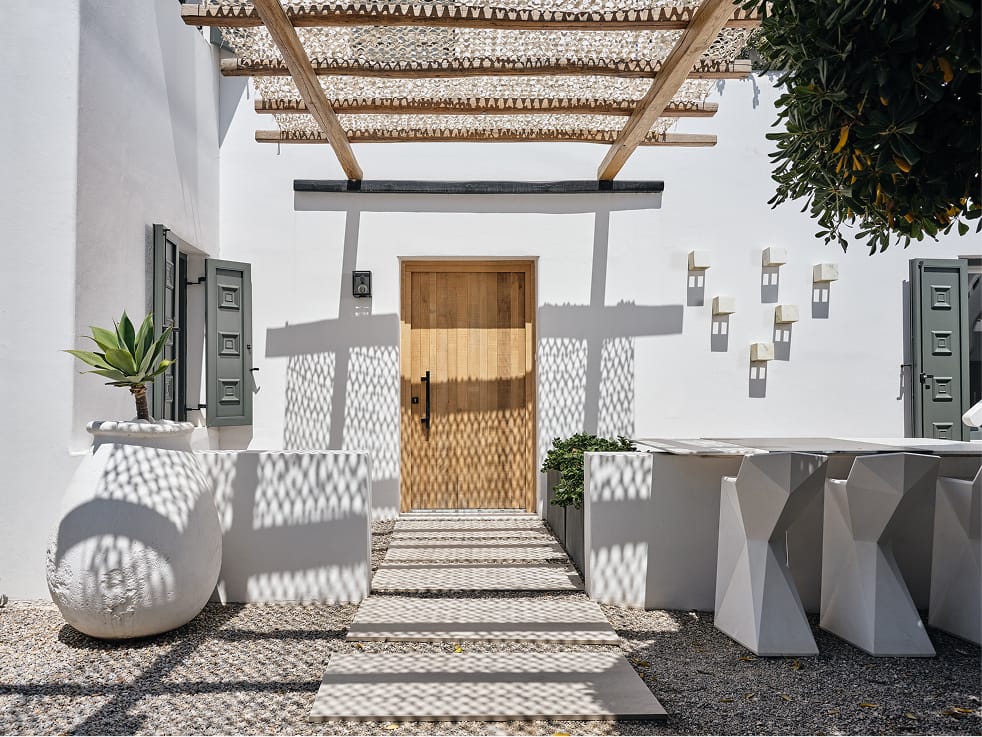
There is also Thea Estiatorio, focused on reimagined Greek cooking, and Cocco, an Italian bistro on the seafront. Hilltop Rooms and Suites, a cluster of three whitewashed buildings two hundred and fifty metres from the main hotel, offer more privacy while remaining connected to the central property by shuttle. The Waterfront Villa, originally built in the late 1960s and long known on the island as the “phantom villa” for its discretion, has its own pool and a wall of bougainvillea so dense it forms a kind of botanical architecture. And the Belvedere Mansion, the original Mansion Stoupa, has been restored as a private residence within the hotel, sleeping up to four guests in rooms filled with black-and-white photographs and antique details that connect the space to its previous inhabitants.
What distinguishes the Belvedere from the newer properties now multiplying across Mykonos is not a single amenity or design gesture but rather an accumulation of time. The hotel is not themed. It does not reference Cycladic tradition as a mood board; it grew out of it, organically, over decades. The cypress trees that shade the garden were planted long before the first guest arrived. The bar’s cocktail programme traces back to a 2003 collaboration with Dale DeGroff, the American mixologist, which predated the global cocktail revival by several years. The social atmosphere around the pool is not manufactured; it is the residue of a hundred seasons during which the same kinds of people, drawn by the same quality of light and company, returned to the same hilltop.
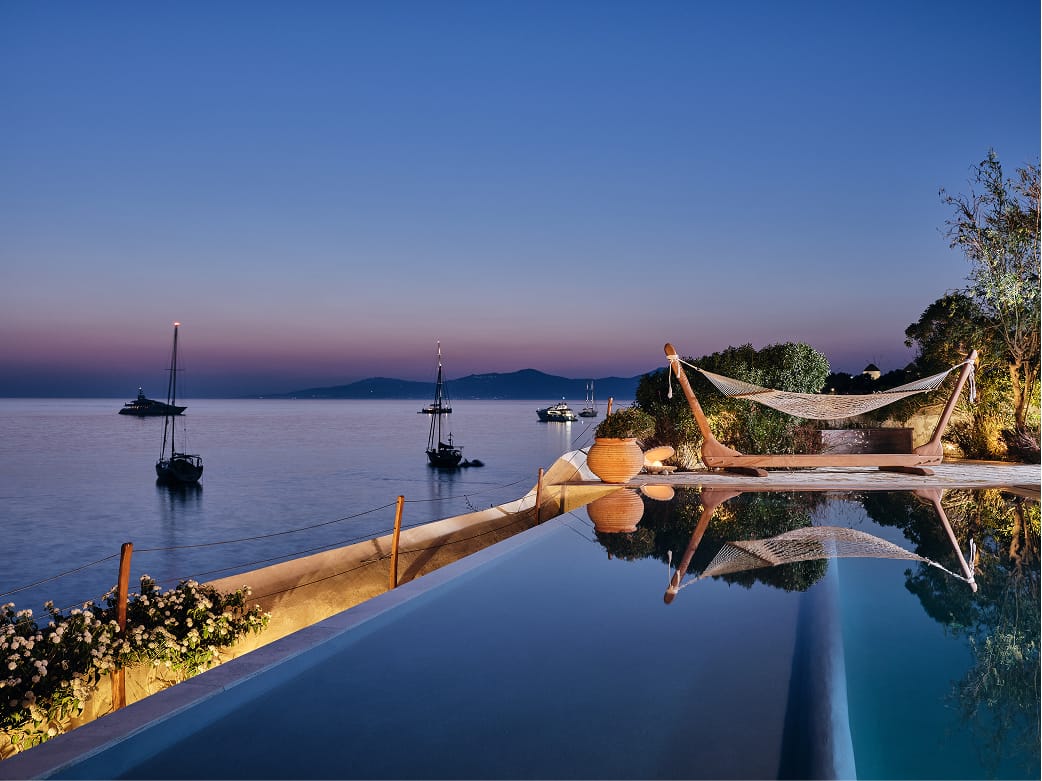
The ancient Greeks believed that certain places possessed a daimon, a spirit specific to the site, something that could not be transported or reproduced elsewhere. Heraclitus wrote that character is destiny. It may also be geography. The Belvedere’s character, its particular mixture of sociability and calm, of historical depth and easy informality, belongs to this hill above Chora, where the wind drops in the evening and the light, in its final hour, does something to the whitewashed walls that feels less like illumination than like memory itself, rising to the surface.
A member of The Leading Hotels of the World, the Belvedere operates seasonally, typically from April through October. The hotel is located on the edge of Mykonos Town, near Rohari Hill, opposite the School of Fine Arts.