Amelia Dubai: A Restaurant Built Around Music, Mixology and Nikkei Cuisine
– 4 min read

In Dubai, many restaurants attempt to merge dining and nightlife. Few manage to balance both without allowing one to overpower the other. Amelia Dubai approaches the equation differently. The restaurant does not separate dinner from atmosphere, or cocktails from music. Instead, it structures the entire evening as a continuous progression — one that begins with Nikkei cuisine and gradually shifts into a more energetic social setting as the night unfolds.
Located inside Address Sky View in Downtown Dubai, Amelia has become one of the city’s most recognisable dinner addresses, particularly for guests looking for a venue where cuisine, design and music operate within the same rhythm rather than as separate concepts.
Amelia was first introduced in Beirut in 2018 by Lebanese hospitality entrepreneur Rayan Nicolas. The concept was built around three elements: gastronomy, mixology and music. In Dubai, the formula evolved into a larger, more theatrical format, shaped specifically for the scale and energy of Downtown.
The restaurant positions itself around Japanese-Peruvian cuisine with Mediterranean influences — a structure now familiar in Dubai, but here interpreted through a more immersive setting. The objective is not minimalism or quiet fine dining. Amelia operates with movement, visual intensity and controlled spectacle.
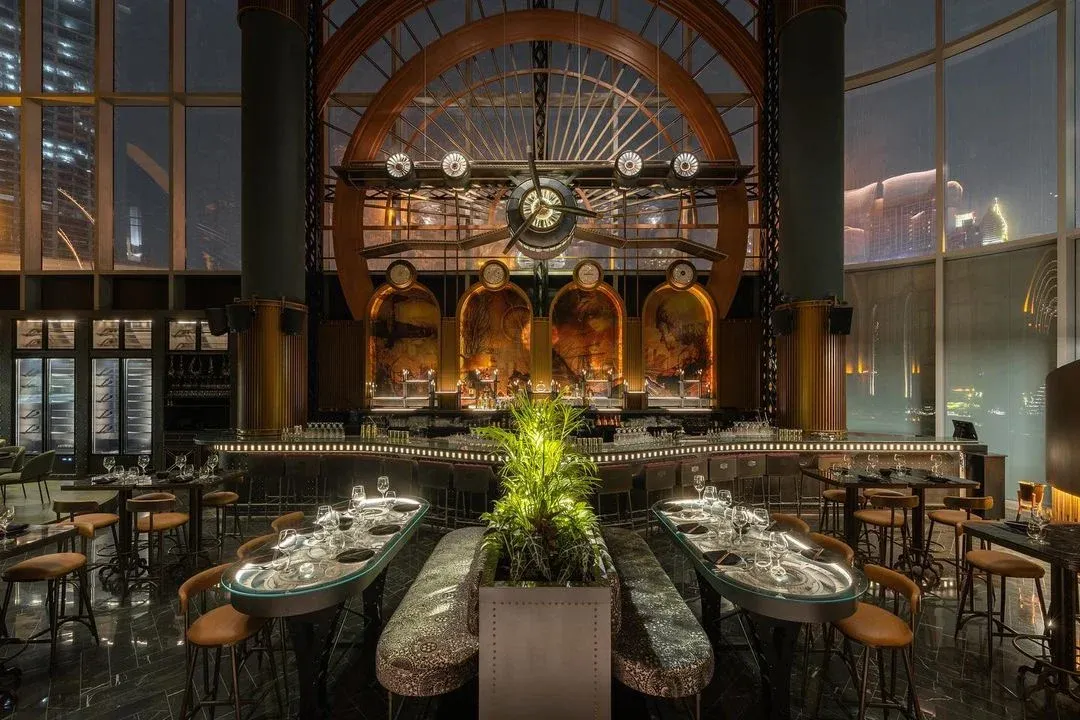
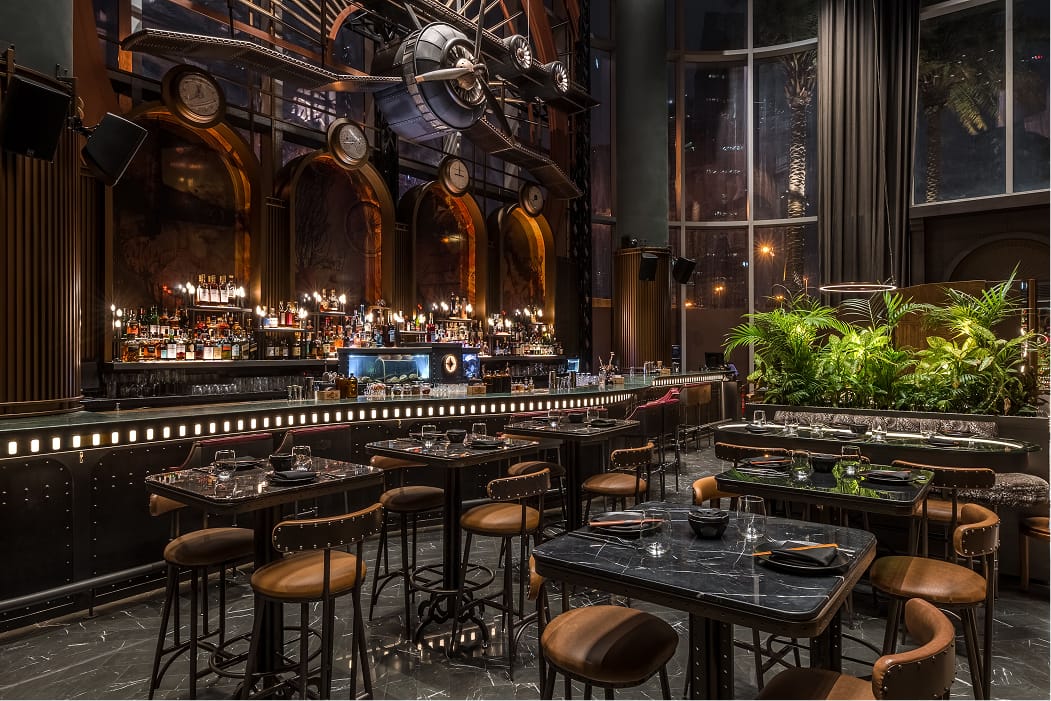
The design language is central to Amelia’s identity. The restaurant adopts a retro-futurist, steampunk-inspired aesthetic that references aviation, mechanical engineering and Art Deco interiors without becoming overly literal.
Twelve-metre ceilings frame the main lounge, where stone arches meet floor-to-ceiling glass overlooking Downtown Dubai and the Burj Khalifa. At the centre of the room, a large illuminated compass sits above the DJ booth, functioning almost as the venue’s visual anchor.
The space is layered with metallic surfaces, sculptural pipe installations and suspended mesh structures inscribed with fragments of text and symbolism. Lighting remains low and amber-toned, shifting subtly as the evening progresses.
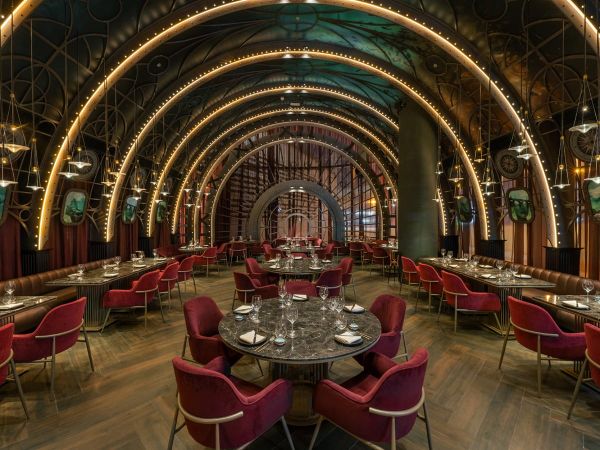
On the mezzanine level, the fine dining room adopts a different atmosphere. Vaulted arches curve above the tables, evoking the structure of a submarine hull. The setting feels more enclosed and cinematic than the main lounge below, allowing dinner service to retain intimacy despite the scale of the venue.
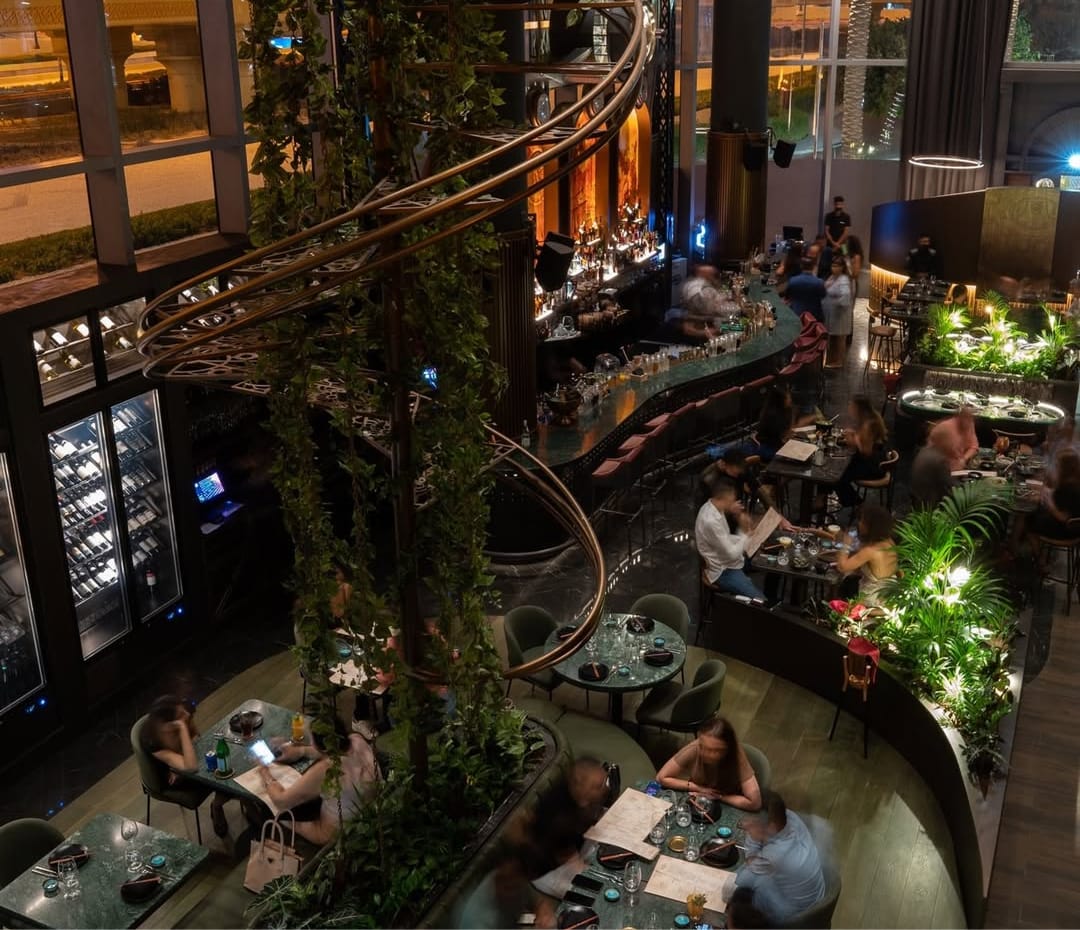
Amelia’s Botanical Lounge introduces yet another register — denser with greenery and softer in atmosphere, while still maintaining the industrial-metallic design vocabulary that runs throughout the project.
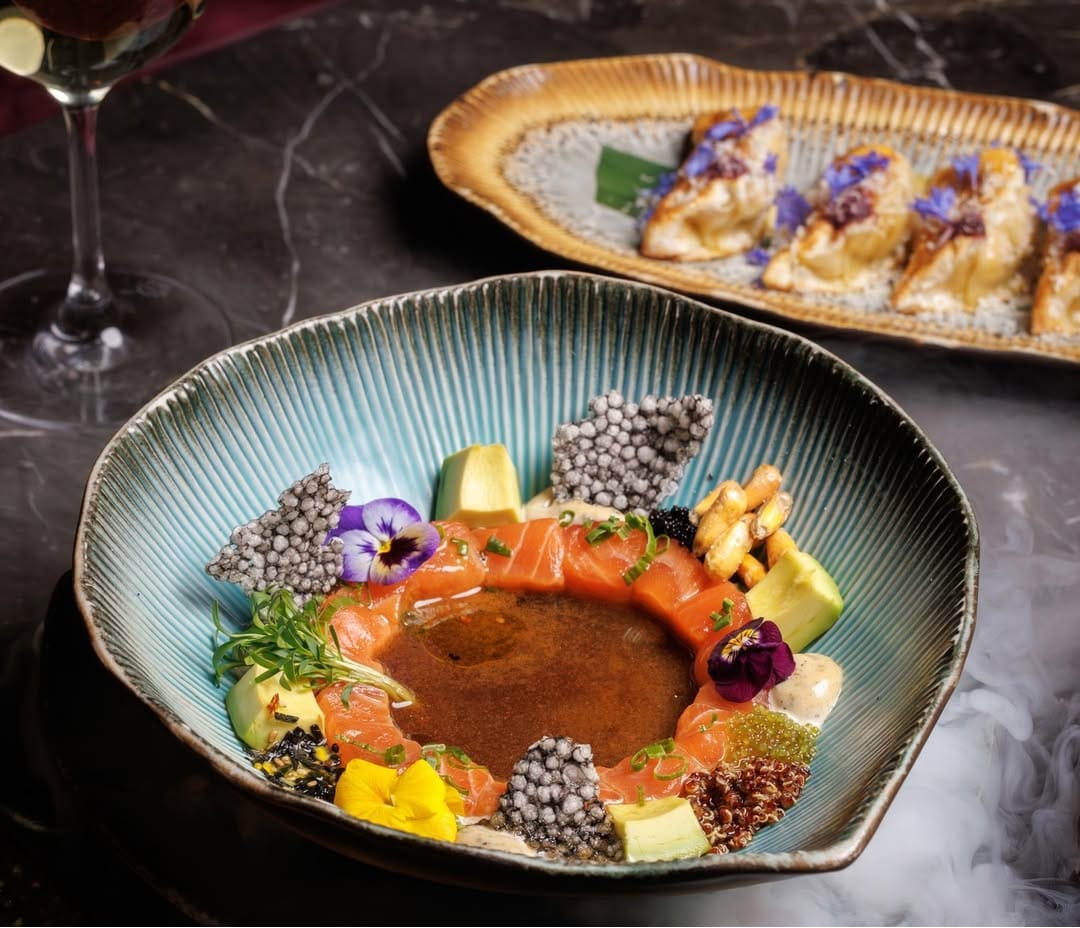
Amelia’s culinary direction is built around Nikkei cuisine — the long-standing dialogue between Japanese and Peruvian cooking — while introducing Mediterranean references across sauces, seafood and grilled dishes.
The menu is broad but remains coherent in structure. Raw dishes, robata cooking and seafood dominate the opening sections, while the later courses move toward richer textures and fire-led preparation.
Sashimi and tiradito dishes lean toward acidity and precision rather than excessive garnish. Sushi remains technically clean, with balanced rice seasoning and restrained sauces. The robata section introduces more depth, particularly in meat and seafood dishes shaped by smoke and caramelisation.
The Mediterranean influence appears more subtly — in olive oil textures, grilled vegetables and broader table-sharing formats that soften the sharper edges often associated with Nikkei menus.
Rather than focusing on conceptual experimentation, Amelia prioritises rhythm and accessibility. The menu is designed to support a long evening rather than a formal tasting progression.
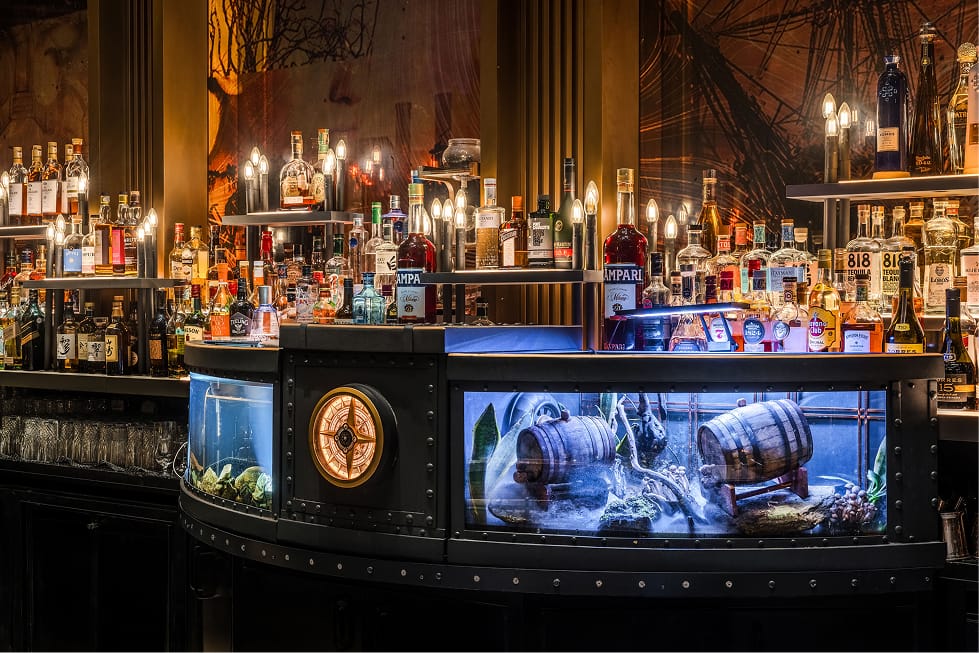
Mixology is not treated as a secondary component. Amelia’s bar programme operates with the same level of visibility as the kitchen.
Cocktails are visually composed but remain technically structured, balancing Japanese ingredients, tropical fruit, spice and darker spirits. The presentation aligns naturally with the restaurant’s theatrical setting without becoming disconnected from the drinking experience itself.
Music shapes the atmosphere as much as lighting or design. Afro-house and melodic house dominate the soundtrack, gradually increasing in intensity as dinner service progresses into late evening. DJs remain central to the venue’s identity, positioning Amelia closer to a dinner-and-music destination than a conventional fine dining restaurant.
This transition is particularly noticeable after 10pm, when the room becomes more social and fashion-oriented. Tables shift from seated dining into a more fluid environment built around cocktails, music and movement.
Amelia describes its dinner concept as a multi-sensory journey, and while the phrase risks sounding overstated, the restaurant does succeed in creating a strong sense of continuity between its different elements.
What distinguishes Amelia is not simply the cuisine or the design individually, but the way the venue controls pacing. Dinner evolves gradually into nightlife without requiring guests to relocate or change environments. The shift feels integrated into the structure of the evening itself.
In a city where many venues rely on scale or spectacle alone, Amelia works because the concept remains cohesive. The restaurant understands exactly what it wants to be: a Downtown dining room shaped equally by Nikkei cuisine, mixology, architecture and music culture.
And in Dubai, that level of clarity matters.
Address: Address, Sky View - Burj Khalifa - Downtown Dubai - Dubai - UAE