Wearable Health Technology Is Moving Into Preventive Medicine
– 1 min read

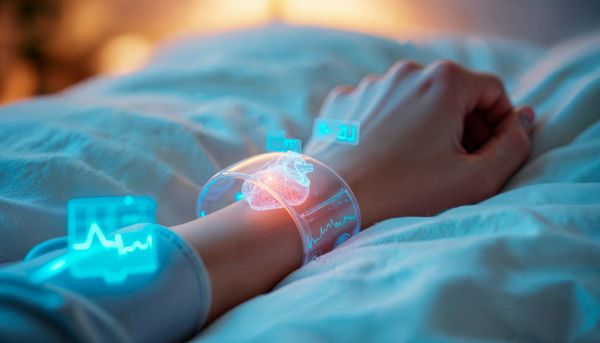
A fitness tracker once answered a simple question: How much did I move today? The next generation of wearable health technology is asking a different one: What is changing in my physiology over weeks, months and years?
The shift is from isolated readings to continuous streams of data. Researchers are studying activity, sleep, circadian rhythms, heart-rate variability and other physiological signals that can be collected passively in everyday life. A January 2026 study in npj Digital Medicine showed how consumer wearables and mobile technologies could be used to monitor behavioural and physiological patterns continuously, while also highlighting the need for further validation.
A digital biomarker is a health-related measure derived from digital technologies such as wearable sensors. Unlike a single measurement taken during an annual check-up, continuous monitoring can reveal patterns and changes across days, weeks or months.
This is particularly relevant to preventive health. UK Biobank's current research programme is examining commercial wearable data to develop digital biomarkers related to Alzheimer's disease and related dementias. Researchers are looking at signals including daily activity, sleep fragmentation, circadian rhythms and heart-rate variability.
The objective is not to turn a consumer device into a diagnostic tool. It is to determine whether subtle changes in everyday behaviour and physiology can eventually contribute to earlier risk assessment.
That distinction matters. A wearable-derived signal can show an association with a health outcome without proving that it predicts an individual's disease. Recent research on passive digital technologies for Alzheimer's screening found promising results but also identified major differences in study design, reference standards and external validation.
For now, wearable health technology sits between wellness monitoring and clinical medicine. Its potential lies less in another daily score than in building a longer, more detailed physiological record that clinicians and researchers may eventually be able to interpret.