Why Swiss Made Is No Longer Enough to Win Watch Collectors
LVMH Watches CEO Jean-Christophe Babin says Swiss watchmaking needs stronger design and identity as competition grows in the €2,000 to €8,000 market.

– 3 min read

LVMH Watches CEO Jean-Christophe Babin says Swiss watchmaking needs stronger design and identity as competition grows in the €2,000 to €8,000 market.
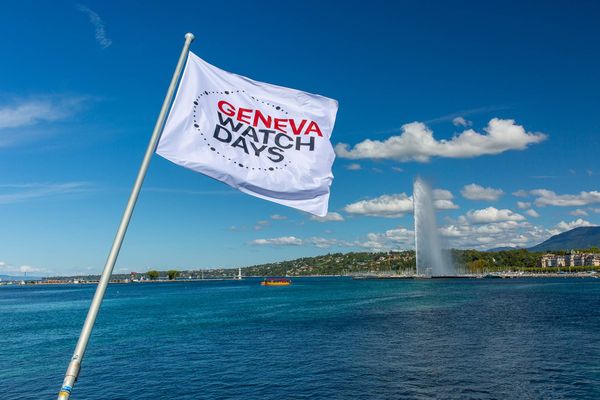
Swiss watchmaking should not assume that decades of market leadership will protect it from a more competitive future, according to Jean-Christophe Babin, CEO of LVMH’s Watch Division, CEO of Bvlgari and President of Geneva Watch Days. His warning comes just before the seventh edition of Geneva Watch Days, running from 2 to 6 September 2026.

Speaking to Wallpaper*, Babin pointed particularly to watches priced between roughly €2,000 and €8,000, a segment where established manufacturers now face younger brands offering alternatives that may use comparable components at lower prices. He also cited the development of Chinese watch brands with more distinctive design identities as one reason Swiss manufacturers should avoid complacency. These are Babin's observations, rather than a stated LVMH corporate strategy or evidence that Chinese watchmaking is replacing Swiss haute horlogerie.
Geneva Watch Days itself illustrates how much broader that field has become. Its 2026 line-up spans established manufactures, small workshops, independent watchmakers and younger names, placing watches with very different histories, production models and price positions in front of the same collector audience.
The more relevant question for collectors is what separates a technically competent watch from one they actually want to own.
Mechanical quality remains important, but competence alone has become less differentiating. In the €2,000 to €8,000 range, buyers can now find watches from younger manufacturers using established movements and components alongside products from long-standing Swiss names. Babin's argument is that design must carry more weight. In his view, buyers often respond first to the appearance of a watch rather than its movement specification.
That does not make history irrelevant. A recognisable case shape, a design associated with a particular period or a technical development that belongs specifically to one manufacturer can give a watch context beyond its components. The distinction is between heritage that is visible in the product and heritage used primarily as a marketing claim.
The same applies to mechanical complexity. An unusual movement architecture, genuinely difficult complication or technically purposeful construction can still provide a reason to collect. A standard automatic calibre inside an interchangeable design has a harder task, however accurate the specification sheet may be.
Babin also argues that a watch needs an identity that buyers can recognise, citing Bvlgari’s Serpenti and its connection to the Roman maison’s design history. More broadly, his argument suggests that brands competing around €2,000 to €8,000 need a recognisable point of view as much as mechanical credibility.

Geneva Watch Days will put that question in front of collectors almost literally. Its 2026 edition includes 71 participating watch houses, and the official programme schedules a 4 September discussion titled “Desirability: The Brand or the Product?”
For the watches arriving in Geneva this September, the longest specification sheet may not be the decisive one. In a market with more technically competent choices, design, recognisability and a reason for that particular watch to exist are becoming harder to separate from mechanical quality itself.