Locanda La Raia: Where Italian Hospitality Begins with the Land
– 7 min read

“He who sows utopia will reap reality.” — Carlo Petrini
Some places do not try to impress immediately. They wait until the guest’s pace changes.
La Raia is one of them.
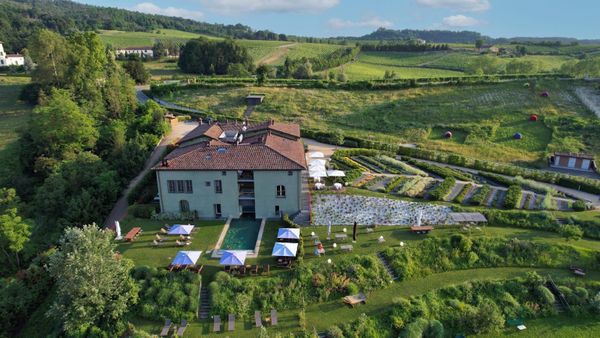
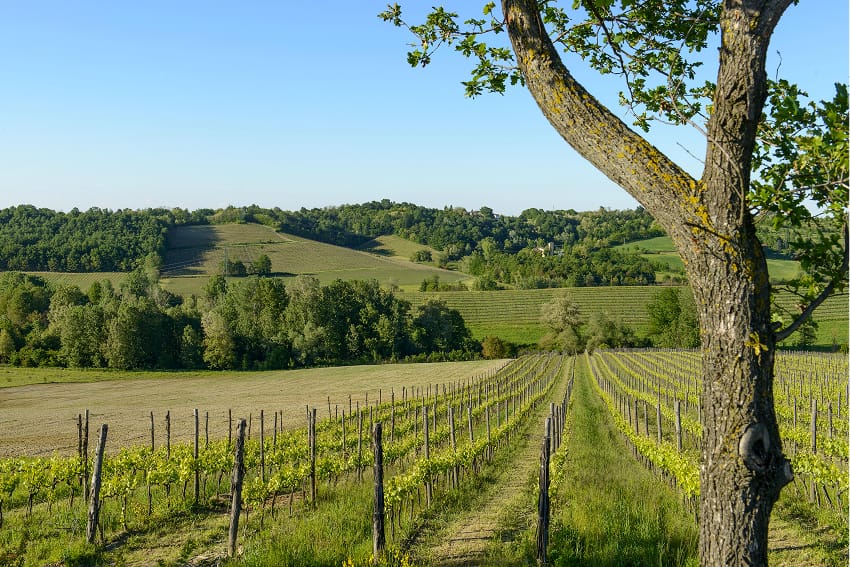
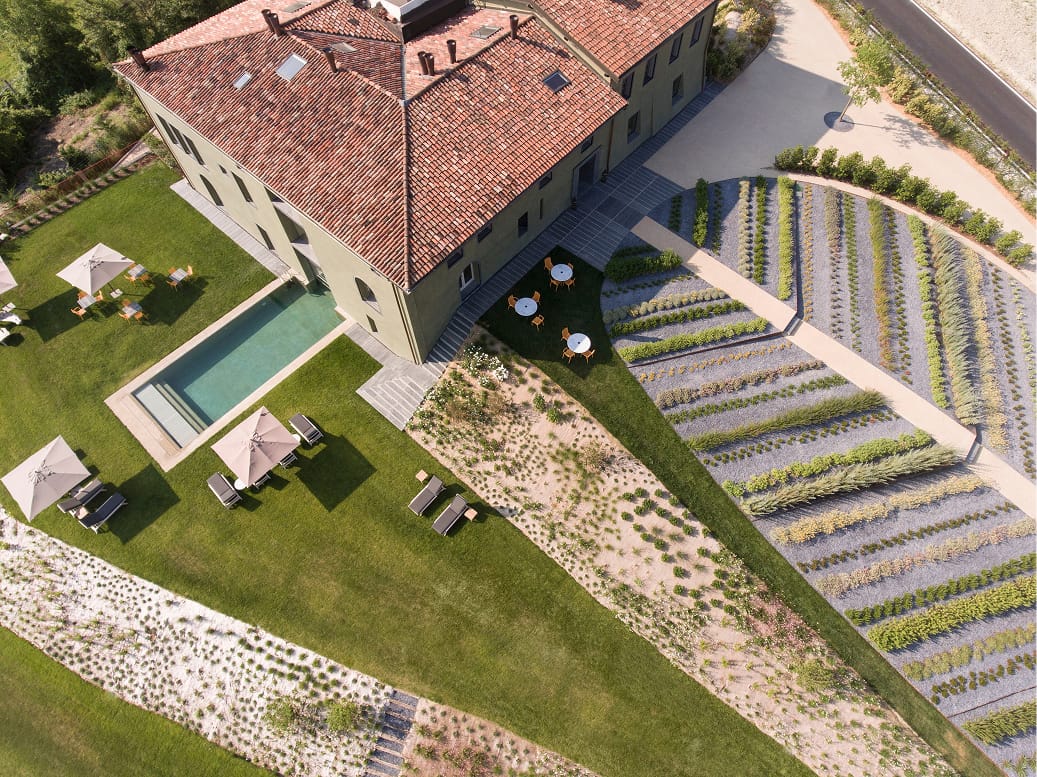
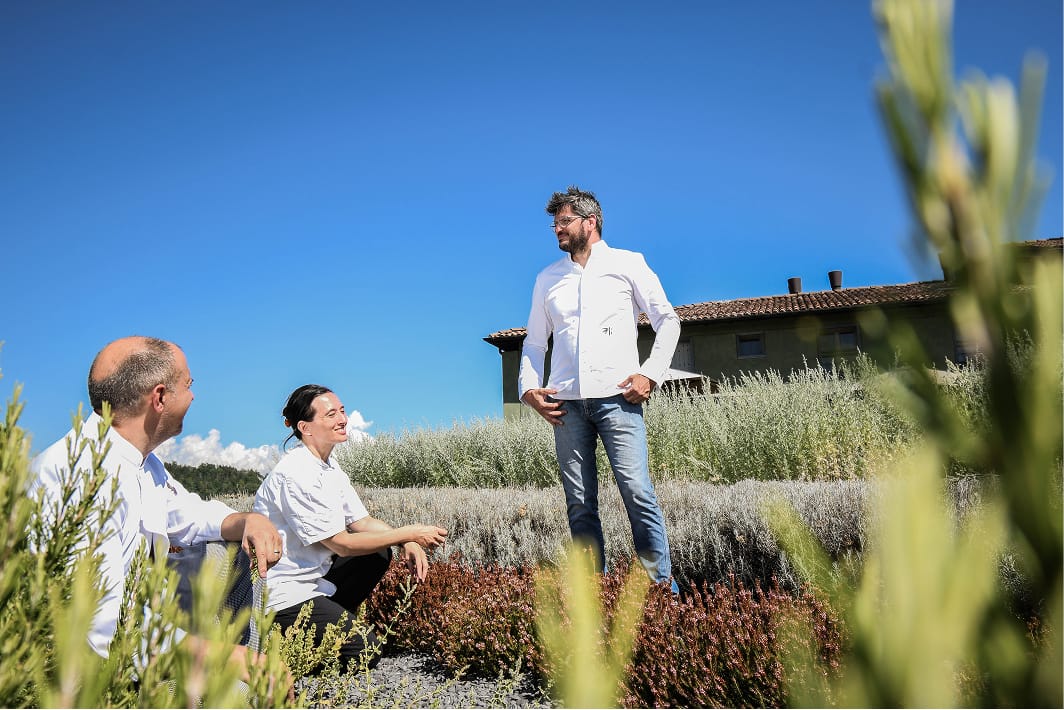
In Lower Piedmont, in the hills of Gavi, around an hour from Milan and less than an hour from Genoa, the estate unfolds through vineyards, meadows, woods, lakes, kitchen gardens, grazing Fassona cattle and long internal paths where the landscape feels carefully protected rather than arranged for effect. At first glance, it has the softness of the Italian countryside. After a few hours, it becomes clear that this is not countryside used as decoration. It is land treated as a responsibility.
There is an Italian word that explains La Raia more precisely than “hotel”: tenuta. It means an estate, but in rural Italy the word carries a wider meaning. A tenuta is land held with continuity, where agriculture, family history, architecture, food and hospitality belong to the same order. La Raia is exactly that. Not a retreat placed among vineyards, but a living agricultural estate where guests are invited into an ecosystem already in motion.
The estate is run by the Rossi Cairo family and has been shaped over more than two decades by biodynamic agriculture, biodiversity and respect for the territory. The Italian word territorio is useful here because it means more than geography. It includes soil, climate, work, memory, local knowledge and the people who keep a place alive. At La Raia, this idea is visible everywhere: in the vines, in the garden, in the cellar, in the restaurant, in the art projects and in the quiet discipline with which the land is maintained.
Carlo Petrini, the Piedmont-born founder of Slow Food, once wrote: “I believe that he who sows utopia will reap reality.” At La Raia, the sentence feels less like an aphorism than a working principle. The idea that wine, food, hospitality, art and biodiversity could exist inside one regenerative estate may sound idealistic on paper. Here, it has been cultivated into daily practice.
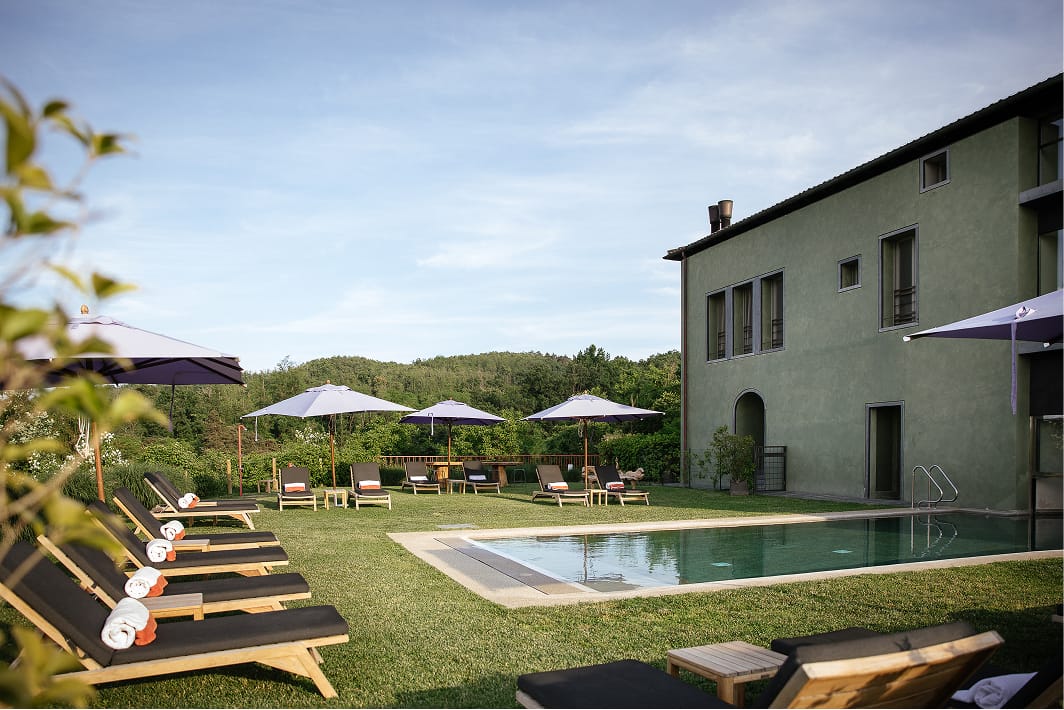
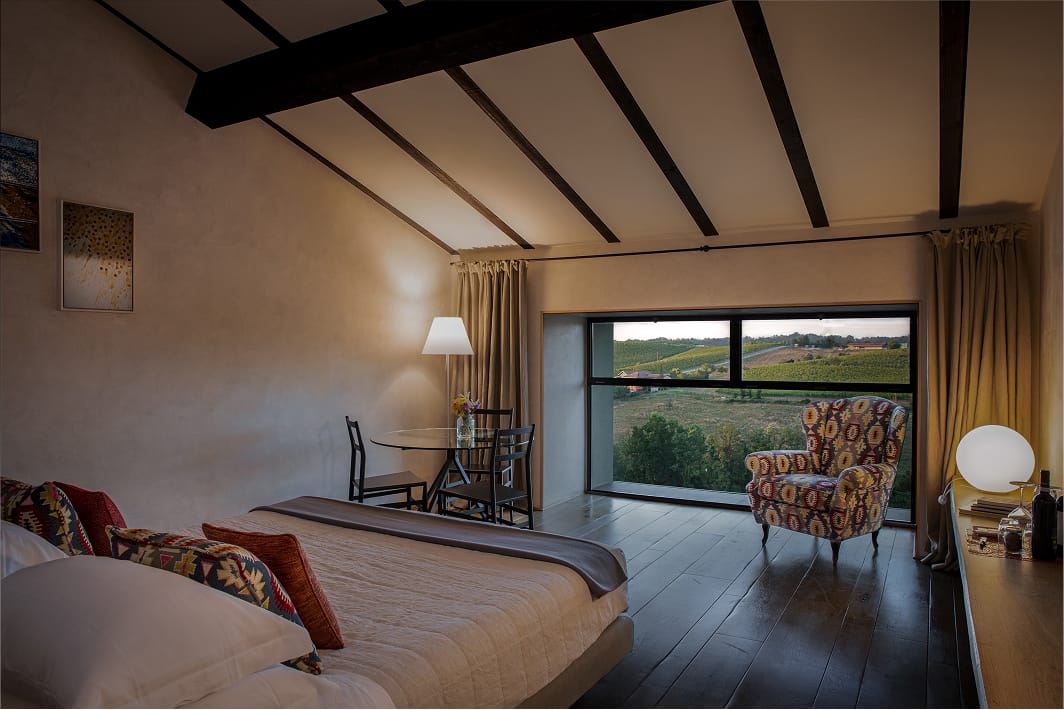
Locanda La Raia, the estate’s original relais, opened in 2017 in a restored post station. With only twelve rooms and suites, it feels intimate from the first moment, closer to a private country house than to a conventional hotel. What struck me most during my stay was space. Not theatrical space, not designed emptiness, but the kind that lets the eye travel without interruption. The hills are wide, the vineyards breathe, and silence seems to have weight.
It reminded me of the old Italian idea of villeggiatura: a seasonal stay in the countryside, not simply as leisure, but as a way of living closer to light, weather, food and rhythm. At La Raia, that rhythm is never imposed. It arrives through small adjustments: a slower breakfast, a longer walk, an unplanned pause by the vines, an evening glass of Gavi before dinner.
The design follows the same logic. Studio Deamicisarchitetti restored rather than replaced. Inside, antique Piedmontese furniture sits beside contemporary works, family pieces and artworks connected to the estate’s cultural world. Nothing feels overstyled. Rooms have character without noise: an old wardrobe, a carefully chosen lamp, a textile, a painting, a desk placed where the view matters. The attention to detail is unmistakably Italian, but never demonstrative. It is quiet, precise and personal.
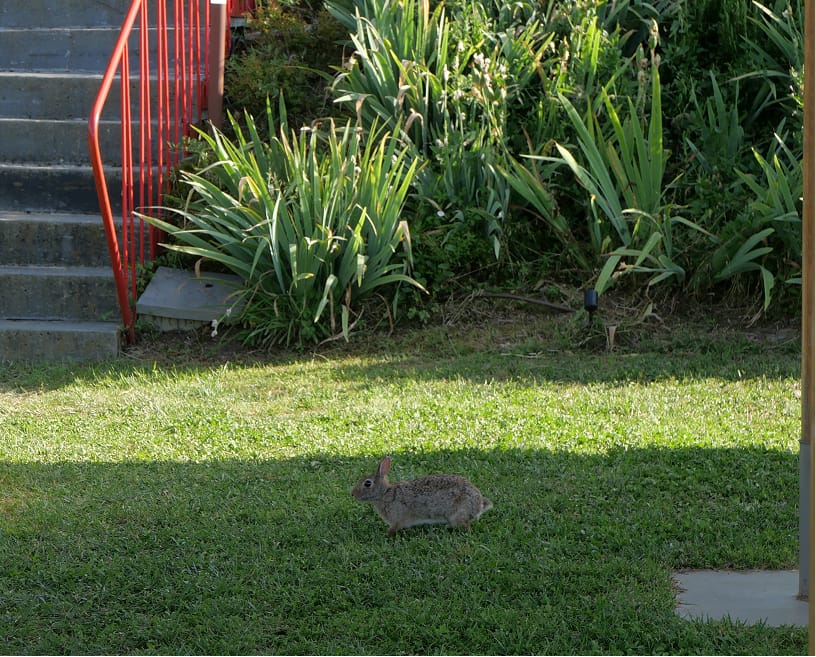
Outside, nature becomes part of the service.
One morning, walking through the estate, I noticed wild rabbits moving through the grass. They appeared without hesitation, as if the land belonged equally to them. That small detail stayed with me. In a place like La Raia, even the presence of animals feels like a form of truth. Rabbits, hares, deer, birds, bees, grazing cattle and fireflies in summer are not background poetry. They are signs that the ecosystem is functioning.
The Italians use the word cura for care, but also for attention, responsibility and almost tender discipline. It may be the most accurate word for what La Raia does with its land. The vineyards are cultivated biodynamically. The woods are left to breathe. The cattle graze. Pollinators are protected. Wildlife crosses the estate freely. The guest is not placed at the centre of the world. The land is.
This changes the meaning of comfort. One begins to understand that we are guests not only of a hotel, but of nature itself. And when nature feeds us, shelters us and gives us beauty, care becomes not an abstract value, but a duty.
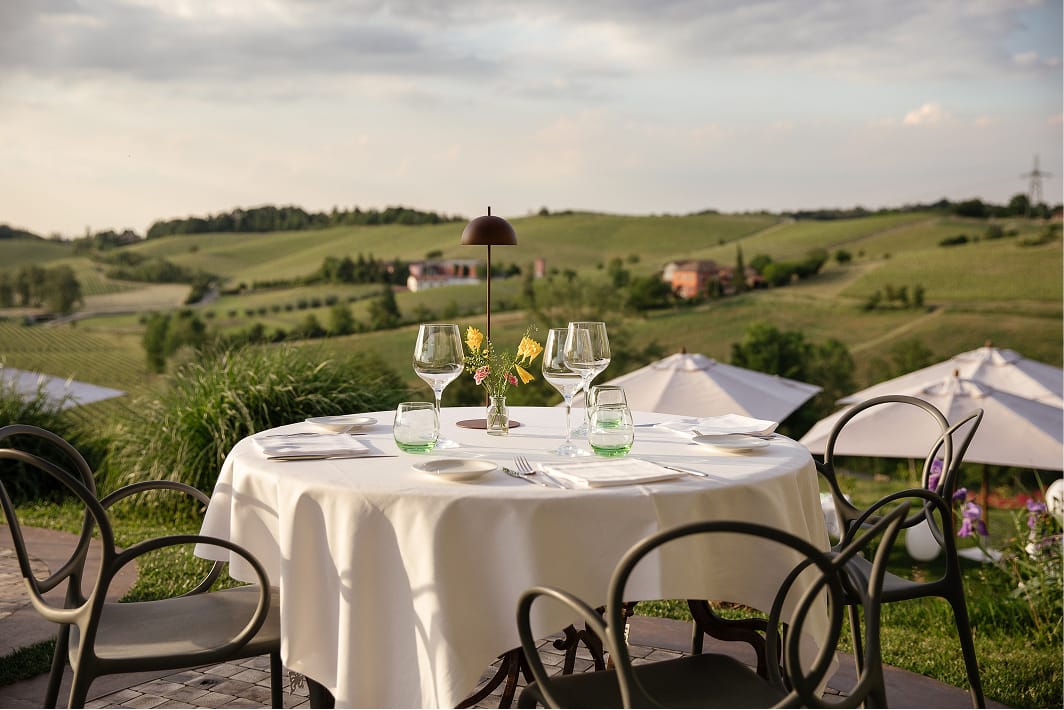
This is why the restaurant matters so much.
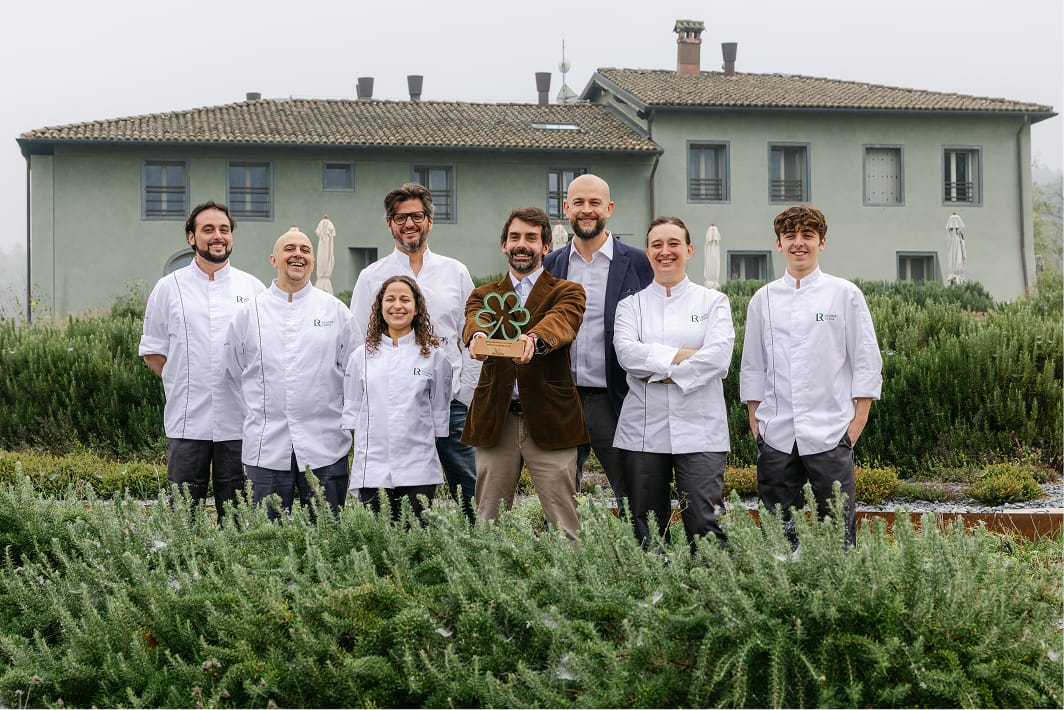
Locanda La Raia’s restaurant received the Michelin Green Star in 2025, a recognition that feels aligned with the estate rather than added to it. The award is linked to environmental standards, responsible sourcing, waste reduction, in-house production and attention to the wider ecosystem of hospitality. At La Raia, these principles are not separated from the dining room. They begin in the soil.
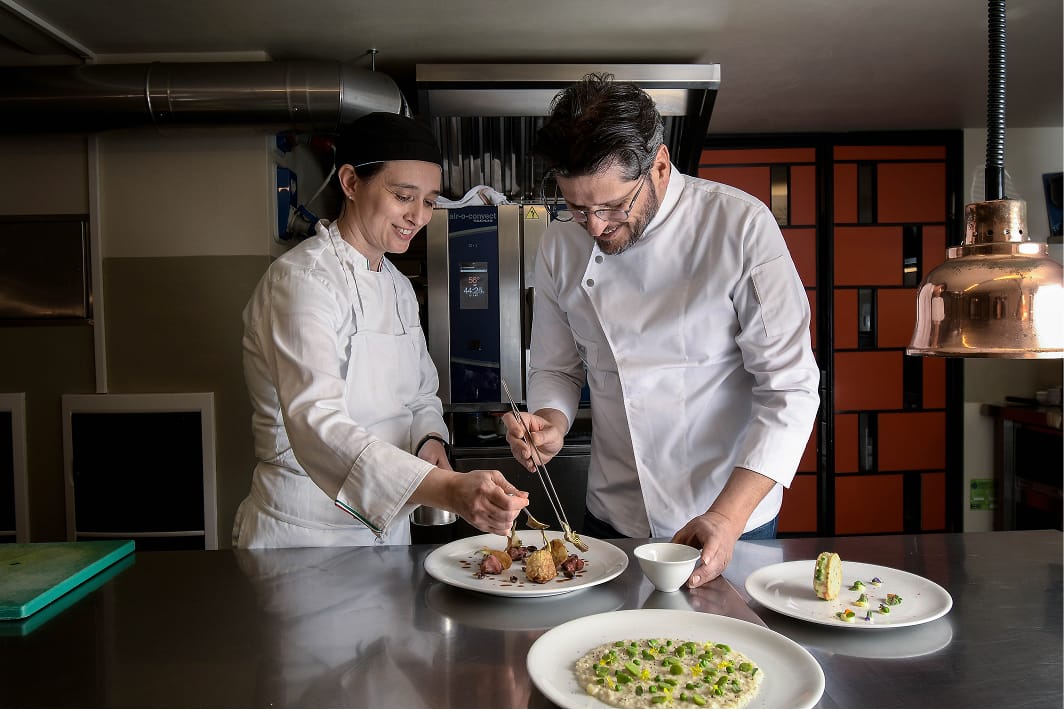
Chef Tommaso Arrigoni has signed the menus at Locanda La Raia since 2019. His cuisine is based on seasonality and on the traditions of Gavi, a territory positioned between Piedmont and Liguria. This geographical crossing gives the restaurant its particular identity: the depth and structure of Piedmontese cooking, with the brightness and coastal memory of Liguria nearby.
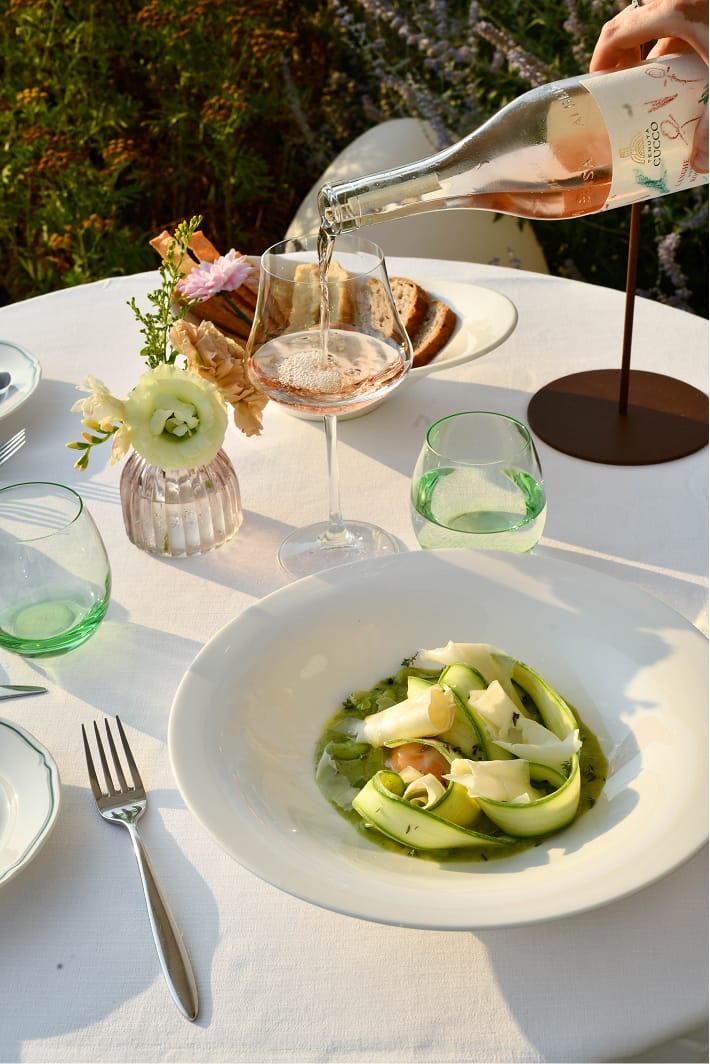
The kitchen works with products from the biodynamic farm and local producers: ancient cereals such as monococco spelt, vegetables from the organic garden, herbs, fruit, eggs, estate honey and Fassona beef raised on pasture. Local cheeses and cured meats come from nearby producers, including Slow Food Presidia. Dishes may include ravioli del plin, risotto with herbs from the garden, battuta di Fassona al coltello, veal cooked to a pale pink centre, or baccalà mantecato interpreted through the language of the region.
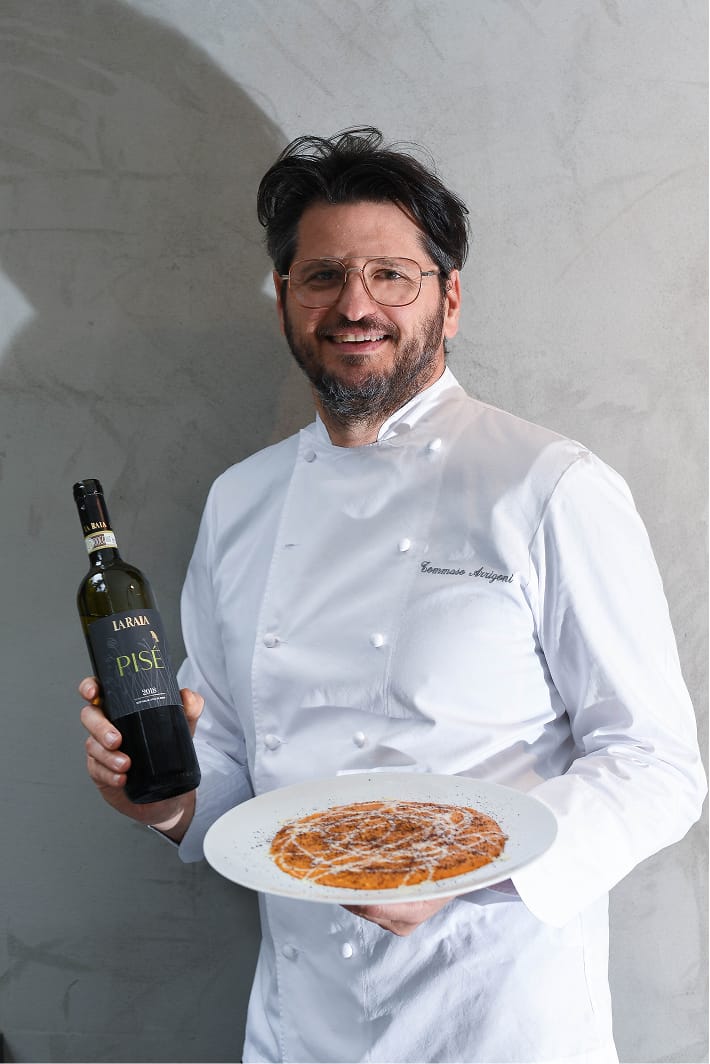
Dinner at La Raia was one of the strongest memories of my stay. Not only because the food was excellent, but because it felt connected to everything outside the dining room. The fields, the bees, the cattle, the vineyards, the garden. The meal did not begin in the kitchen. It began in the land.
There is another Slow Food phrase that could sit naturally above the table here: buono, pulito e giusto — good, clean and fair. At La Raia, this is not a slogan. It becomes visible in the way ingredients are selected, in the limited distance between production and plate, and in the confidence of dishes that do not need to announce their virtue.
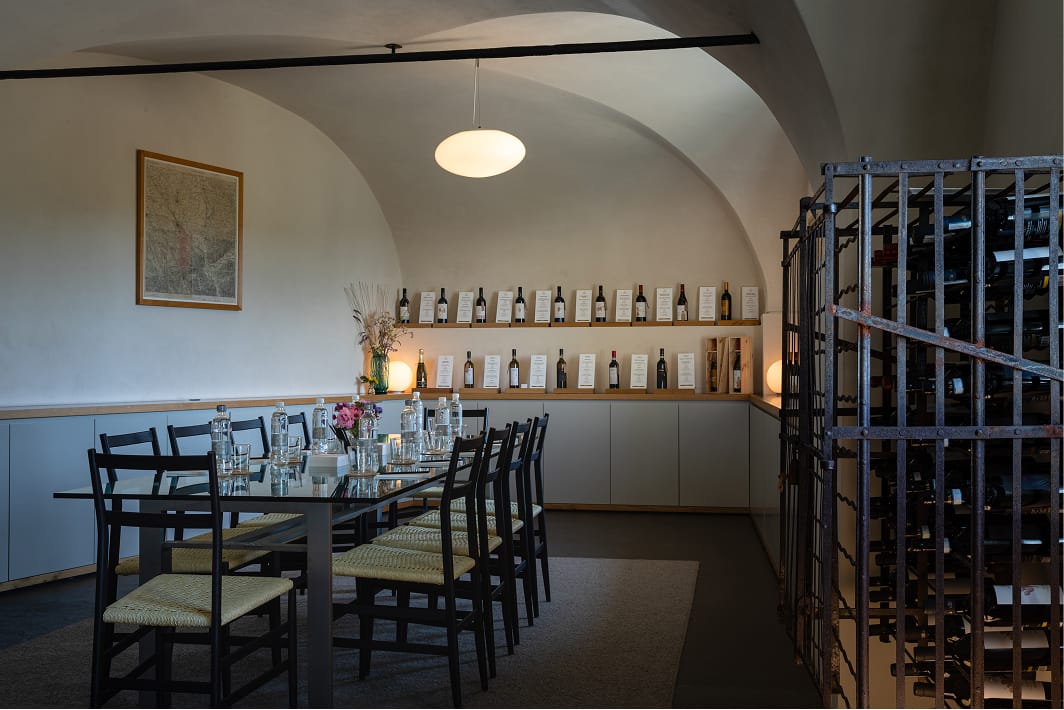
The wine deepens that understanding.
La Raia produces Gavi DOCG from Cortese grapes, including Gavi, Gavi Riserva and Gavi Pisé, the estate’s cru. It also produces Piemonte Barbera DOC and Pinot Nero. Through the Rossi Cairo family’s Tenuta Cucco in Serralunga d’Alba, the wine story extends into the Langhe with organic Barolo and Nebbiolo. This creates a rare line of conversation between Gavi and Barolo, between white and red, between the freshness of Cortese and the depth of Nebbiolo.
The “Dal Gavi alle Langhe” tasting menu follows this route through wine, connecting La Raia and Tenuta Cucco through the same family vision. A tasting here is not a technical exercise alone. It is a way to understand why biodynamic farming matters. Wine is presented as the result of soil, weather, insects, patience and restraint. The cellar comes later. The vineyard speaks first.
La Raia’s cultural identity is equally important.
Fondazione La Raia – arte cultura territorio was established in 2013 to promote reflection on landscape through art, culture, education and research. Its work is not decorative. It studies how contemporary art can respond to agriculture, architecture and place. Across the estate, eleven site-specific works commissioned from international artists are installed among vineyards, the winery and other buildings. A three-kilometre trail connects Locanda La Raia to Il Borgo, allowing guests to read the estate through its natural and artistic layers.
This approach continues beyond Gavi. In Serralunga d’Alba, where the Rossi Cairo family also manages Tenuta Cucco, Fondazione La Raia has presented MOODCLOCK, a site-specific installation by Riccardo Previdi, curated by Ilaria Bonacossa. Installed on the 17th-century bell tower of the Church of San Sebastiano nel Borgo, the work uses coloured wooden panels inspired by emotional faces and the language of contemporary symbols. It reinterprets the historical role of the bell tower and sundial, replacing the measurement of time with a reflection on emotional rhythm.
It is a sharp, unexpected gesture in a historic village, but it is consistent with La Raia’s way of thinking. The past is not frozen. The landscape is not treated as a museum. Art becomes another way of paying attention.
For 2026, Borgo de La Raia adds a new layer to the hospitality project. The restored rural hamlet introduces a more private, residential mode of staying on the estate, with houses designed for families, longer visits, weddings and private gatherings. It feels like a natural extension of the Locanda: more independence, more privacy, but still connected to the same agricultural and cultural rhythm.
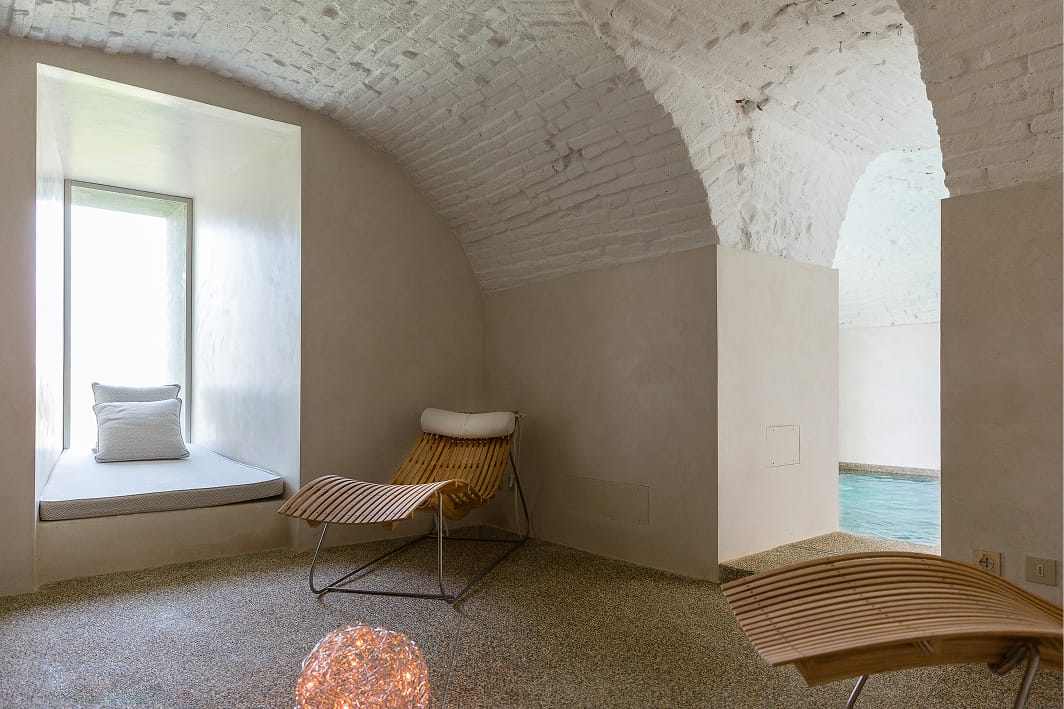
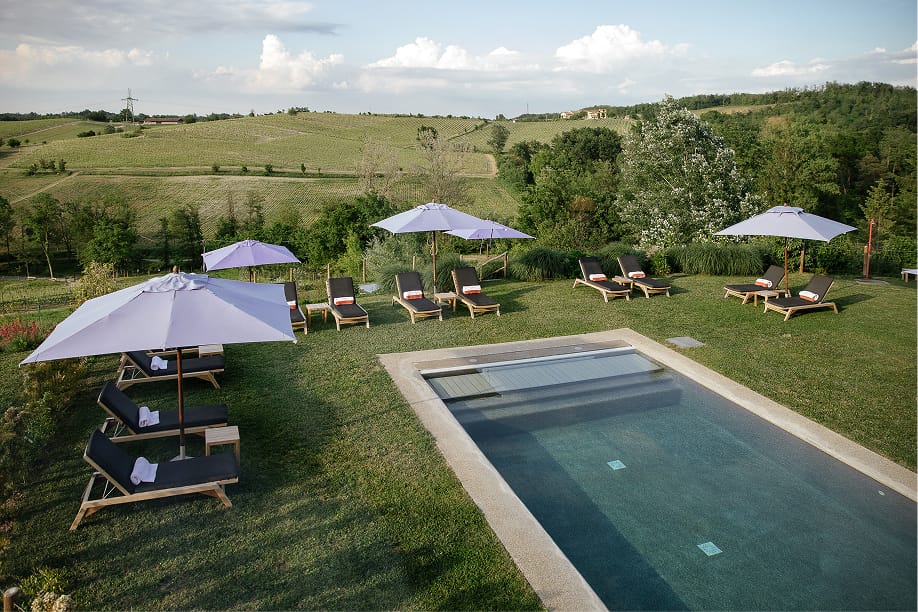
Wellness at La Raia remains discreet. There is an indoor heated pool, outdoor pool, sauna, hammam, Himalayan salt wall, gym, tennis court and nature fitness trail. Yet the deepest sense of wellbeing comes from less visible elements: walking between vines, breathing after rain, watching the light change over the hills, sleeping after a dinner that feels both generous and clean.
La Raia is not for travellers seeking spectacle. It is for those who want to understand how a place is held together. Wine, food, art, animals, architecture and service all belong to the same sentence.
By the time I left, I understood its quiet lesson. Luxury here is not measured by excess. It is measured by connection, by restraint, by cura. La Raia does not speak loudly about sustainability. It lets the guest see it, taste it, walk through it and, if paying attention, feel responsible for it.


