Blue Zones: What the World’s Longevity Regions Really Teach Us
– 8 min read


In the age of NAD+ infusions, biological-age tests, cryotherapy and personalised longevity programmes, one of the world’s most influential longevity concepts offers a far less technological answer.
People who live longer than average do not necessarily visit specialist clinics, take dozens of supplements or continuously monitor their health data. In many cases, they simply live in environments that naturally encourage them to move, eat simple food, maintain strong relationships and remain socially engaged well into old age.
This idea was popularised by the American journalist and explorer Dan Buettner through the Blue Zones project. The term refers to several regions where researchers historically observed unusually high concentrations of centenarians.
However, Blue Zones should not be treated as a proven formula or evidence that one specific food, ritual or lifestyle intervention can guarantee a lifespan of 100 years.
They are better understood as large-scale observations of communities where health was supported not by individual treatments, but by the entire structure of daily life.

The term did not originate as a marketing slogan or the name of a diet.
In the late 1990s and early 2000s, demographer Michel Poulain and physician-researcher Gianni Pes were studying the distribution of centenarians in the mountainous areas of Sardinia.
They marked the villages with the highest concentration of people aged 100 and over on a map using blue ink. This area became known as the first Blue Zone.
Dan Buettner later worked with National Geographic and a group of demographers, physicians and anthropologists to investigate other regions associated with exceptional longevity.
Five locations became central to the popular Blue Zones model:
Buettner did not independently discover all these populations. His primary contribution was to combine existing demographic research with field observations and transform it into a concept that could be understood by a global audience.
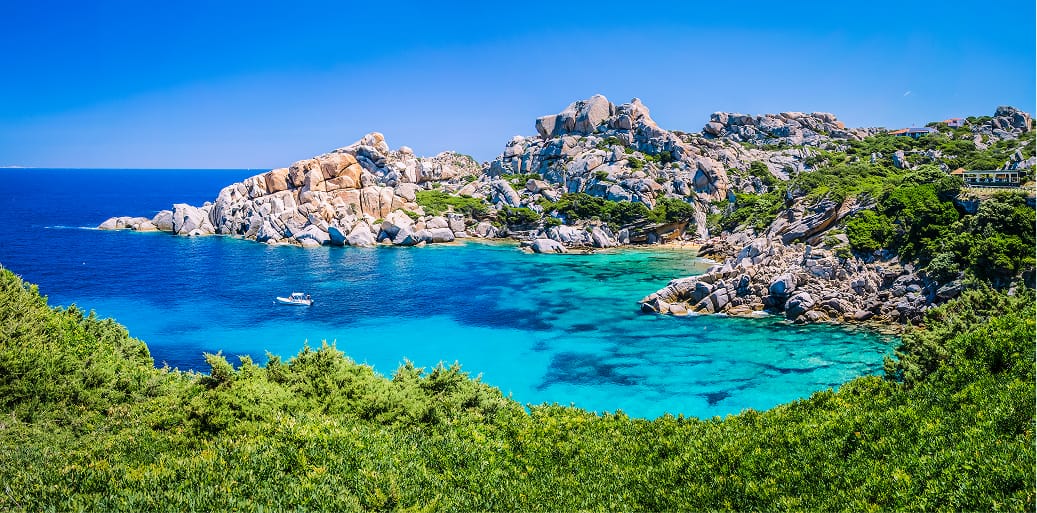
The first identified Blue Zone is located not on Sardinia’s fashionable coastline, but in the mountainous villages of the central and eastern part of the island.
The region attracted particular attention because of the unusually high longevity of men.
In most countries, women are significantly more likely than men to reach the age of 100. In some Sardinian villages, however, the difference between the number of male and female centenarians was considerably smaller.
Researchers have not attributed this to one “secret” ingredient, but to a combination of possible factors:
Sardinian shepherds often walked long distances across mountainous terrain without considering it exercise.
Movement was not a separate task added to the day. It was a natural part of life.
This observation became the basis of one of Buettner’s central principles: long-lived populations may not follow intensive fitness programmes, but they rarely remain inactive for most of the day.
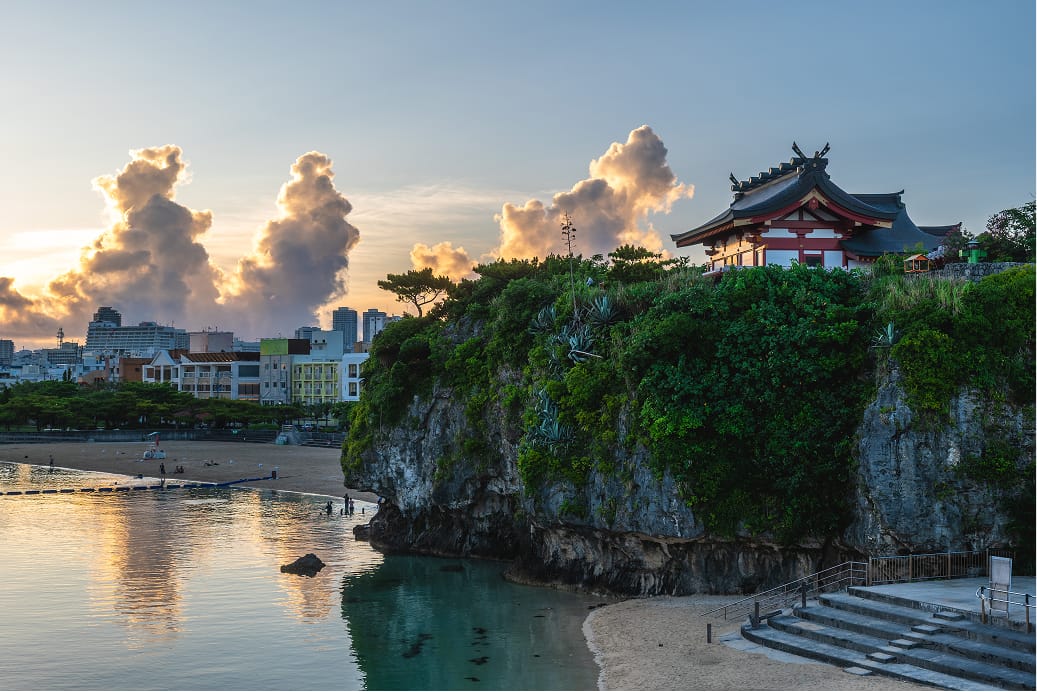
Okinawa was long known for its high concentration of centenarians, particularly among women.
The Okinawa Centenarian Study examined more than 1,000 centenarians and documented the historically exceptional longevity of the islands’ older generations.
The traditional lifestyle of Okinawan elders included:
However, Okinawa also demonstrates why Blue Zone status should not be considered permanent.
After the Second World War, the local diet and lifestyle began to change. Consumption of processed foods, meat and Western-style fast food increased, while physical activity decreased.
Among younger generations, Okinawa’s previous longevity advantage has substantially weakened.
This is one of the most important lessons of the Blue Zones concept: longevity does not belong to a place. It can disappear when the surrounding environment and culture change.

The Nicoya Peninsula in Costa Rica became known for the unusually long lives of men born in the region during the early twentieth century.
Research involving more than 16,000 older Costa Ricans found that Nicoyan men historically experienced lower mortality in later life than men in other parts of the country.
Possible explanations included:
More recent data, however, suggest that Nicoya’s longevity advantage is gradually disappearing.
Men born in the early twentieth century showed significantly lower mortality, but the advantage weakened among later generations. In some population groups, it disappeared almost completely.
The geographical area associated with exceptional longevity has also become considerably smaller.
Like Okinawa, Nicoya demonstrates that a region can lose its longevity advantage within one or two generations as food systems, employment, transportation and family structures change.
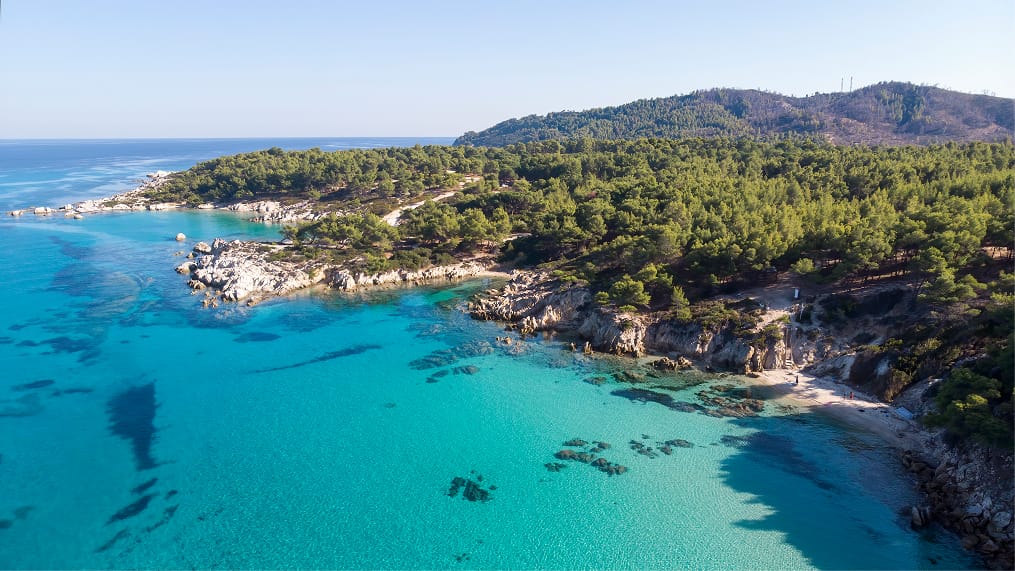
The Greek island of Ikaria is often described as a place where people “forget to die.” The scientific picture is, naturally, more complex.
Studies of older residents have found a high prevalence of Mediterranean-style eating, daily movement, social interaction, daytime rest and continued participation in family and community life.
The importance appears to lie not in one individual habit, but in the combination of several factors.
Older people do not necessarily become socially invisible after retirement. They continue helping their families, caring for gardens, meeting neighbours and participating in community events.
Ageing does not automatically lead to social isolation.
At the same time, the scientific evidence regarding Ikaria is less conclusive than the romantic stories surrounding the island.
Many studies examine the current lifestyles of people who have already reached old age. They cannot definitively prove that these habits caused their longevity.

Loma Linda differs from the other Blue Zones.
It is not an isolated island or remote mountain region, but a Californian community with a large population of Seventh-day Adventists.
Many Adventists:
The religious community also provides stable social relationships, shared values and a strong sense of belonging.
The Adventist Health Studies, which involved tens of thousands of participants, have linked certain vegetarian dietary patterns with lower risks of overall and cardiovascular mortality.
However, Loma Linda has not undergone the same type of geographical and demographic validation as some of the other Blue Zones.
It may be more accurate to describe it as a population in which several protective behaviours are unusually common, rather than as a territory with a mysterious longevity effect.
Based on observations from these regions, Buettner created a framework known as the Power 9:
These principles should not be presented as the results of one controlled scientific experiment.
They are a synthesis of observations from several different cultures.
Some of the principles are strongly aligned with independent scientific evidence.
Regular physical activity is associated with lower mortality. Diets based predominantly on high-quality plant foods are linked to better cardiometabolic outcomes. Social isolation, by contrast, is associated with a higher risk of premature death.
Other elements require more caution.
The traditional Blue Zones suggestion of drinking wine regularly is no longer consistent with the most conservative approach to prevention.
Current evidence indicates that people should not begin drinking alcohol for health reasons. Even relatively low levels of consumption may increase the risk of certain diseases, including several forms of cancer.
The greatest value of the Blue Zones concept is not the promise of living to 100.
It is the demonstration of how strongly the environment can influence health.
Most people try to improve their health through willpower. They force themselves to exercise, avoid unhealthy food, socialise more and go to bed earlier.
In traditional longevity communities, many of these behaviours happened automatically.
People walked because walking was necessary.
They ate legumes, seasonal vegetables and whole grains because those foods were available.
They maintained close family relationships because several generations often lived near one another.
They continued moving after retirement because they remained involved in the home, garden, farm or wider community.
Buettner describes this as creating the right environment: the healthier option should not require heroic effort. It should be the easiest and most natural choice.
In recent years, the concept has faced significant criticism.
Demographer Saul Justin Newman has argued that some reports of extreme longevity may be influenced by errors in documentation, incomplete birth and death records or, in some cases, pension fraud.
Some of his most widely discussed claims regarding Blue Zones were initially distributed as preprints rather than fully peer-reviewed studies.
Researchers associated with Blue Zone populations have responded that the ages of centenarians in the principal regions were validated using multiple independent documents and accepted demographic methods.
The most balanced interpretation lies between these positions.
Historical evidence supports the existence of populations with unusually high longevity in Sardinia, Okinawa and Nicoya.
The evidence for some other regions is less uniform.
It is also impossible to conclude that longevity in these populations was caused by one specific food, one daily ritual or a single lifestyle principle.
Blue Zones should therefore be treated as natural observational laboratories rather than completed scientific experiments.
It may be impossible to replicate the life of a Sardinian shepherd or a traditional Okinawan family.
However, it is possible to adapt certain principles to modern life.
People do not need to move to an island. They need to redesign their daily environment.
This may include:
None of these steps can guarantee a lifespan of 100 years.
Genetics, access to medical care, education, economic circumstances, environmental conditions and chance also influence longevity.
Luxury hotels and wellness resorts increasingly create programmes inspired by Sardinia, Ikaria and Okinawa.
Guests may be offered Mediterranean food, guided walks, meetings with local residents, breathing practices, sleep rituals and digital detox programmes.
These experiences may help people rest and explore healthier routines.
However, a four-day retreat cannot reproduce decades of natural movement, stable social relationships and traditional eating patterns.
The real lesson of the Blue Zones is not to visit a longevity destination for a few days.
It is to bring a different structure of life back home.
Blue Zones offer one of the strongest counterarguments to the modern anti-ageing industry.
Longevity does not necessarily begin with an expensive infusion, a genetic test or a new medical device.
It begins with a place where walking is convenient, food is minimally processed, relationships are meaningful and people have a reason to remain engaged with life.
Perhaps the greatest luxury of the future will not be the ability to purchase another treatment.
It will be the ability to live in an environment that quietly supports health every day.