An Exclusive Conversation with Executive Coach Elena Vorobyeva on Identity, Renunciation, and Growth
– 7 min read

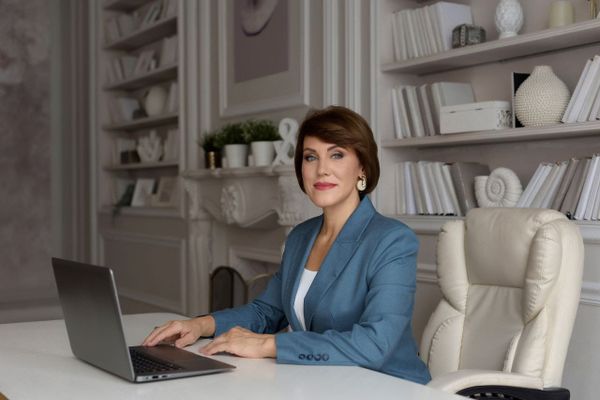
Executive Coach MCC ICF, founder of MasterCoachingClub,
winner of the All-Russian TOP-3 Coaches for First Persons Award
Coaching has long entered the business lexicon, and has simultaneously been devalued. The word has become a screen for too many different things: from motivational slogans and "everyday checklists" to subtle work with thinking, identity, and a person's inner architecture.
Elena Vorobyeva, an Executive Coach at the MCC ICF level (the highest international qualification in the profession), hoмlds a Master's degree in psychology, an MBA, is a mentor to executives and a lecturer, and the founder of the MasterCoachingClub Professional Coaches Club and the International Academy of Business and Executive Coaching. Her clients are owners, CEOs, first persons, and senior executives.
Elena's own path is a story in itself. International law, an MBA, fifteen years in the oil and gas industry, and then a deliberate turn: into psychology, coaching, and the creation of original programs at the intersection of neuroscience, systems thinking, and depth psychology. In this conversation, we are not discussing "success techniques." We are talking about what happens to a person at the peak of responsibility, and why genuine growth begins where familiar roles and beliefs end.
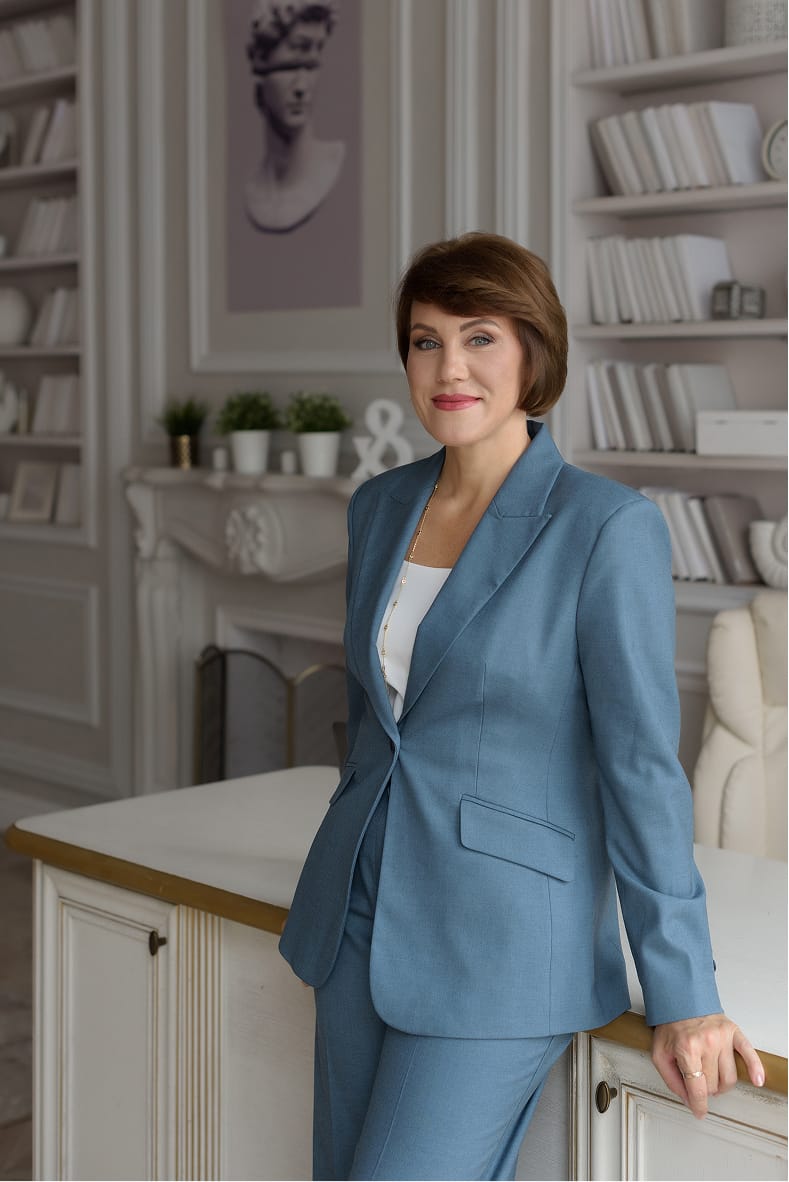
IPremium: International law, an MBA, fifteen years in oil and gas, and then a turn toward coaching and psychology. What from your first career did you not simply bring with you, but without which your approach today would be impossible?
E.V. I think it is respect for systemic logic and, importantly, personal management experience. Fifteen years in oil and gas is not just an industry; it is a school: I went the whole way from specialist to executive, I was responsible for people, processes, budgets, and results. International law, the MBA, and the management experience itself all taught me a simple thing: words carry weight, and an ill-considered decision costs a great deal. I came into coaching not out of disappointment with business, but out of interest in what lies beyond processes: human choice. And it is precisely my managerial experience that gives me a unique perspective: I know from the inside what it means to make decisions under uncertainty, to take a hit, to bear responsibility for a team, and at the same time to preserve a human face. This is not merely theoretical knowledge; it is lived reality. Without it, coaching with first persons often remains a beautiful conversation, but one detached from reality. My task is to combine the discipline of fact, managerial experience, and depth of contact with the person.
IPremium: An executive comes with a concrete task: strategy, team, growth. How, in coaching, do you bring them to a different request?
E.V. I should probably clarify right away what I mean by a "different request." It is not about replacing a business task with a psychological problem. It is about seeing, behind the external formulation ("how to build a strategy," "how to establish interaction within the top team"), the inner tension that fuels this task. Because very often a person is solving an external task while inside them an entirely different, unspoken question is at work, for example: "Do I even have the right to this growth?", "What will happen to my identity if I stop being the rescuer?", "Who will I become without this struggle?" And I approach this with great care. I never insist that a task is "the wrong one." Instead, I propose that we explore: what exactly in this task generates tension? I do not "lead them out"; I invite them to look a little wider. Usually a deep question is enough, for example: "If you solved this task, what would change in your state, in your sense of yourself?" And the person, on their own, through a pause, through a metaphor, through an unexpected detail, begins to move to a different level. My role is to create a safe space where one can hear oneself differently and ask a unique question that helps them see the situation from another perspective and look at themselves anew.

IPremium: First persons are professionally skilled at self-control. This is at once their strength and their trap. What inner contradictions do you uncover in such people?
E.V. I would put it this way: they often live with a tension between two natural human needs, the need for safety and the need for development. Self-control gives a sense that the world is manageable, but at the same time it can limit access to one's own vulnerability. I know this well not only from clients, but from myself. In a leadership position, you cannot allow yourself to "fall apart," because behind you stand people who watch and read every movement of yours. You learn to be a fortress. And this fortress becomes a prison when the time comes to change yourself. The second contradiction is between the role of the "reliable rear" for the company and one's own resource. A person becomes accustomed to being a support for everyone, but rarely asks the question: who is a support for them? My own experience suggests that a leader, in this sense, often remains alone. And to admit this fatigue is the most difficult thing, because it goes against the image of the "strong executive." My task is not to "cure" this contradiction, but to help see it and accept it as part of one's reality.
IPremium: Today people speak a great deal about scale, but almost never about its psychological cost. In your view, what does a person have to let go of in order to move to the next level, not in business, but inside themselves?
E.V. Scale presupposes loneliness in decision-making and reliance on oneself. Moreover, the higher a person rises, the less right they have to public weakness. At the same time, responsibility only grows. Therefore, on an inner level, one has to part with the illusion that you can be an effective leader and remain convenient for everyone, and also with the need for total control, because at a certain level it becomes resource-draining. And when the external (a result or yet another summit) ceases to nourish, the person is left with the question: "Who am I without all this?" The answer to it is the next level inside oneself. On the business level, this is the transition from strategy to meta-strategy, from managing actions to managing meanings. On the human level, it is the manifestation of personal maturity and of ethics as an inner compass and wisdom.
IPremium: Your mastermind is called "Place of Power. Stepping into Scale." What does "Place of Power" mean?
E.V. In ordinary life, our wings are often clipped when we are told that a leader has no right to weakness, that one must be strong, keep face, not show doubts. And we get used to believing this. "Place of Power" is a space where a leader can allow themselves to say: "yes, I am afraid," "yes, I am tired," "yes, I do not know what to do," to show their vulnerability and humanity, and this will not destroy their identity. Therein lies the paradox: it is precisely from the acknowledgment of one's vulnerability that a resilience is born which will not break under external circumstances.
And when such an inner support appears, a different movement also opens up, no longer outward, but into the depths of oneself. "Stepping into scale," in this case, is the expansion of the zone of inner resilience and freedom, the unfolding of inner potential, of those qualities that had not previously been manifested, a place for "carrying" a new project or idea. And as a result of this, the external scale changes: of projects, leadership, career, influence.
IPremium: What are executives most afraid of discovering in themselves, and how does coaching help here?
E.V. I think one of the most frequent, though rarely voiced, fears is: "What if I am here by accident? What if my success is simply luck?" I remember this feeling from my own managerial past: when you are at the top, it seems to you that at any moment people may come and say: "Actually, you are not up to it." This is impostor syndrome, and, contrary to the myths, it strikes even very strong and successful leaders. Or the opposite fear: "What if I no longer want what I have been striving toward for so long?" My managerial experience taught me to understand that we often move by inertia, confusing our own goals with imposed ones. And to stop in order to ask oneself "Is this really mine?" requires no less courage than launching a new project. Coaching does not remove these fears, that would be dishonest. But it creates a space where they can be spoken aloud, without fear of judgment or loss of reputation. When a fear is named and examined, it often ceases to be all-powerful. A person discovers that they can be afraid and at the same time act, choose, change course.
IPremium: It is said that growth requires renunciation. Why does letting go of an old way of thinking and living turn out to be harder than mastering a new one?
E.V. The old way is not merely a habit or a pattern, but a significant part of our identity. Even if it no longer works or brings suffering, it is one's own, familiar, time-tested, and to let it go means to cease being the person one used to be. It is a small inner death. And any death, even a symbolic one, frightens us. Mastering the new is an adventure, but letting go of the old is grieving. And I treat this with great respect. That is precisely why in coaching we do not "break" old patterns, but carefully examine them: what was valuable in them? What were they holding on to? And only after finding the answer does the person, on their own, without violence, make the choice in favor of the new. But a person often does not understand exactly what they need to change. And what is invisible cannot be changed. And in order to see what needs to be changed, one needs another.
Executive & business coach MCC ICF https://t.me/elena_vorobyeva
Academy of Coaching: https://t.me/elvorobyeva