Vincent Cassel: Dark Horse, Screen Legend
– 5 min read

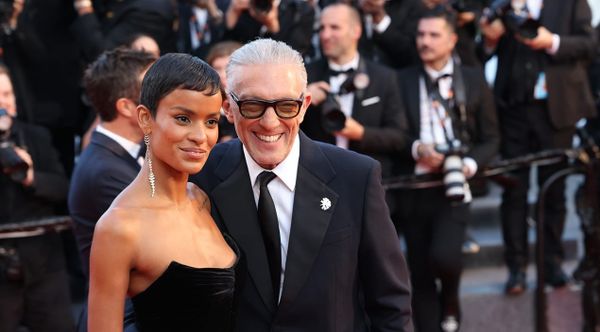
"You don't have to be smart to be an actor. You have to be able to let yourself go." - Vincent Cassel
He was born Vincent Crochon — but the world would come to know him by his father's stage name. The son of beloved French actor Jean-Pierre Cassel and journalist Sabine Lanfranchi, Vincent Cassel entered the world on November 23, 1966, in Paris, into a household where performance was the native language. Growing up alongside his brother Mathias and half-sister Cécile Cassel (who would also become an actress), he seemed destined for the spotlight. Yet the path he carved was entirely his own — rawer, darker, and far more international than anyone might have predicted.
Before he ever stepped in front of a camera, Cassel trained at Annie Fratellini's renowned circus school in Paris. Acrobatics, physical discipline, the art of commanding a room with your body — it was an unusual foundation for an acting career, but it explains something essential about how he moves on screen: with coiled, animal precision. When his parents divorced during his adolescence, he followed his mother to the United States at 18, throwing himself into New York's theatre world. He studied at the Atelier International de Théâtre and the Actor's Institute, absorbing American methods while retaining something irreducibly French.
That transatlantic formation would define him. Cassel never became a Hollywood actor who happened to be French. He became something rarer: a French actor who conquered Hollywood on his own terms.
The breakthrough came in 1995, through a friendship. Director Mathieu Kassovitz cast him in Métisse (1993), and the chemistry between them was immediate. Two years later, that partnership produced La Haine — a ferocious, black-and-white portrait of three young men in the Paris suburbs in the aftermath of a police brutality incident. Cassel's Vinz, a volatile Jewish kid fantasising about revenge, was electric: a live wire of rage, tenderness, and self-destruction. The film caused a sensation at Cannes, and Cassel received a double César nomination — Best Actor and Most Promising Actor — almost simultaneously.
What La Haine announced was not just a new French star, but a new kind of French masculinity on screen: angular, unpredictable, physically intense. The film gave Cassel a platform, and he was smart enough to use it in every direction at once.
The years that followed were a masterclass in range. He played the title villain in Jan Kounen's controversial Dobermann (1997), a flamboyant criminal so charismatic he threatened to overwhelm the film. He appeared in Shekhar Kapur's Elizabeth (1998) and Luc Besson's The Messenger: The Story of Joan of Arc (1999) — early signals that international directors were paying attention.
Then came The Apartement (1996), a stylish Parisian thriller by Gilles Mimouni. The film was significant for reasons beyond the screen: on set, Cassel met a young Italian actress named Monica Bellucci. Within a year, they were together. By 1999, they were married in Monte Carlo.
Together, Cassel and Bellucci became the closest thing cinema had to a mythological couple — both strikingly beautiful, both willing to inhabit extreme material. They appeared together in Dobermann, in Irreversible (Gaspar Noé's harrowing 2002 film), and in multiple other productions. Cassel would later tell the Guardian: "Monica was my first real love."
The Hollywood door opened properly in 2004, when Steven Soderbergh cast him in Ocean's Twelve alongside George Clooney, Brad Pitt, and Julia Roberts. It was a different register — lighter, slicker — but Cassel held his own with ease, his European otherness working as an asset rather than an obstacle.
What separates Cassel from his contemporaries is his appetite for moral complexity. He has made a career of playing men who are brilliant and terrible in equal measure.
His portrayal of Jacques Mesrine across two films — Mesrine: Killer Instinct and Mesrine: Public Enemy No. 1 (both 2008) — is widely considered his finest work. Mesrine, France's most infamous criminal, could have been a caricature. Instead, Cassel gave him paradoxical depth: charismatic, funny, politically aware, and capable of breathtaking violence. The performance earned him a César for Best Actor and confirmed his status as one of Europe's most important screen presences.
Darren Aronofsky's Black Swan (2010) brought him to a new global audience as the manipulative ballet director Thomas Leroy — a role that required him to be simultaneously seductive and sinister. David Cronenberg cast him in Eastern Promises (2007) and A Dangerous Method (2011). Danny Boyle put him in Trance (2013). Paul Greengrass gave him a memorable villain turn in Jason Bourne (2016). By this point, Cassel had accomplished what almost no French actor manages: genuine crossover credibility, without ever abandoning his European identity.
The marriage to Monica Bellucci produced two daughters — Deva, born in September 2004, and Léonie, born in May 2010. But after nearly two decades together, the couple separated in 2013. Bellucci later spoke candidly about the decision, telling Madame Figaro that it was she who initiated the split: "When you leave someone, it doesn't mean you don't love them anymore. It means it's no longer possible to continue."
Two years later, at 49, Cassel met Tina Kunakey — a young French-Basque model thirty years his junior — in Biarritz. Their relationship was officialised at the Victoria's Secret show in 2016, and they married in 2018 in a grand ceremony at the Gaztelur estate in the Basque Country. Their daughter Amazonie was born in 2019. The marriage ended in 2023.
In 2024, Cassel appeared at Paris Fashion Week alongside Narah Baptista, a Brazilian model and former Miss Universe contestant — again, thirty years younger than him. In 2025, the couple welcomed a son, Caetano, Cassel's first boy and fourth child. At 58, he appears to have found a new chapter in Brazil, where he splits his time between Paris and a villa that has become something of a personal sanctuary.
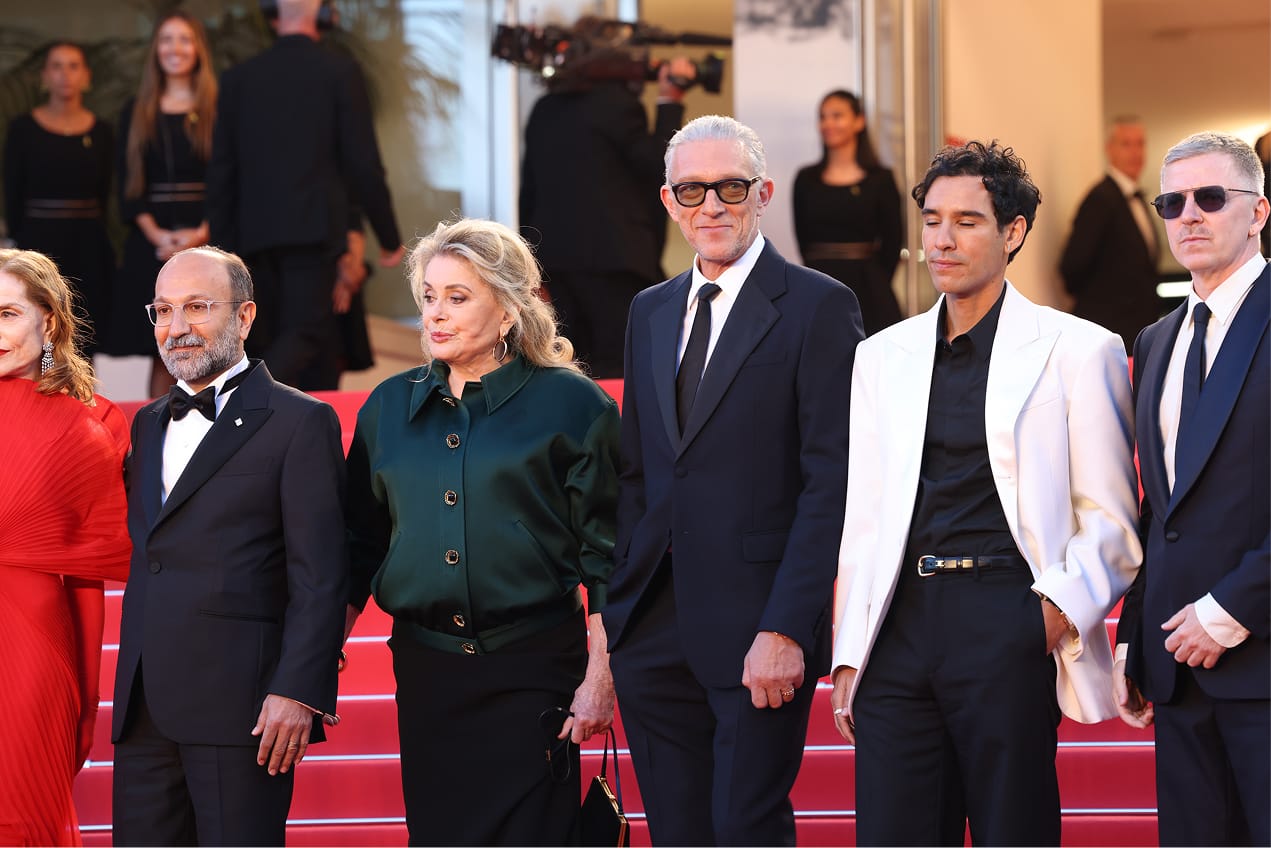
What is striking about Cassel's trajectory is that he has never coasted. In 2025, he returned to Cronenberg for The Shrouds. He appeared in Romain Gavras's Sacrifice (2025) alongside Chris Evans and Salma Hayek, and in Asghar Farhadi's Paralle Tales (2026) with Isabelle Huppert anc Virginie Efira. These are not cameos o paycheques – they are serious filmmak ers making serious films.
He has played circus performers and gangsters, gods and detectives, ballet directors and French Musketeers. He has voiced Shrek in French, produced indie films, and made a short film of his own. He is, by almost any measure, one of the most interesting actors of his generation — not despite his contradictions, but because of them.
The boy who learned to fall gracefully at a Paris circus school never really stopped performing. He just found bigger stages.