Summer Senses Paros: When Luxury Learns to Be Quiet
– 4 min read

"Let Paros go, and those figs, and the life of the sea." Archilochus of Paros, seventh century BC
Almost everyone arrives on Paros from somewhere louder. The crossing takes less than 40 minutes on the fast boat from Mykonos, which is not nearly enough time to put down what you were carrying. You step onto the quay at Parikia still moving at the tempo of the island you left.
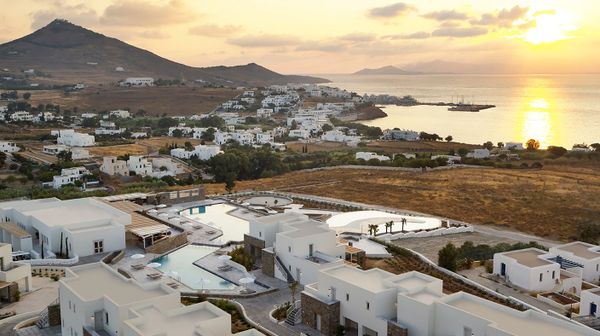
The island's current reputation rests largely on Naoussa, the old fishing port on the north coast that now holds the resortwear boutiques, the jewellers, the marina and the most-discussed restaurant list on Paros. Summer Senses stands on the east coast, above Punda, twenty minutes by car from Naoussa.
Paros has always been an island of two temperaments. For roughly three centuries, from the early 13th century until the Ottoman conquest in 1537, it belonged to the Venetian orbit, governed by Italian families who left behind fortress walls, marble-paved lanes and a lasting appetite for the long, unhurried dinner. Parian marble travelled the other way, north to Venice and its sculptors. The island has been simultaneously worldly and provincial ever since. Naoussa is the worldly half. The east coast is the other one.
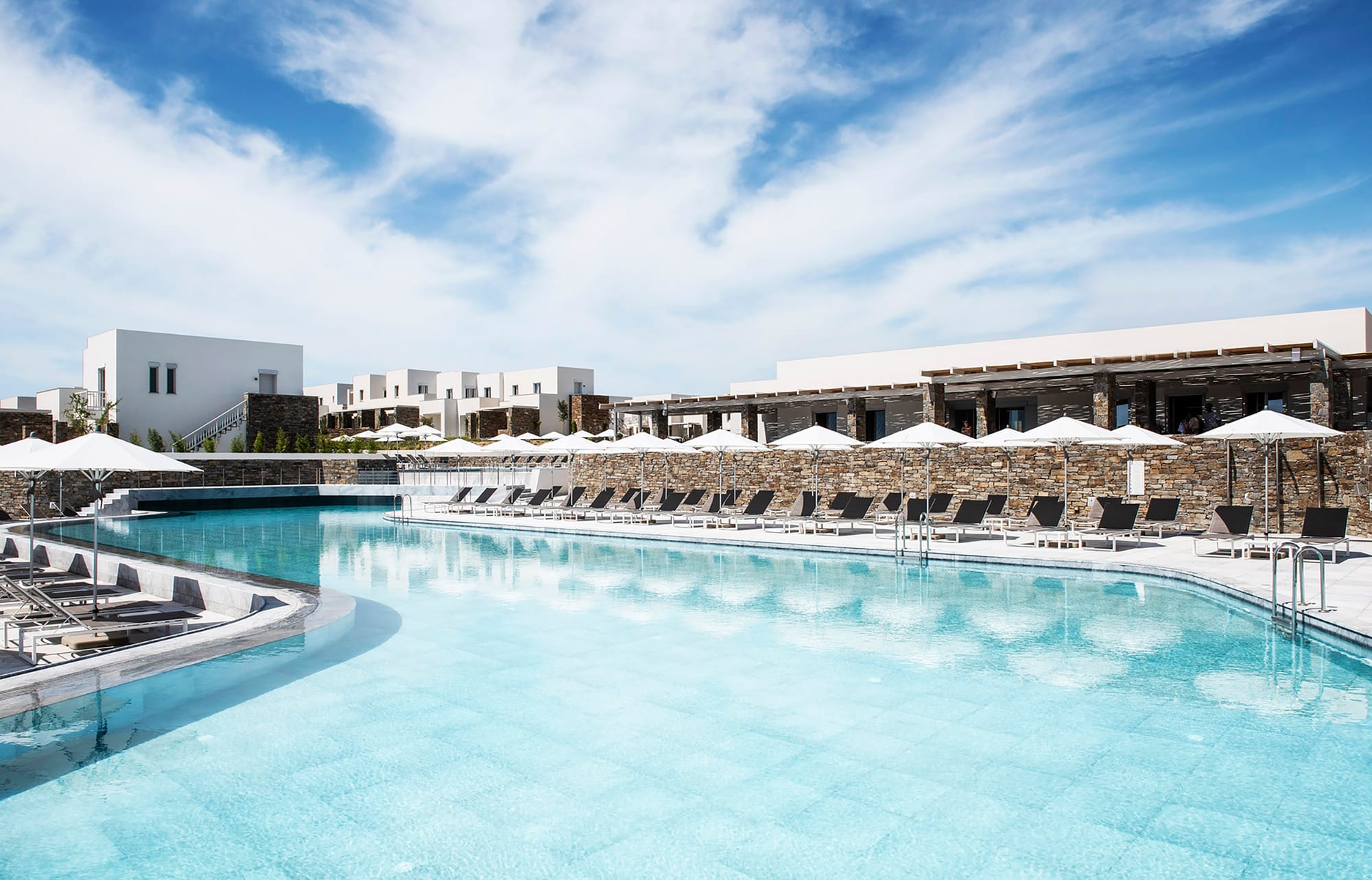
Summer Senses Luxury Resort opened here in 2019 and was conceived, from the drawings onward, as a village rather than a hotel: low whitewashed volumes stepping down a hillside, connected by paths and small courtyards, so that walking from your room to dinner feels less like moving through a building than through a settlement. There are one hundred keys, forty-five rooms and fifty-five suites across twelve categories, and the property closes from November to April, keeping the same season as the island itself. It belongs to Small Luxury Hotels of the World, which in this case describes the scale accurately rather than aspirationally.
What registers first, though, is not the architecture. It is φιλοξενία, the Greek word for hospitality that carries an older obligation inside it, the duty owed to a guest as a matter of honour rather than service standards. Errica Psimopoulou, the general manager, appears at breakfast most mornings, at the tables, unhurried, and this reads not as choreography but as the ordinary behaviour of someone who lives where she works. By the second day the staff knew how I take coffee. By the fourth they knew when not to approach.
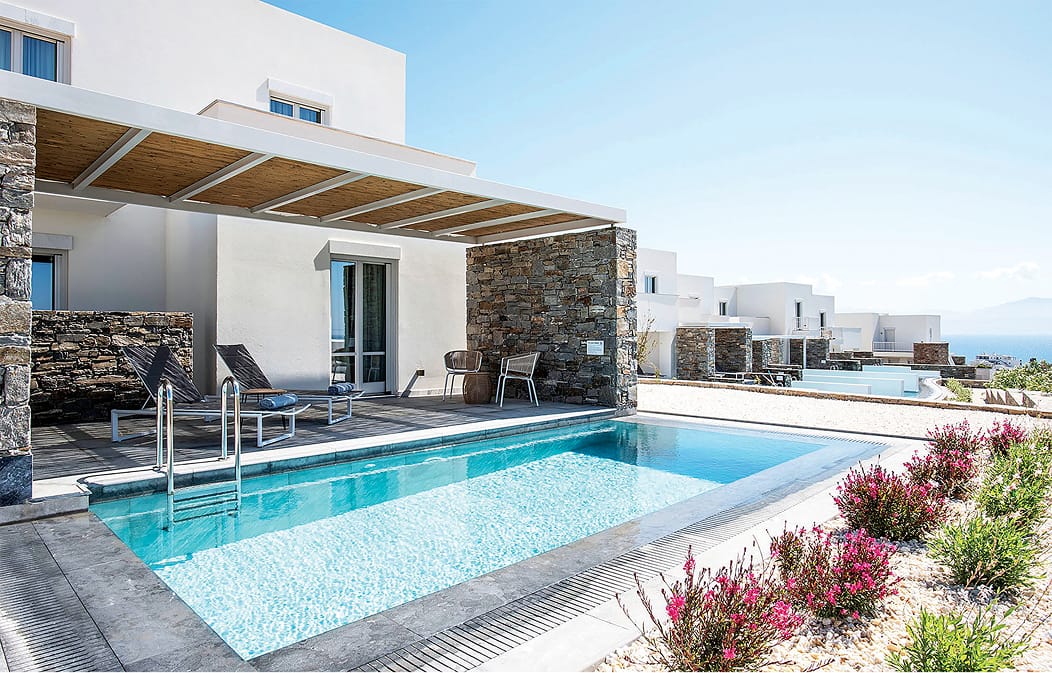
We stayed in a suite with a private pool, and the pleasure of it turned out to be almost entirely unphotographable: a terrace, a book, the pool cool enough at four in the afternoon to be worth the walk of three steps. Marble in the bathroom, wood overhead, a palette drawn from the hillside. And, on the windows, insect screens. I mention this because in the Aegean in August it matters more than any turndown ritual, and remarkably few hotels of this category bother.
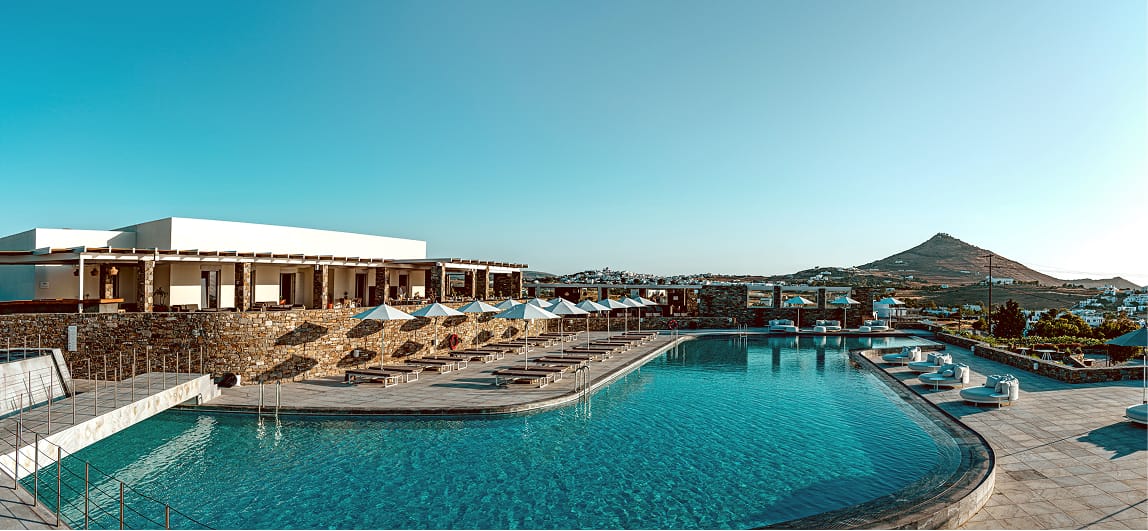
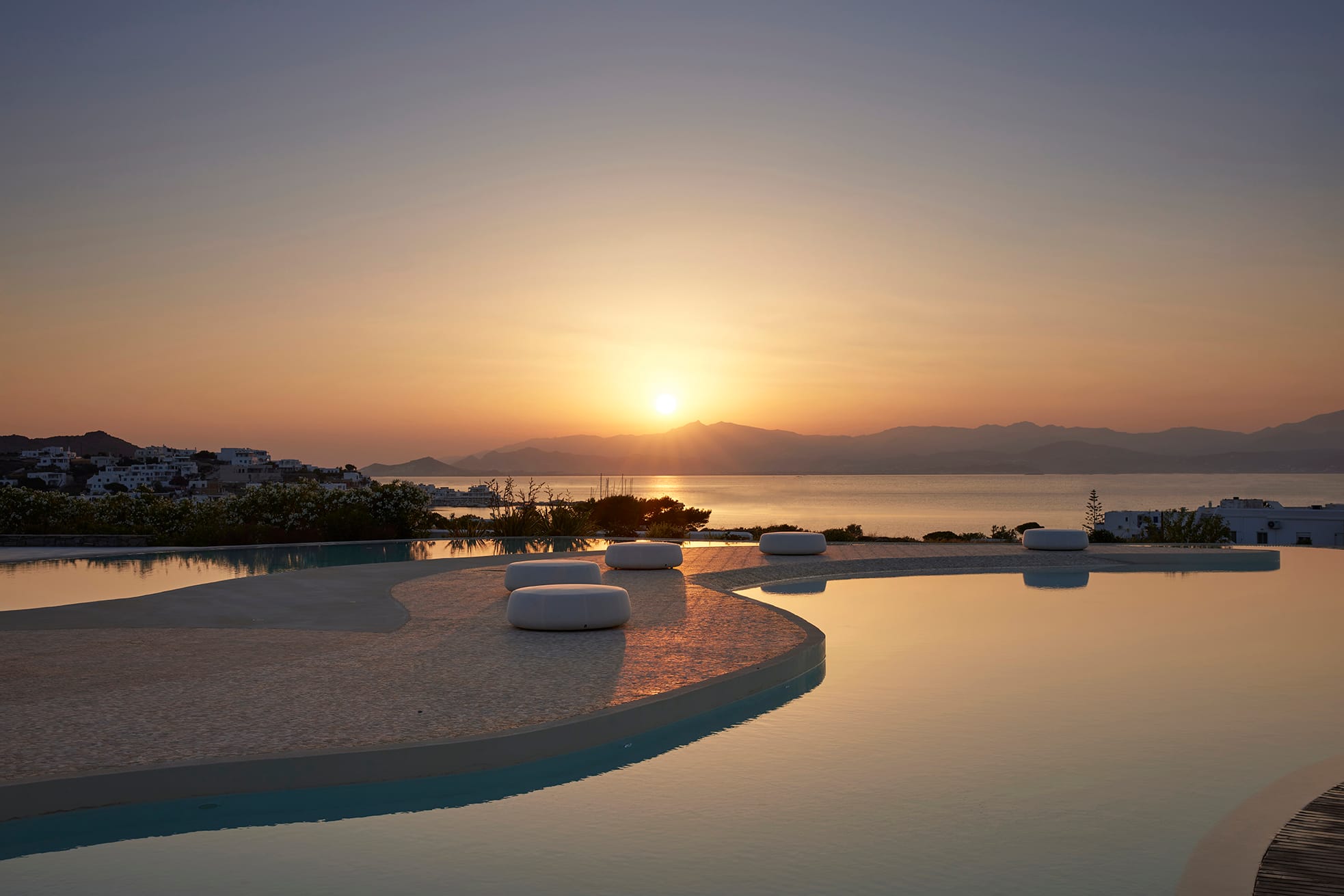
Three outdoor pools are set among the gardens and sun terraces. The largest is a generous freeform pool with the Hydor bar at its edge, a second, quieter one sits further back in the planting and a shallow lounge pool takes its shape from Tigani, the cluster of islets in the channel between southern Paros and Antiparos. The gym is properly equipped. Anassa Spa by Idolo is reserved for house guests, which is why the corridors are silent at six in the evening.
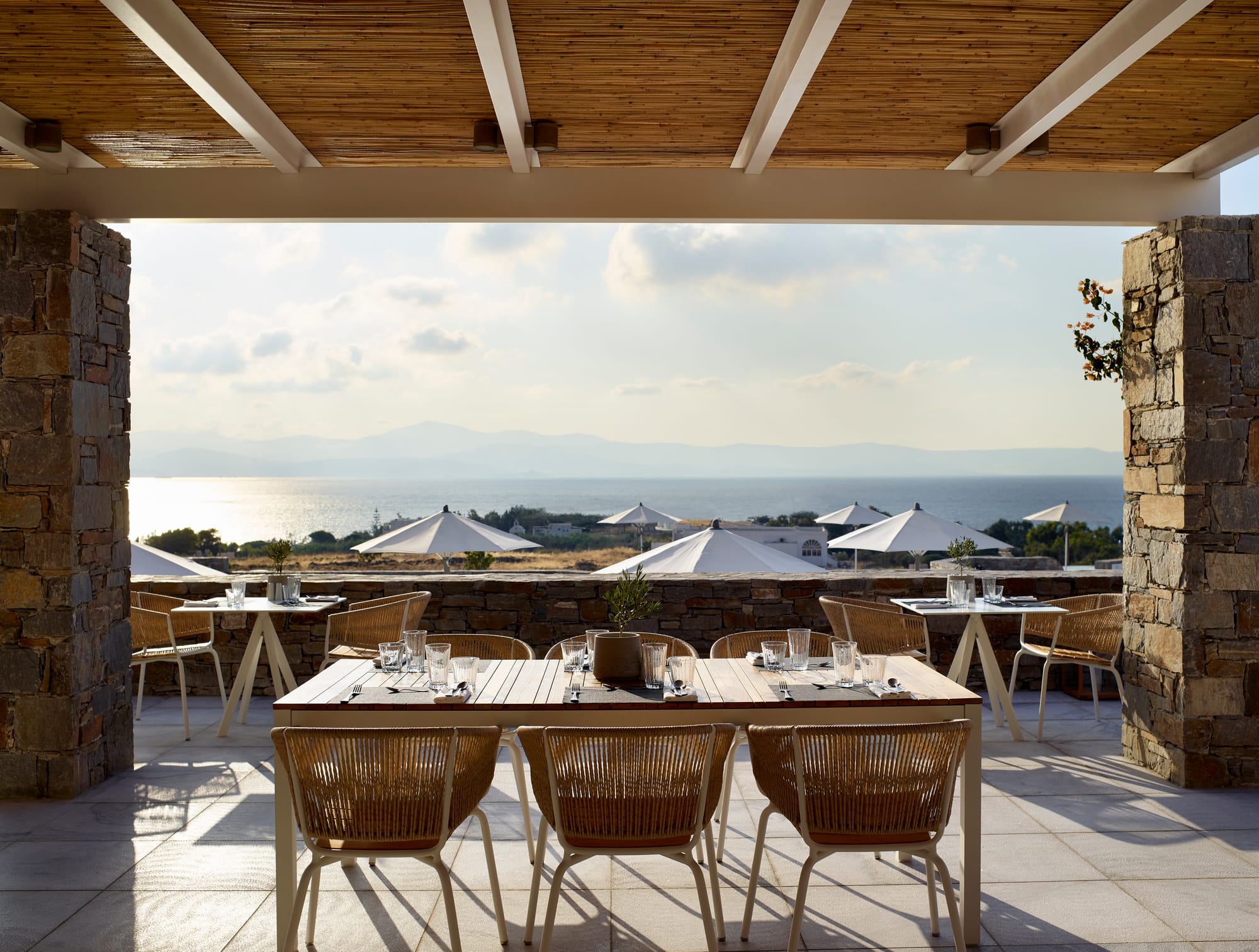
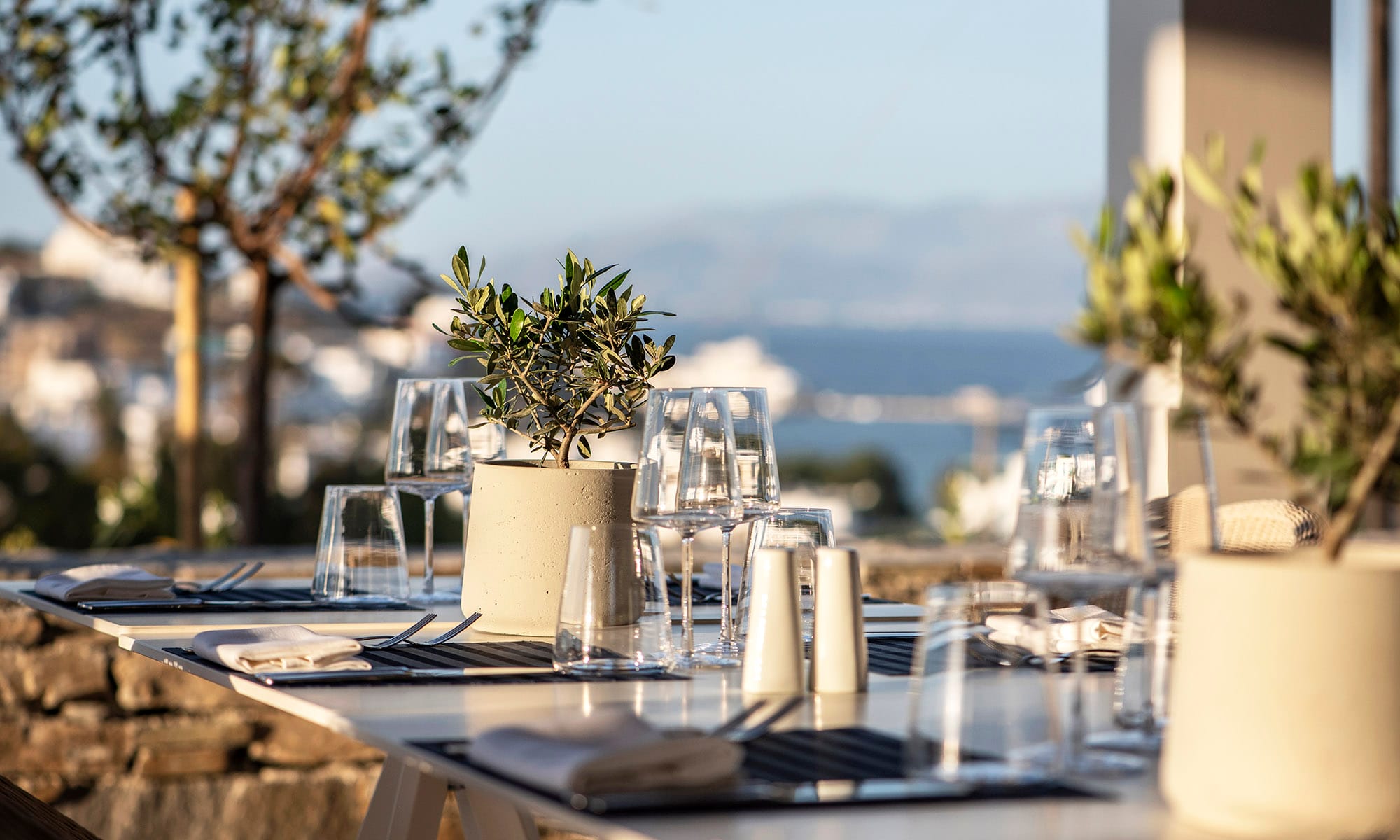
Dinner is where the hotel makes its clearest statement, and it makes it in the less formal of its two rooms. Gaia serves through the day and is where we ate most evenings. The kitchen here is run by Ioannis Fyntanis. Cycladic cooking built on garden produce and the morning's catch, at the hour when the light goes off the hills and the tables fill with παρέα, whatever company the week has assembled around you. The octopus came off the charcoal with its edges blackened and the flesh giving under a fork, dressed with nothing it did not require: oil, lemon, salt. The fish was whole and local and cooked by someone unwilling to interfere with it.
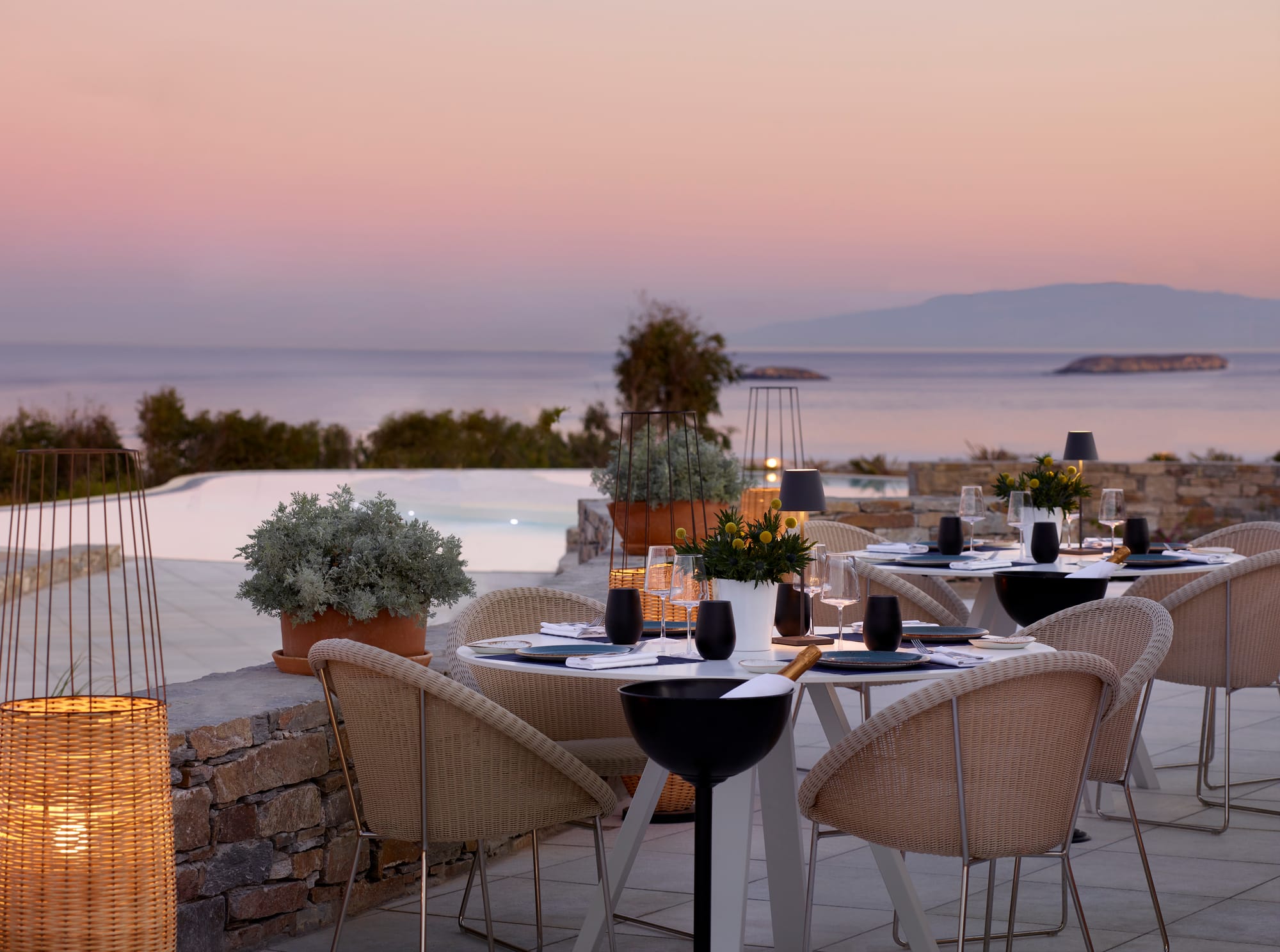
The other gastronomic experience is Galazia Hytra, the only Hytra outside Attica, a collaboration with the Athens restaurant that holds a Michelin star, both belonging to the group behind Spondi. Figs, thyme honey, salted olives. The discipline arrives from the capital intact, the formality is left behind there. The wine list rewards patience, and rewards it in Greek.
The beach is three minutes on foot, small and clear and almost never rough. Piso Livadi, ten minutes away, is where I went for grilled fish and the sight of the ferries turning in the harbour, and hilltop Marpissa is worth an evening on its own. The hotel keeps a car for transfers, which spares you the rental-car conversation entirely.
There is a phrase you hear all over these islands, σιγά σιγά, slowly, slowly, offered as instruction and as apology. It is what this hotel is actually selling, though it has the good sense never to say so.
Three thousand years ago, the island's own poet told himself to let Paros go, the figs and the life of the sea along with it. He was leaving for Thasos, and for money. It is a small, pleasing irony that people now cross the Aegean for precisely those three things, and that on this side of the island you can still find all of them.