The Reef You Return To: A Week on Eri Maldives
– 6 min read

"In one drop of water are found all the secrets of all the oceans." — Kahlil Gibran
There is a category of Maldivian island that the travel world has largely overlooked. Not the overwater-villa archipelago shaped for the honeymoon market, nor the villa-and-infinity-pool compound designed to photograph well from a drone. Something older, smaller, closer to the water. Eri Maldives, on a natural island in the North Malé Atoll that has been receiving travellers for more than thirty years, belongs to this quieter lineage. And its recent transformation from Eriyadu Island Resort into something more considered may be one of the more interesting repositionings in the region right now.
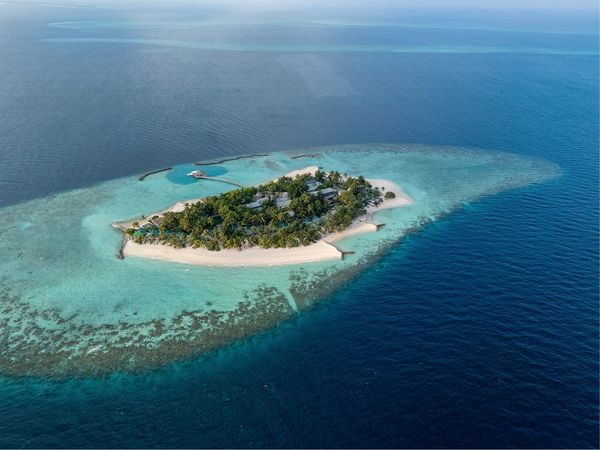
The island itself carries a small history. Eriyadu is a compact tropical island where the original character of the Maldives remains intact. Mature palms and dense tropical vegetation cover most of the land. You can walk the full perimeter in ten minutes. From Velana International Airport, the speedboat transfer takes forty-five minutes, or fifteen by seaplane if the budget allows and the schedule aligns. There is no jetty drama, no golf-cart procession, and no lengthy arrival ritual. You step off the boat and onto sand, complete your check-in, and the transition from airport to island happens with the kind of speed that larger resorts, for all their choreography, rarely achieve.
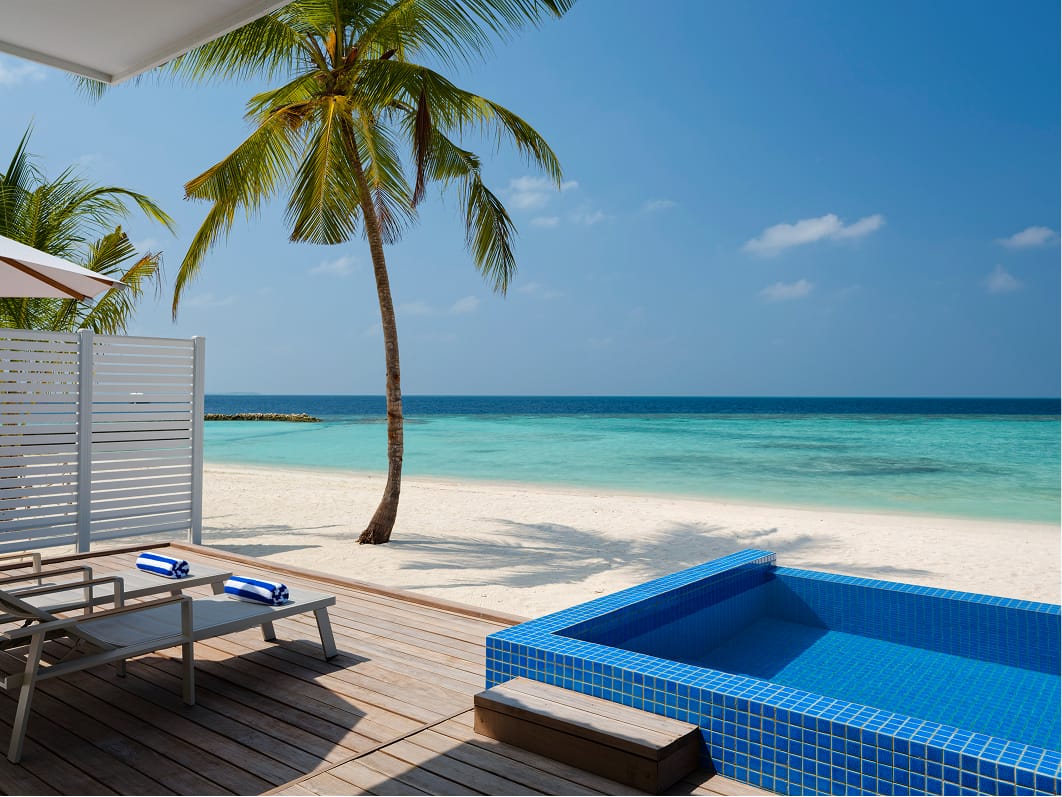
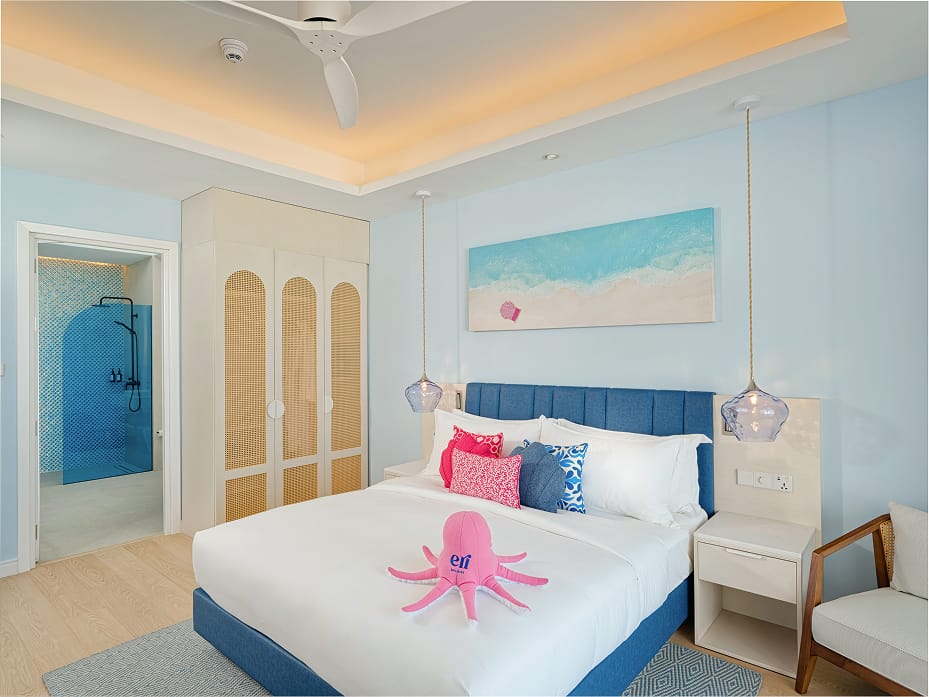
I arrived in early afternoon, when the light on the North Malé lagoon had turned from morning silver to something closer to glass. My Beach Pool Villa sat a few metres from the shore, its architecture plain and honest: concrete, timber, wide windows facing west toward the sunset side of the island. The room was clean, well-proportioned, recently renovated, and oriented so that the first thing visible from the bed was water. The next morning, a floating breakfast arrived at the private pool — fresh fruit, eggs prepared to order, juice in vibrant colours that reflected the tropical palette of the island — arranged on a tray that drifted gently in the still water while the early sun warmed the deck. It was the kind of beginning that made the rest of the day feel unhurried before it had even started.
What distinguishes Eri from the dozens of four-star properties scattered across the atolls is what sits directly offshore. The house reef encircles the island almost entirely, accessible from four entry points without the need for a boat, a guide, or any planning beyond putting on a mask. I have dived and snorkelled across more than twenty Maldivian islands over the years, and I would count Eri's house reef among the finest I have encountered. The coral is dense, healthy, and varied. The drop-off along the eastern wall reaches thirty metres. And the reef's permanent residents include fourteen individually identified hawksbill turtles — Rosie, Cara, Anna, and others — each logged by the dive team through shell patterns and markings. Guests who spot an unrecorded turtle are given the chance to name it. It is a small gesture, but it shifts the relationship between visitor and reef from spectacle to something closer to acquaintance.
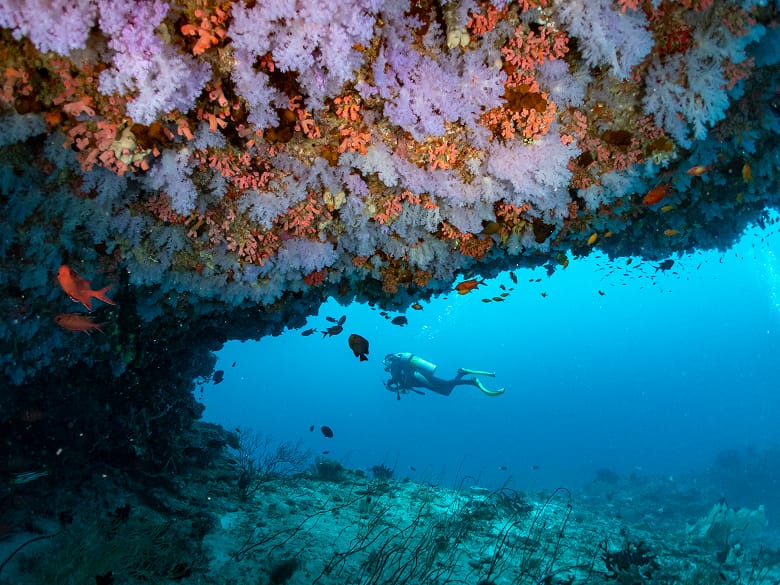
Within the first hour in the water, I had seen two turtles feeding along the coral wall at a depth of perhaps three metres. By the end of the second day, I had encountered four more. This is the quiet gift of a reef you can return to several times a day, on your own terms: you begin to notice patterns, to recognise individuals, to read the reef not as a single event but as a living neighbourhood with its own rhythms and schedules.
North Malé Atoll has long been known as one of the most reliable regions in the Maldives for manta ray sightings, with Lankan Manta Point offering encounters throughout the year. The resort arranged a full-day safari excursion by boat, and what we saw that afternoon exceeded any reasonable expectation. A group of mantas — five, perhaps six — moved through the water in slow, unhurried arcs, their wingspans wide enough to darken the sand below them. On the return journey, dolphins appeared off the bow, keeping pace with the boat for several minutes, close enough to hear the sound of their breathing between jumps. These are the moments that no itinerary can guarantee but that this particular corner of the Maldives seems to produce with quiet regularity.
The diving operation, run by Euro-Divers as a five-star PADI centre, provides access to more than thirty sites across the atoll. During one night dive, I watched the familiar reef rearrange itself entirely: moray eels hunting in the open, trevallies moving in tight, nervous packs, nurse sharks gliding through the torch beam with what looked like total indifference. Night diving changes your understanding of a reef the way reading a city at 3 a.m. changes your understanding of a city. The geometry shifts. You notice what the daylight had been hiding.
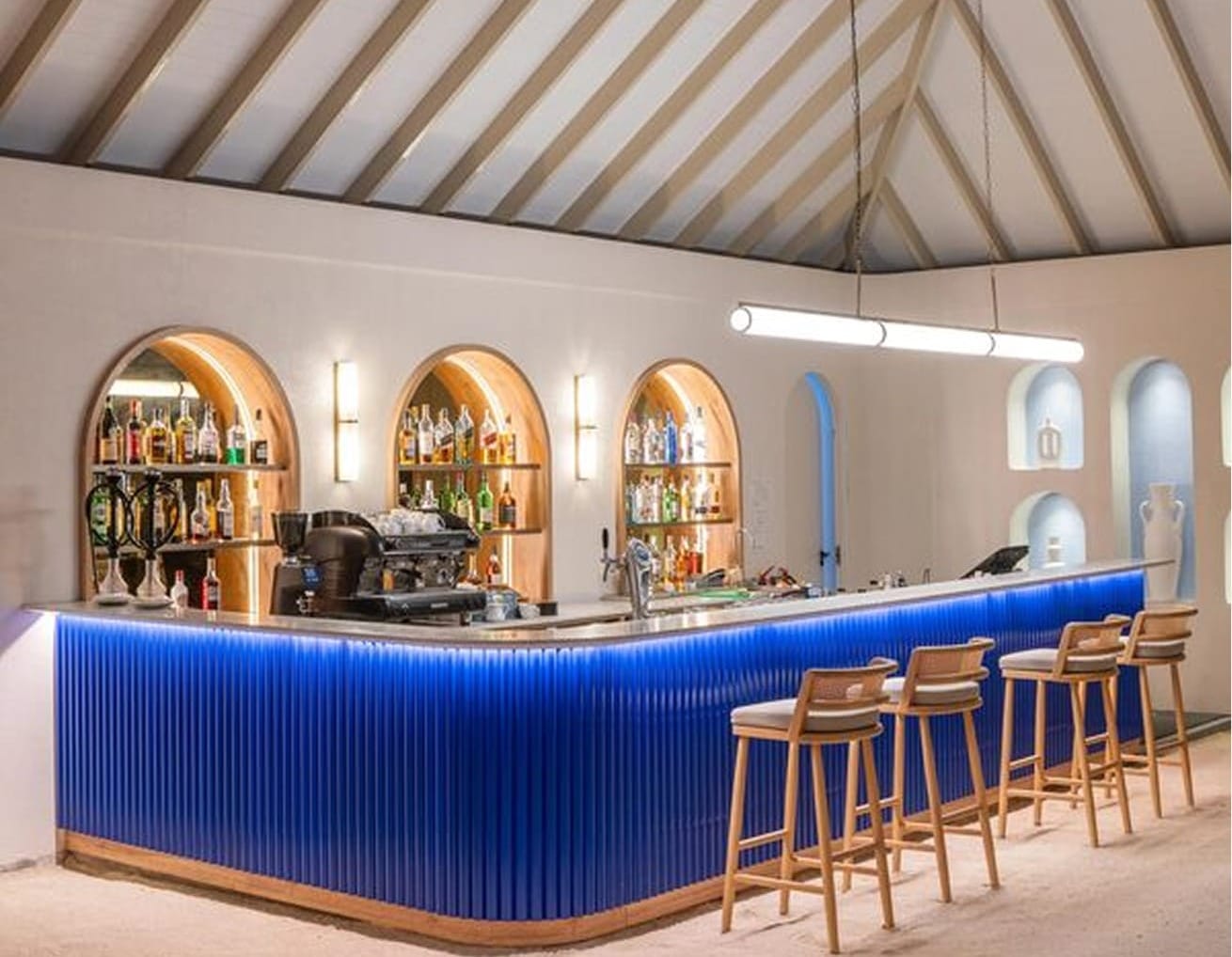
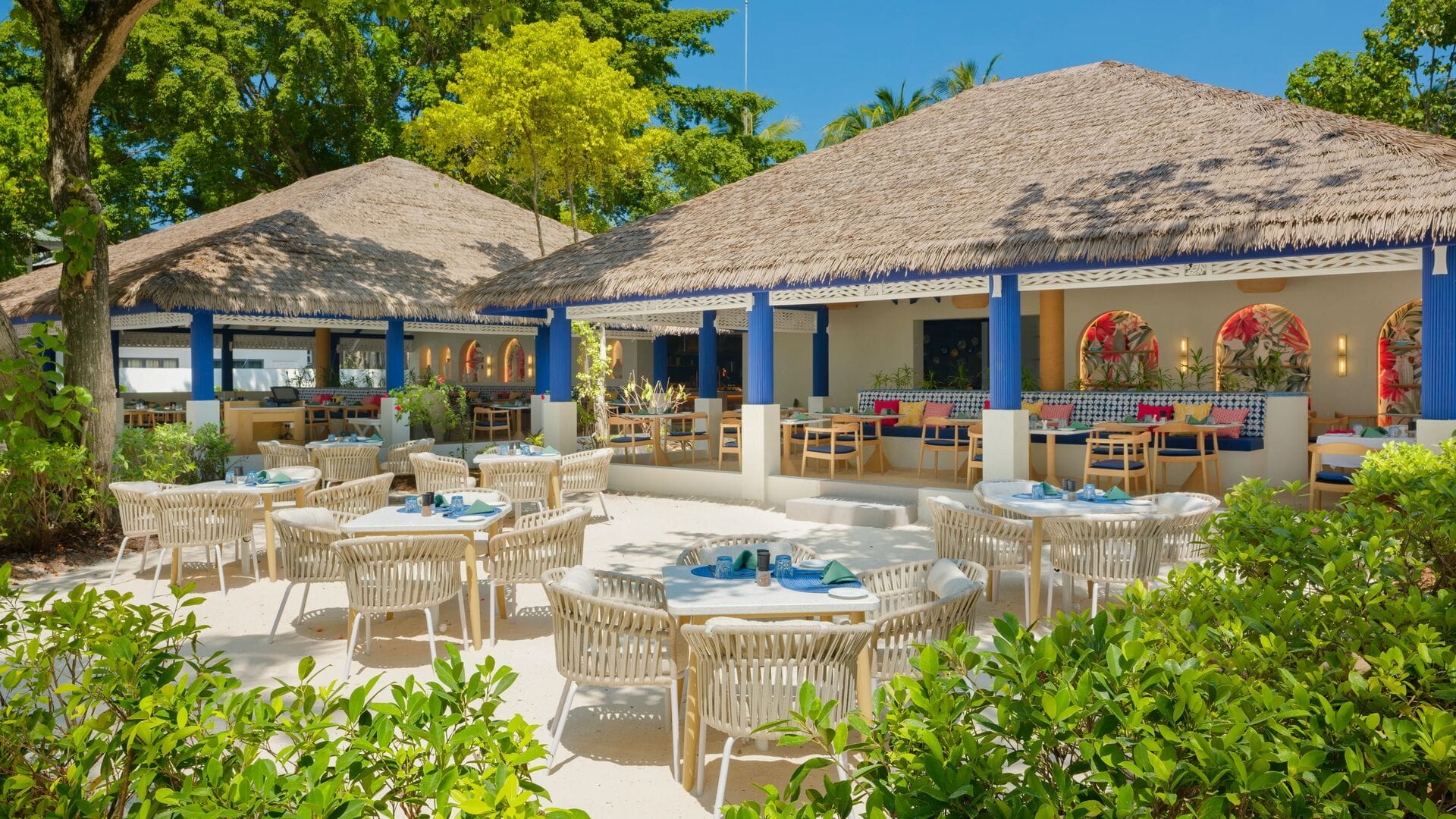
On land, the resort moves at its own gentle pace. Three dining venues — Soul Kitchen for all-day international and regional cooking, the Beach Shack between meals, and Sip & Dip on the sunset side of the island — cover the daily rhythm without fuss. Breakfasts at Soul Kitchen deserve particular mention. The spread is generous and carefully prepared: eggs to order, tropical fruit that tastes as though it was picked an hour ago, fresh juices, pastries still warm. For a resort of this size and positioning, the morning table here competes with properties charging three times the rate. The Maldivian dishes, when they appear on the menu, carry more personality than the international plates — a detail that is true of almost every resort in this country, and that few seem willing to lean into fully.
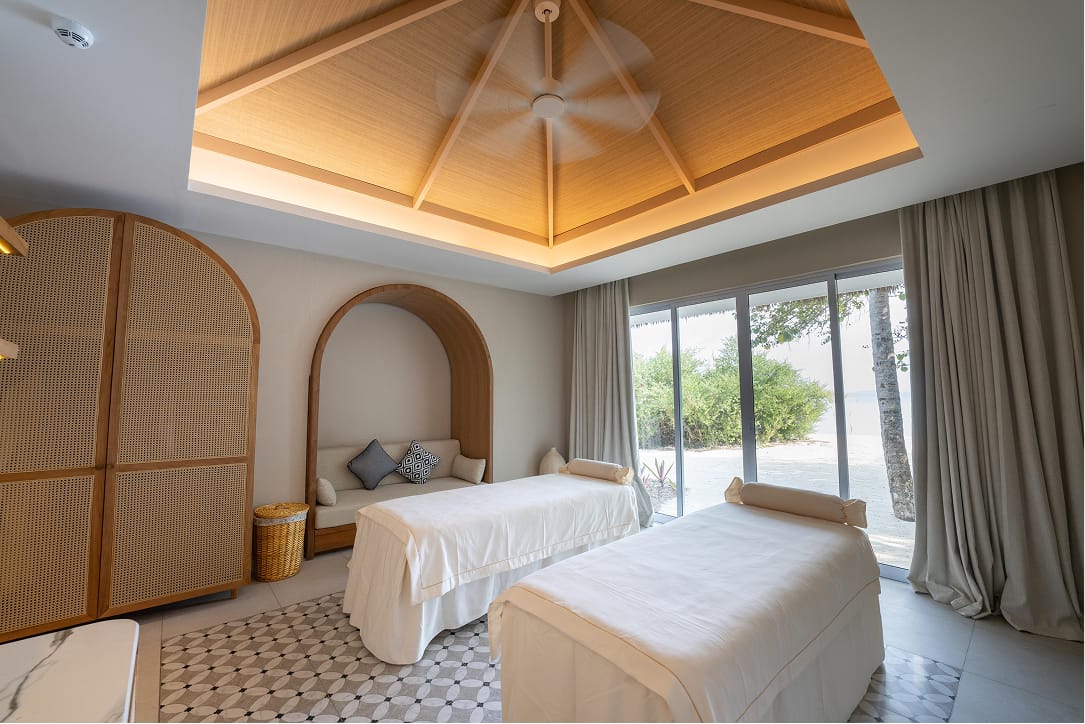
The Eskape Spa sits within the tree cover on the island's interior, and the treatments reference Maldivian tradition without overselling it. I had one massage during my stay. It was good. The real therapy, as is often the case in this part of the world, was the water.
Life on the water is not simply a recreational concept in the Maldives; it is a way of existence. It reflects the way island communities across this archipelago have always understood their relationship with the ocean — not as something to visit, but as something to inhabit. Eri, perhaps because of its long history as a working dive island, retains some of that quality. The reef is not a feature. It is the reason the place exists.
What makes this island rare is the compression. Ten minutes of shoreline, soft white sand that yields underfoot like powder, and directly beyond it a reef dense enough to hold fourteen named turtles, reef sharks, eagle rays, and the full spectrum of tropical marine life. Most Maldivian islands offer either a good beach or a good reef. Eri, by some accident of geography and decades of careful stewardship, offers both in the same small perimeter.
On my last morning, I walked the island's full circumference before breakfast. A heron stood motionless at the water's edge near the eastern entry point. The reef was visible beneath the surface in the early light, its coral structures casting faint shadows on the sand below. No other guests were in sight.
There are Maldivian islands that sell you a version of paradise. And there are islands where the ocean is close enough to hear from your pillow, where the reef begins at your feet, and where the turtles have names. Eri, for all its modesty, is the second kind. Sometimes that is enough. Sometimes that is the point.