Web Summit 2026 and the technology changing everyday life
From fashion assistants and dexterous robots to personal aircraft, iPREMIUM explores the Web Summit 2026 ideas changing travel, wellness and everyday life.
– 6 min read

From fashion assistants and dexterous robots to personal aircraft, iPREMIUM explores the Web Summit 2026 ideas changing travel, wellness and everyday life.

Fashion assistants, dexterous robots and personal aircraft brought the future closer in Lisbon. The harder question is how much of our lives we want to hand over to them.
A fashion assistant that understands how a garment fits has an obvious appeal. So does arriving abroad with mobile data already arranged. At Web Summit 2026, some of the most persuasive ideas concerned familiar frustrations, even as robots and personal aircraft competed for attention. For iPREMIUM, the interesting thread was how technology might improve the experiences people already value, and what happens when convenience requires access to increasingly personal information.
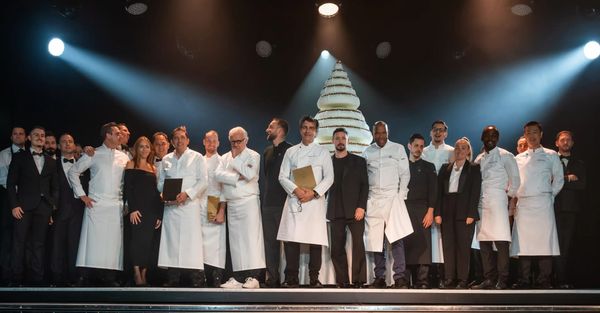
The Lisbon event was scheduled for 9–12 November at MEO Arena and FIL. Organisers reported 70,003 attendees from 164 countries and a record 1,943 investors. Their figures distinguished more than 10,000 startups attending from 3,052 exhibiting companies representing 110 countries. It was a substantial international marketplace for technology, with China sending what organisers described as its largest delegation to the conference. [1]
The week also had an interruption no software could remove. Wednesday’s programme was cancelled following Portuguese government advice about Storm Charles, as Business Insider reported. The Next Web subsequently reported the announced Thursday restart and the rescheduling of sessions. The disruption compressed an already crowded agenda. [2], [3]
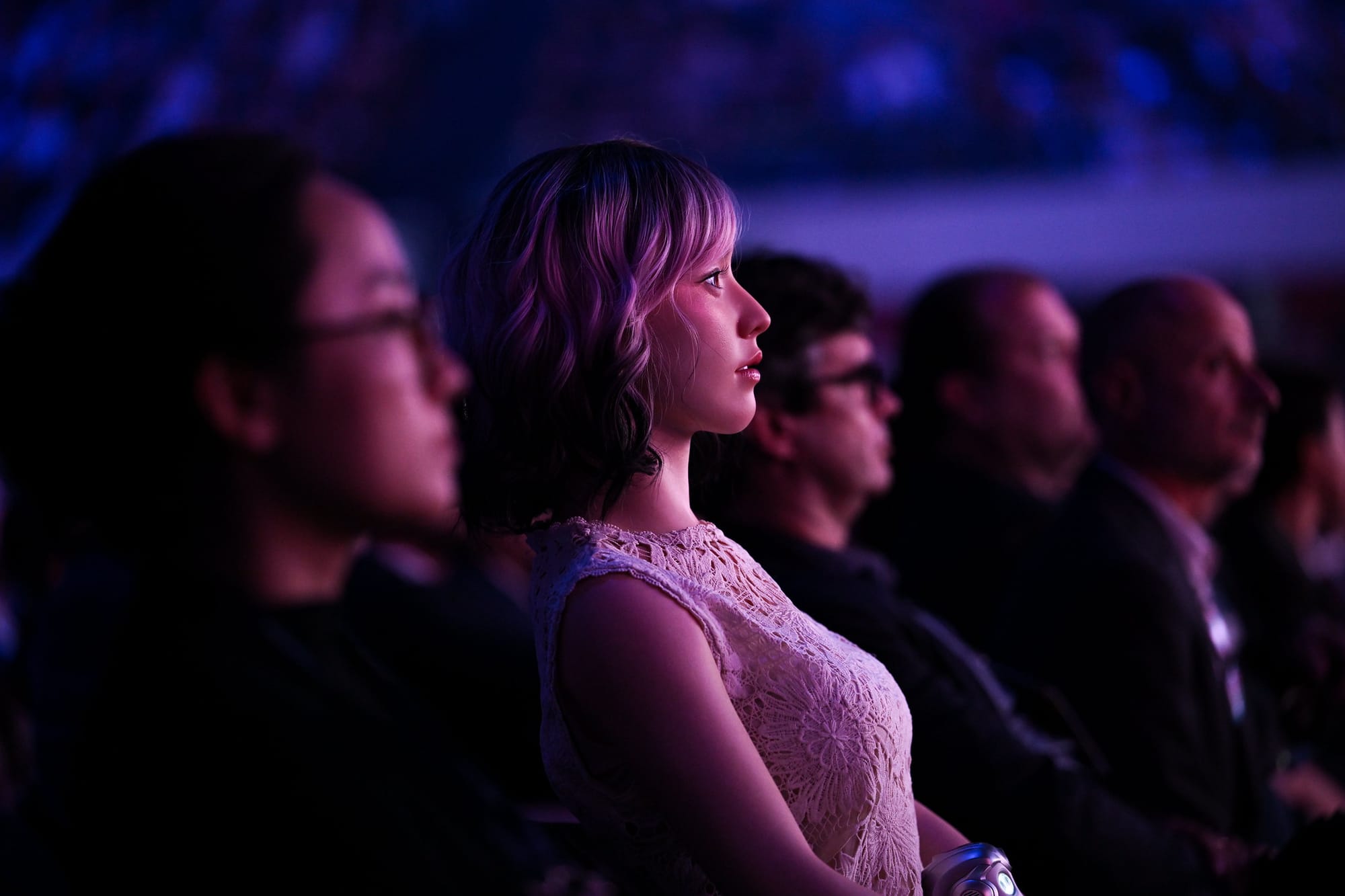
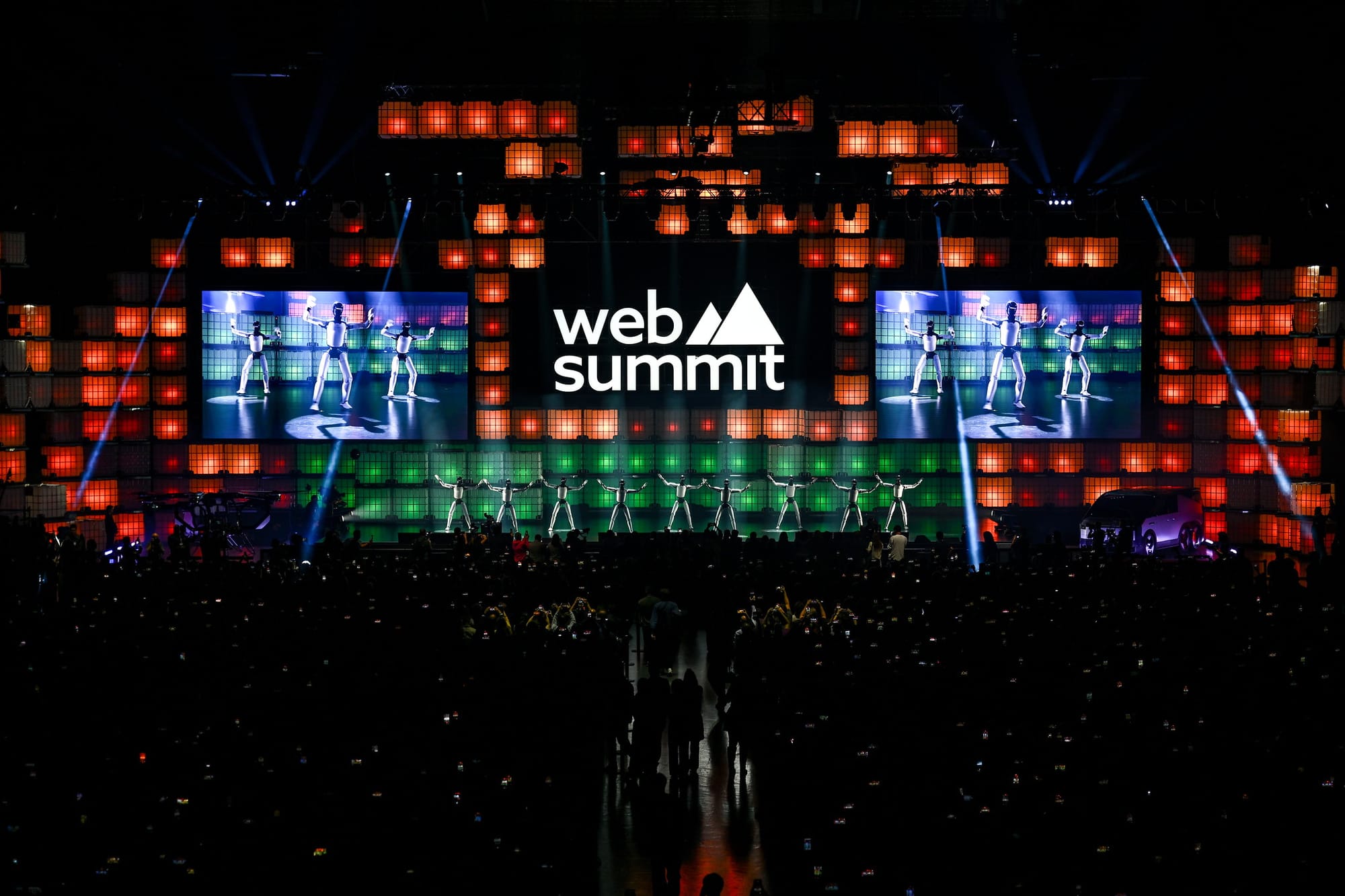
Dancing humanoid robots opened the conference, an image that featured prominently in Euronews’ coverage. The performance made physical AI easy to picture: software connected to machines that must move and act in the world around us. [4]
The more revealing engineering problem appeared in Xynova’s presentation of robotic hands. The company brought Prima 1, a direct-drive hand for research, and Flex 2, a hybrid design intended for practical applications. Its Lisbon announcement described demonstrations using everyday objects. A machine can understand an instruction yet still struggle to grasp something unfamiliar or fragile. Useful robotics depends on closing that gap. [5]
For hospitality, the distinction matters. A robot in a lobby may attract photographs; a machine entrusted with objects must cope with different shapes, weights and unexpected human movements. Those are demanding operating conditions. Xynova’s work points to a component of that future, rather than evidence that a hotel can already replace its service team. The question for an owner is which repeated task the hardware can perform dependably, and whether staff and guests actually benefit.
Zalando offered one of the clearest examples of AI becoming useful through specialist knowledge. Its Web Summit announcement said 22 million people had visited its Assistant this year. The latest addition, conversational size advice, draws on more than 10,000 mapped size charts alongside product information and customer fit signals. Zalando said size advice already covered around 70% of its assortment. These are company-reported figures. [6]
The Assistant can also use an uploaded image to find similar styles and help shoppers compare products. Such features bring the interaction closer to a conversation with a sales adviser, particularly when the customer can explain an occasion or refine a request. [6]
Our reading is that the valuable part lies in the retailer’s knowledge of its products. A fluent answer is useful only if the garment is available and likely to fit. For premium brands, this creates a practical competitive question: how clearly can a digital assistant explain the qualities that justify a purchase? Fabric, construction and proportion need more precise treatment than generic claims about elegance. AI shopping will reward the brands that can supply that detail and preserve a recognisable point of view.
Few products better suited the spectacle of a technology summit than the Xpeng ARIDGE Land Aircraft Carrier. Its manufacturer describes a modular system combining a six-wheel ground vehicle with an electric vertical take-off aircraft whose rotors fold for transport. The carrier also provides charging for the aircraft. [7]
The Guardian reported plans for limited use in China in the second half of 2027. [8]
The appeal to adventure travel is easy to imagine. A guest could regard a short flight as part of the experience itself. For a resort considering the idea, the important questions would extend to approved routes, operating permissions, insurance and places to take off and land. A vehicle that travels with its own aircraft is a striking proposition. Turning it into a dependable guest experience would require a carefully designed service around it.
Some announcements addressed the smaller obstacles that accumulate during international work. Otter.ai announced 27 additional languages for its transcription platform. Thirteen were available at launch, including Italian, Portuguese, German and Russian; fourteen more were planned. Transcription that follows speakers switching between languages was also described as forthcoming. The distinction matters for anyone choosing a tool for an imminent meeting. [9]
RWS launched Weava, a platform designed to adapt content across languages and cultural contexts. Its approach includes AI agents representing intended audiences, with human expertise available where further judgement is needed. For a hotel group or fashion house, the relevant promise is the ability to retain its voice while communicating appropriately in different markets. A translated sentence can be accurate and still feel wrong for its reader. [10]
Meanwhile, NOS Group’s get eSIM brought partnership models allowing travel businesses and other brands to offer connectivity within their own customer journey. The company cited coverage in more than 150 destinations. [11]
Taken together, these announcements suggest a useful direction for travel technology. The service can begin before arrival, with a working connection, clear communication and fewer administrative steps. Guests may barely notice the technology when those arrangements work well.
An AI system that can act for a customer introduces questions that a recommendation alone does not. Access to a loyalty profile, passport document or payment process carries responsibility. Before allowing an assistant to make a booking, a business needs to know who authorised it and where its authority ends.
Sumsub brought its Know Your Agent framework to the event. The company describes controls that filter access to sensitive information, record agent activity and require additional human verification for specified actions. The aim is to make delegated authority visible and enforceable. [12]
IBM’s Digital Sovereignty Index added a broader business perspective. Its survey of 2,003 senior decision-makers in large enterprises across seven countries found that 94% reported a sovereignty challenge in the previous three years. Only 33% regularly tested their capabilities. The research concerns control over technology and data, including the ability to demonstrate that control under pressure. [13]
The Open Agentic Web Challenge, announced in Lisbon with participants including Cognizant AI Lab, MIT Media Lab’s NANDA programme and Mozilla, addressed another part of the problem: helping independently developed agents discover and work with one another. It is an initiative to test open approaches, with the infrastructure still taking shape. [14]
For a premium service business, the implication is straightforward. Clients should be able to delegate a task without surrendering broad control of their information. Discretion remains part of good service even when the assistant is software.
The organiser’s closing bulletin named Carevision the winner of PITCH. Led by Amani Abulaban, the company is developing camera-based technology for cardiometabolic wellness screening, according to investor 2080 Ventures. Its proposition places preventive health among the practical applications attracting attention alongside the larger demonstrations. [15], [16]
For wellness businesses, the next questions concern validation and how screening results would fit into a person’s care. Published evidence and experience in actual deployments will provide a firmer basis for assessing this technology than a stage demonstration. A specific health application gives readers something concrete to follow as the company develops.
Ramsey Cardy / Web Summit via Sportsfile
Among the announcements collected by Web Summit, Mudita offered a different view of convenience. Its Kompakt phone has an E Ink screen, everyday tools including offline navigation, and no preinstalled browser. The company also presented plans for InkApps, a curated application collection, as part of an operating system update planned for November. Its dedicated Offline+ mode physically disconnects the cellular modem and microphones, according to Mudita. [17]
The product raises a useful question for a conference so concerned with adding capabilities. How much access do people want technology to have to their attention? A visitor may welcome an assistant that handles an awkward task and still want a holiday without continual prompts, messages and recommendations.
The useful test after Lisbon will be what customers can stop worrying about. A well-fitting purchase or an easier arrival is a credible improvement. Each service should also leave people an understandable choice about when to engage. For businesses serving clients who value their time and privacy, that choice is part of the product.
Shauna Clinton / Web Summit via Sportsfile
Web Summit — Attendance and investor figures.