Sri Lanka, Read Slowly
– 5 min read

“The whole of Ceylon is a garden, and the people who live in it are gardeners.” — Leonard Woolf, whose year as a colonial officer became The Village in the Jungle
Sri Lanka is roughly the size of Ireland, yet it holds terrain that most countries would need a continent to assemble. In a single day a traveller can move from tea grown at cool elevation to a reef warm as bathwater, from a fifth-century rock fortress to a beach where the season runs backwards from the coast on the other side. The island rewards those who resist the urge to see everything. Buddhist thought, which has shaped the island for more than two millennia, tends to prize attention over acquisition, and Sri Lanka responds best to exactly that: fewer places, understood well.
The country organises itself into four travel zones, and the sensible approach is to choose two or three rather than chase all of them. What follows is a guide arranged around those movements, weighted toward the three that reward a first, considered visit, with the remaining two sketched for those who return.
The Cultural Triangle: the island's memory
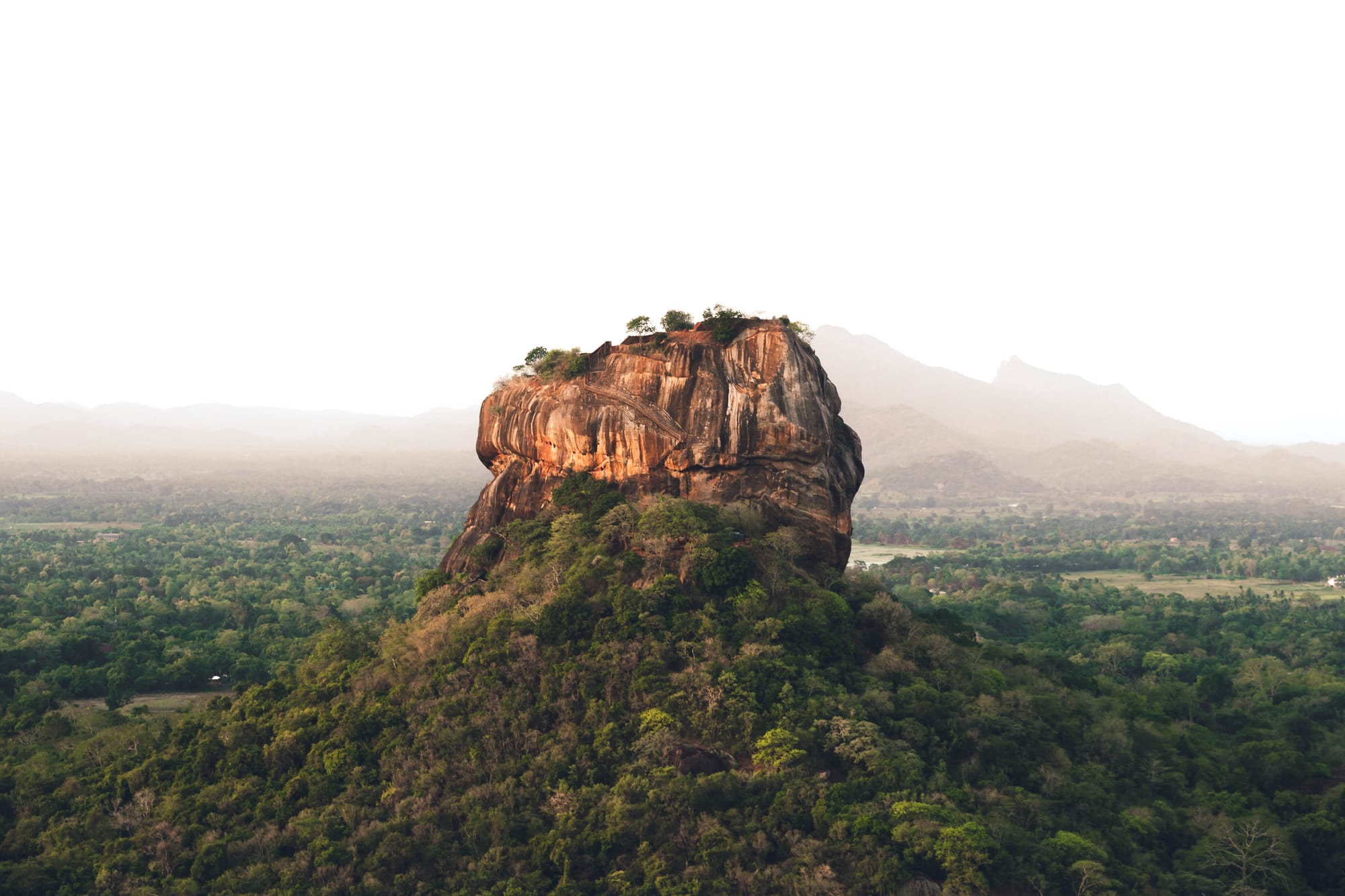
The fertile centre holds five UNESCO World Heritage sites within a compact radius, which is why most itineraries begin here. Sigiriya is the anchor: a rock fortress rising two hundred metres from the plain, built in the fifth century as the palace of King Kashyapa and later occupied by Buddhist monks. The climb is steep and often crowded, and the neighbouring Pidurangala Rock offers a quieter vantage point with Sigiriya itself in the frame. Thirty minutes away, the Dambulla cave temples hold more than one hundred and fifty Buddha statues across five painted caves. This is a working pilgrimage site rather than a museum, and it should be treated as one.
Kandy, at the southern edge of the triangle, is where the last Sinhalese kingdom held out until British authority ended it in 1815. The Temple of the Tooth, which houses a relic of the Buddha, remains the island's most revered Buddhist site, with three daily puja ceremonies and a dress code of covered shoulders and knees. The city is also the gateway to the hills.
Hill Country: tea, mist and the slow train
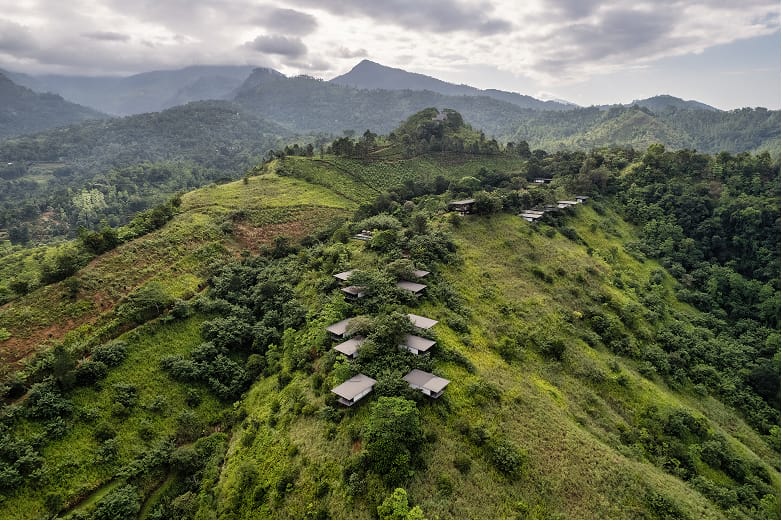
South of Kandy the land rises into the tea plantations that the British planted through the nineteenth century, more than four hundred estates producing Ceylon tea at cooler elevations around Nuwara Eliya and Ella. The defining journey here is the Kandy to Ella train, a six to eight hour passage through terraced green that books out a month ahead. Second-class reserved seats are the ones to hold, chiefly because the windows open.
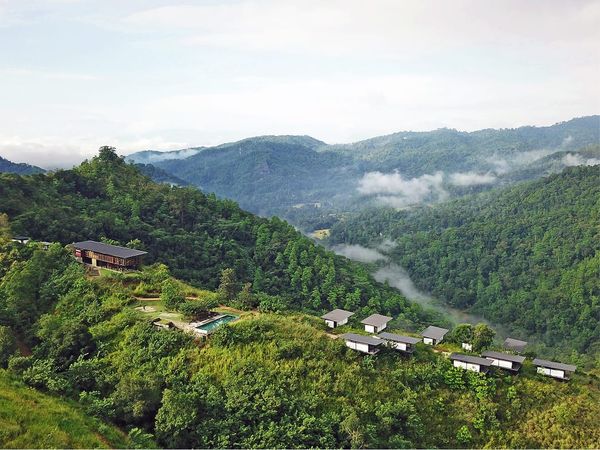
For those who want the hills at their most considered, Santani Wellness sits above Werapitiya on a 116-acre former tea plantation. Opened in 2016 as one of the island's first purpose-built wellness resorts, it was designed by founder Vickum Nawagamuwage around a single principle, that the environment itself should function as the treatment. The shared spaces are deliberately Wi-Fi-free; connectivity requires a conscious choice. Twenty chalets, sixteen with mountain views and four facing the garden, face the Knuckles range across a valley the Sinhalese call Dumbara, the misty mountains. The kitchen builds each guest's menu around Ayurveda's six tastes, and the property marks its tenth year in 2026, holding a Michelin Key. Slightly lower and to the west, near Kalutara, Glenross Living offers architect-designed villas by Palinda Kannangara on a working tea, rubber and cinnamon estate, a gentler first stop for those arriving jet-lagged from Colombo.
Ceylon Tea Trails, in the same high country, restored a set of colonial planters' bungalows into a single connected estate with butler service, tea tastings and walks between the houses. It remains the reference point for anyone who wants to understand how the tea economy shaped this landscape.
The South Coast: where the infrastructure lives
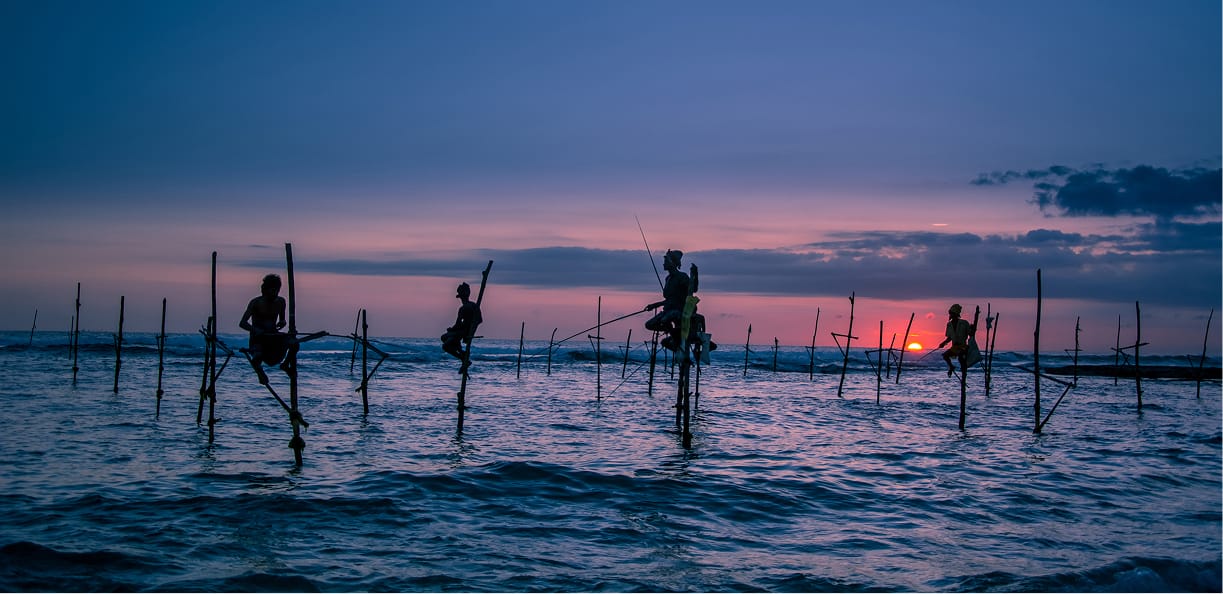
From Galle east to Tangalle, the southern coast concentrates the island's strongest hotels, restaurants and surf, and it is best visited between December and March. Galle Fort, a sixteenth-century Portuguese fortification later expanded by the Dutch, is the cultural heart of the stretch: a walled town of ramparts, a lighthouse, artisan boutiques and the cricket ground visible from the walls. Amangalla occupies a restored seventeenth-century building inside those walls, and remains the most historically grounded place to stay in the fort.
Along the cliffs and beaches to the east, the choices sharpen. Cape Weligama arranges its villas around a clifftop pool above the Indian Ocean. Anantara Peace Haven Tangalle sits on a coconut plantation at the quieter end of the coast, with an Italian restaurant, Il Mare, facing the sea. For food specifically, the south has become the island's most interesting table. Smoke & Bitters at Dickwella works almost entirely with smoke and Sri Lankan ingredients. The Arch, inside Galle Fort, is among the most regarded kitchens on the coast. Raa at Hiriketiya organises itself around arrack and the toddy-tapping tradition its name honours.
Colombo, the arrival city, deserves an evening on the way through. The Gallery Cafe occupies the former office of Geoffrey Bawa, the architect whose tropical modernism shaped much of how Sri Lanka builds, and dinner there is the clearest way to read his influence. Ministry of Crab, founded by chef Dharshan Munidasa with the cricketers Mahela Jayawardene and Kumar Sangakkara, has carried the island's lagoon crab onto Asia's restaurant lists.
Safari country, and the reverse-season coast
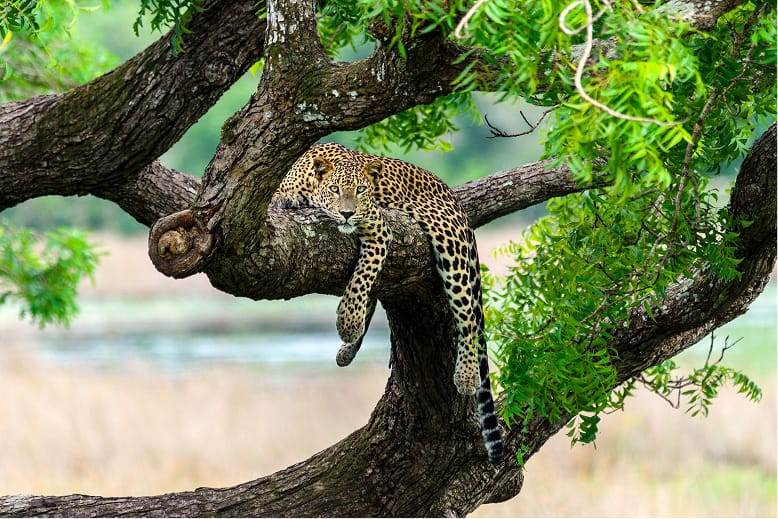
The southeast is where the island keeps its wildlife. Twenty-six national parks are packed into the country, and Yala is the best known, its block one holding one of the higher leopard densities in the world alongside sloth bear, elephant and crocodile. Wild Coast Tented Lodge and Hilton Yala arrange private dawn drives with resident trackers, and the half-day format, leaving before first light, is the one that produces sightings. Drives here reward patience over ambition, which is a fair description of the island as a whole.
The east coast runs on an inverted calendar. When the southwest turns wet, Arugam Bay and Trincomalee come into their season from April to September, and the surf and quiet beaches move to this side of the island. It is the natural answer for travellers whose dates fall outside the southern window, and for those returning to see the half of Sri Lanka the first trip left out.
Getting around
Distances look small and drive slowly. The road from Colombo to Sigiriya takes around five hours; Cinnamon Air covers it in thirty minutes, and also flies seaplanes into the hills and the south. In Colombo, Uber and PickMe work reliably. Between towns, TinyCabs and BlueSky Galle Taxis handle transfers. The Kandy to Ella train must be booked well ahead and printed at a station, a small friction worth accepting for one of the finest rail journeys in Asia.
How to read the island
There is a Sinhala expression, anduren aliyata paninna epa, a caution against leaping toward the elephant in the dark, against grasping at more than you can see clearly. It is a useful principle for a first visit. Sri Lanka is not a country to be completed. It is one to be read slowly, in two or three movements, with the rest left deliberately unturned, waiting for a return.