Could the Shingles Vaccine Protect More Than Against Shingles?
New research links Shingrix with lower cardiovascular burden in adults 60+, but it does not prove the vaccine prevents heart attacks or stroke.
– 2 min read

New research links Shingrix with lower cardiovascular burden in adults 60+, but it does not prove the vaccine prevents heart attacks or stroke.
What the New Study Shows
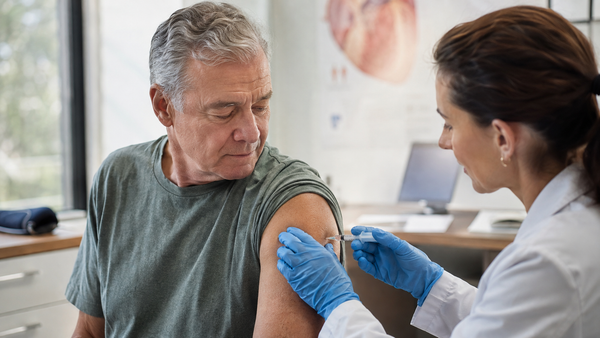
Shingles vaccination is designed to prevent a painful viral disease. New research suggests its effects may deserve attention for another reason: cardiovascular health.
A study published in Nature Medicine on 26 August examined health records from older adults in the United States during the transition from the former live shingles vaccine to the recombinant vaccine Shingrix. Researchers matched 36,460 people aged 60 and over in each group and followed cardiovascular diagnoses for up to seven years.
Those in the predominantly recombinant-vaccine group had a 9 per cent lower cardiovascular burden across a combined endpoint of ischemic heart disease, heart failure and ischemic stroke. The associations were clearest for ischemic heart disease and heart failure, while the apparent benefit weakened later in the follow-up period.
The study is notable because of how it was designed. Earlier research often compared vaccinated people with those who chose not to be vaccinated, creating what researchers call the “healthy vaccinee” problem: people who seek vaccination may also exercise more, attend screening more regularly or differ in other ways that affect cardiovascular risk. Here, both groups had chosen shingles vaccination; the main difference was whether they were vaccinated before or after the rapid US switch to Shingrix. This natural experiment reduces some of that bias, although it cannot eliminate unmeasured differences between the groups.
Why might there be a cardiovascular effect? Shingles itself produces inflammation and has previously been associated with cardiovascular events. Researchers also raise the possibility that the immune response triggered by Shingrix and its AS01 adjuvant could influence inflammatory pathways involved in cardiovascular disease. Both explanations remain under investigation.
Most importantly, this is not proof that Shingrix prevents heart attacks or strokes. Its established role remains protection against shingles; cardiovascular prevention is not an approved indication. Randomised evidence is now being sought. The large Danish DAN-ZOSTER trial, which began recruiting in 2026 and plans to enrol around 162,000 adults aged 65 and over, is specifically testing whether Shingrix reduces major cardiovascular events as well as dementia.
For healthy-ageing medicine, that distinction is useful. Longevity is often associated with experimental interventions. Some of the more consequential research may instead come from established preventive medicine — provided the evidence ultimately supports benefits beyond the original indication.