Messika Okavango Blue: The 20.46-Carat Botswana Diamond
– 1 min read

A 20.46-carat Fancy Deep Blue diamond from Botswana’s Orapa mine is the central stone in Messika’s new high-jewellery necklace, Okavango Blue. The rough diamond weighed 41.11 carats when it was discovered in 2018; after cutting, it emerged at 20.46 carats. Messika identifies it as the largest blue diamond discovered in Botswana and the eighth largest blue diamond recorded worldwide.
The stone’s significance lies not only in its size but in its colour classification. Fancy Deep Blue is a formal grading category for coloured diamonds, where colour intensity is a principal determinant of rarity and desirability. The Okavango Blue is also graded VVS1 for clarity, according to Messika and independent coverage.
Its history predates the jewellery piece by several years. The 2018 discovery at Orapa was followed by the cutting process that reduced the rough stone from 41.11 to 20.46 carats.
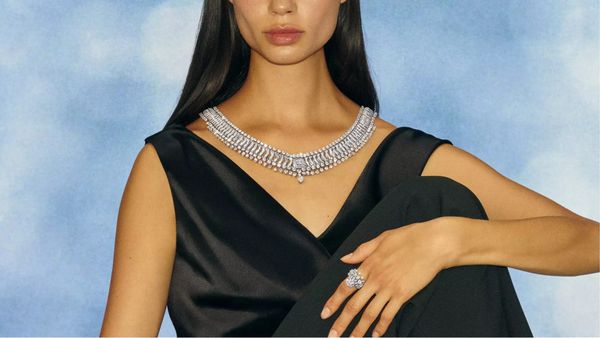
Valérie Messika designed the necklace around the blue diamond rather than treating it as one element within a larger composition. More than 500 additional diamonds form a flexible rivière structure, with hidden interlocking links giving the gold setting movement. Messika says nearly 30 versions of the central medallion were developed to establish the final proportions and light distribution.
Messika presented Terres de Contrastes at the Grand Palais in Paris on 1 October 2026. The collection draws from Botswana’s contrasting landscapes, including the Okavango Delta, Kalahari and Makgadikgadi salt pans. Okavango Blue therefore connects geological provenance with the collection’s design language.
For collectors, coloured diamonds occupy a distinct category because size, hue, saturation, origin and documented grading combine to define an individual stone’s character. The Okavango Blue brings those factors together in a single documented gemstone before the setting is considered.