Best Hotels in Tuscany for an Autumn Food and Wine Trip
– 5 min read

Autumn changes the logic of a trip to Tuscany. By late September, vineyards, olive groves and restaurant kitchens become as important as pools and terraces. Harvest events run through wine estates, truffles return to menus and cooler temperatures make Chianti, Val d’Orcia and Maremma easier to explore by road.
The best hotels in Tuscany for this time of year are therefore not necessarily concentrated in one part of the region. A wine estate in Maremma serves a different purpose from a thermal hotel near Montalcino or a Florence property with direct access to the city's restaurants and markets.
These seven hotels cover different parts of Tuscany and different approaches to food and wine. The selection is not ranked.
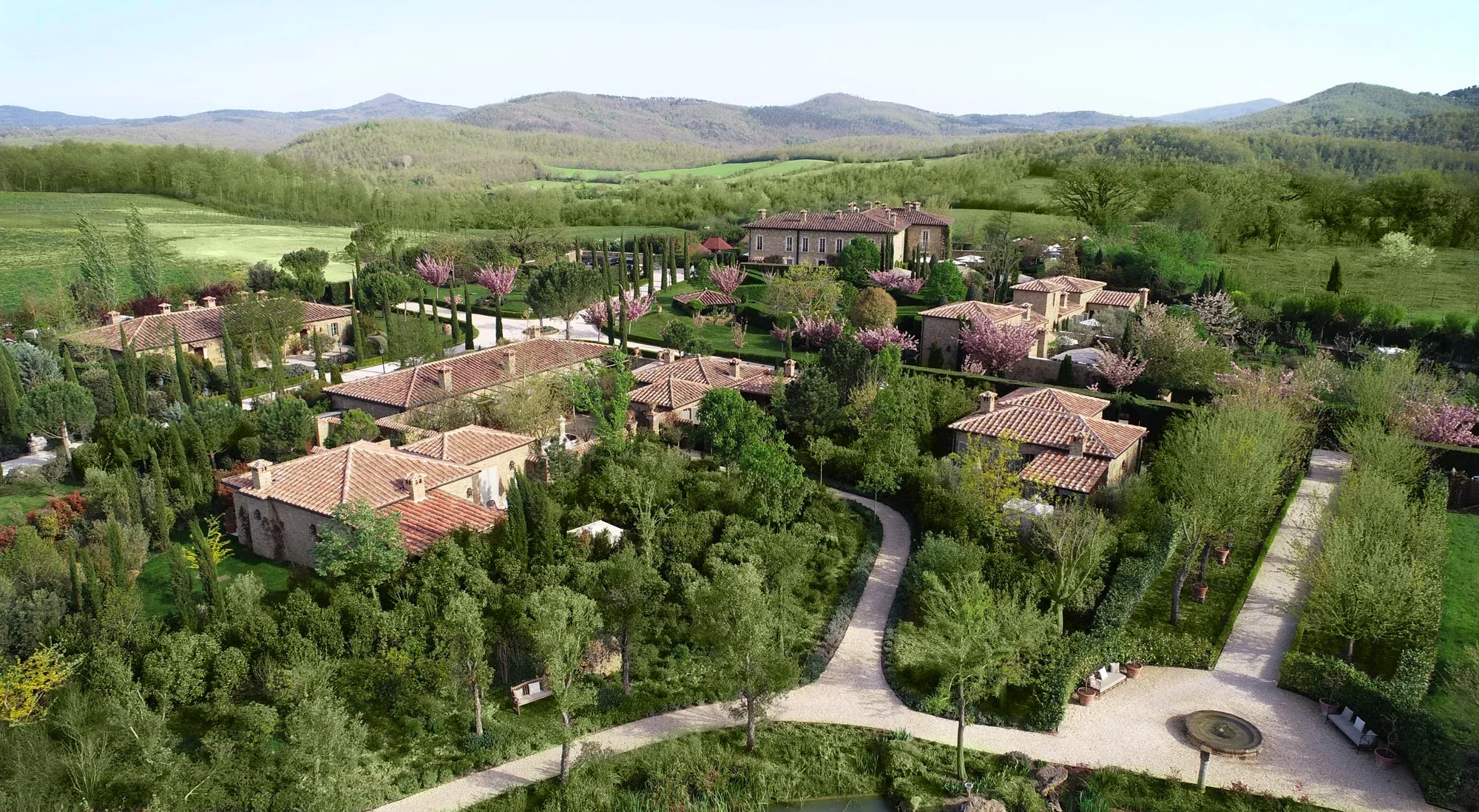
Food at Borgo Santo Pietro starts with the estate rather than the restaurant dining room. Its culinary gardens grow more than 200 vegetable varieties and 50 aromatic herbs, supplying both Saporium and Trattoria Sull'Albero. Saporium Chiusdino currently holds a Michelin star and Green Star for 2026, while its cellar contains close to 1,500 labels with a particular emphasis on Italian and Tuscan producers. The estate also makes cheese, honey and fermented products, creating a more integrated farm-to-table structure than the phrase usually implies. For 2026, its Festum Terrae dinners have extended into September, using estate-grown and estate-made produce cooked over fire in the gardens.
Best for: travellers who want the restaurant and agricultural estate to be central to the stay.
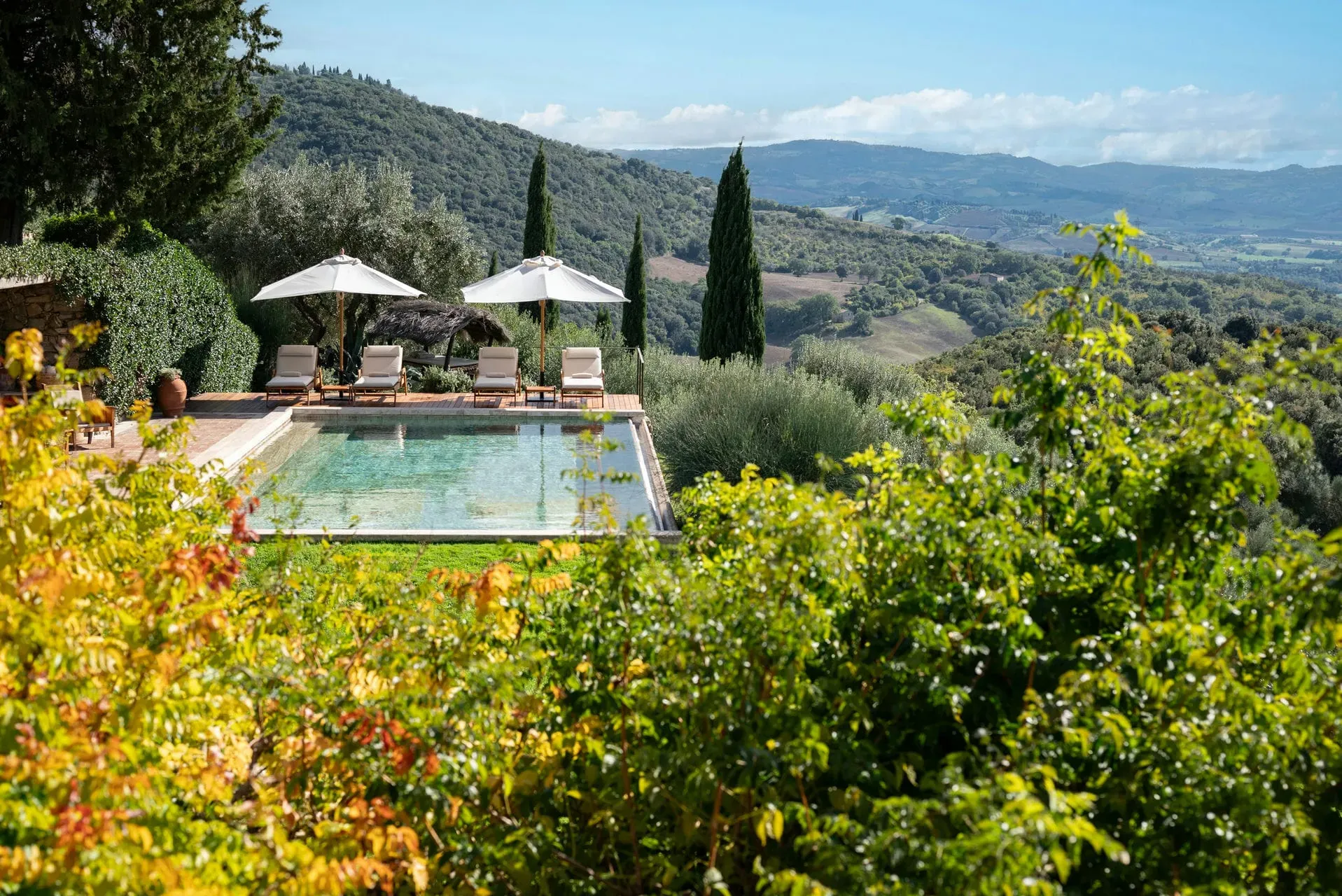
Castello di Vicarello combines a small historic property with a functioning organic wine estate. Seven hectares of high-density vineyards produce five wines, using varieties including Sangiovese, Cabernet Franc, Cabernet Sauvignon, Petit Verdot and Merlot. The estate's 2019 Castello di Vicarello vintage received Bibenda's 5 Grappoli recognition in 2025. Food follows the same agricultural model: vegetable gardens grow more than 50 varieties and 30 herbs, eggs come from the estate and bread and preserves are made on site. Meat, cheeses and seafood are sourced from Maremma producers and the Grosseto coast. Wine tastings, cooking classes and truffle hunting make the property particularly relevant in autumn.
Best for: travellers who want to stay directly on a working Maremma wine estate.
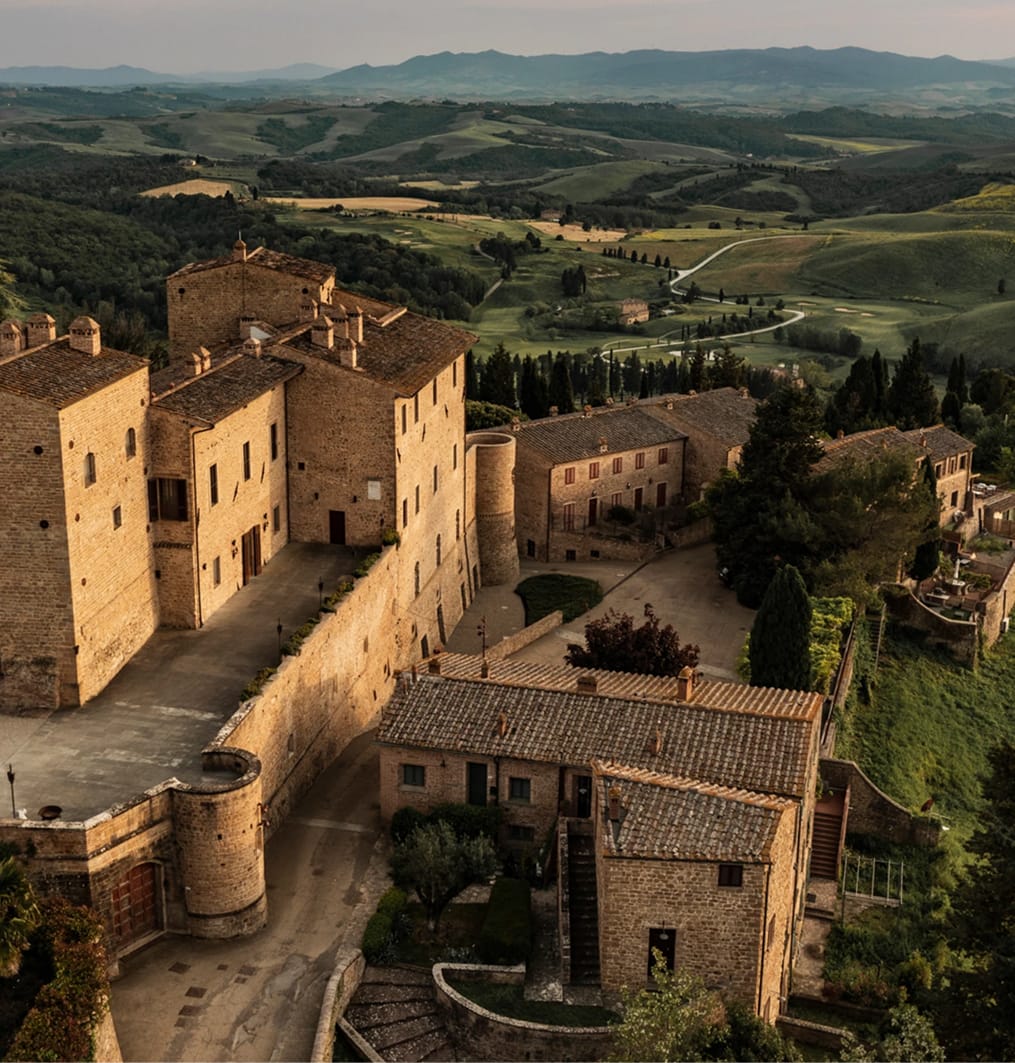
Castelfalfi works for travellers who want several strands of Tuscan food culture within one estate rather than building the trip around a single restaurant. Its winery produces organic wines, while current activities include wine tastings, olive-oil tours, grape harvesting and truffle hunting with trained dogs. The latter can be followed by a truffle-focused lunch or dinner. Dining ranges from Olivina, with its dedicated wine room and open kitchen, to Il Rosmarino, which takes a more traditional Tuscan trattoria approach. This makes Castelfalfi one of the more practical choices for a multi-generational trip: food and wine activities can form part of the stay without requiring daily drives between estates.
Best for: families and groups wanting wine, truffles and estate activities in one location.
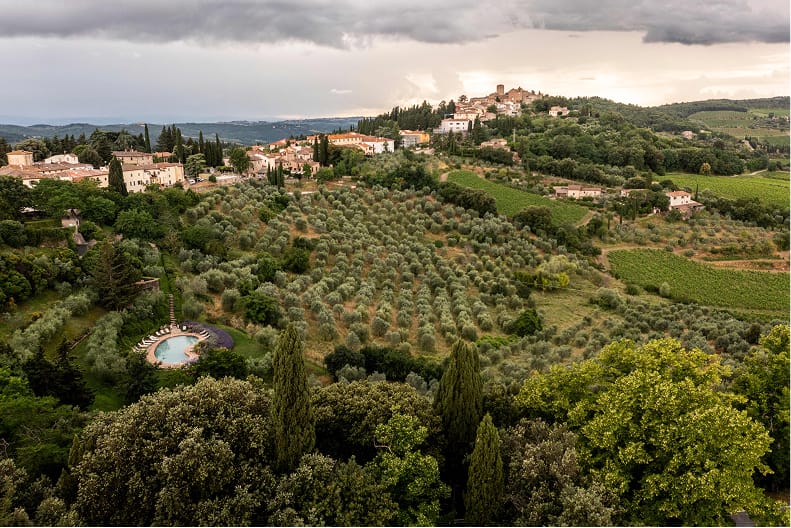
Vignamaggio needs an important distinction in 2026: its Renaissance villa remains closed for refurbishment, while accommodation is currently provided through renovated farmhouses and La Pensione, a 21-room hotel in Panzano in Chianti. That makes La Pensione the correct hotel to book for access to the wider Vignamaggio estate.
The food-and-wine reason to stay is substantial. Vignamaggio's historic wine cellar dates to 1404, while La Fattoria runs tastings, farm tours and lunches pairing estate wines with food. Its current programme includes Chianti Classico tastings and seasonal events; the 2026 Festa della Raccolta runs from 24 to 27 September.
Best for: Chianti Classico and travellers who want to stay in a working village rather than an isolated resort.
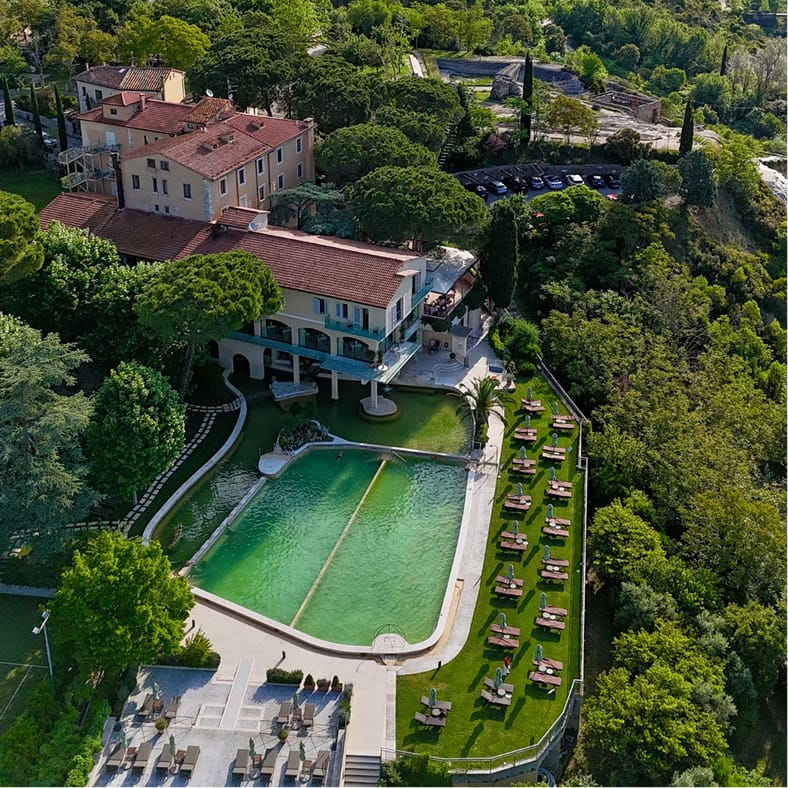
La Posta adds another dimension to an autumn food-and-wine itinerary: thermal water. The 35-room hotel is in Bagno Vignoni in the UNESCO-listed Val d'Orcia, within practical reach of Montalcino and Pienza. Its pools are fed by the area's natural thermal springs, making it particularly useful when temperatures begin to fall.
Food remains closely connected to the region, with seasonal Tuscan cooking and a current programme that includes cooking classes and aperitivi built around local salumi, cheeses and Brunello di Montalcino. The hotel specifically arranges wine tastings around Montalcino and Montepulciano. It also now welcomes guests aged 14 and over, a detail worth knowing for family planning.
Best for: combining Brunello country with thermal spa time.
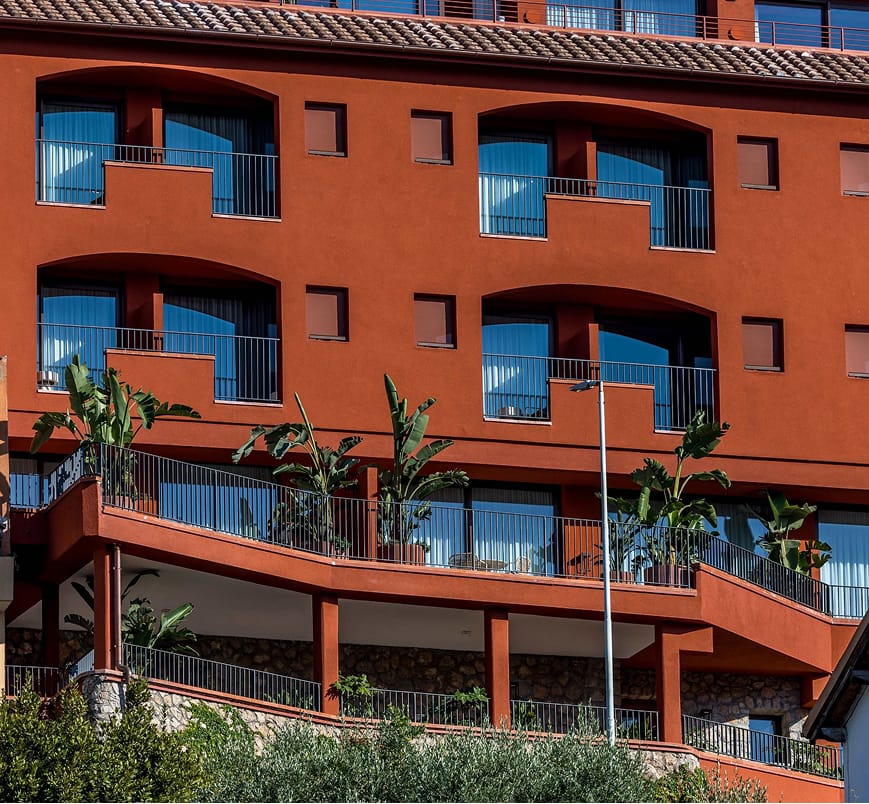
LA ROQQA moves the itinerary south-west to Monte Argentario, where Tuscany's agricultural hinterland meets the Tyrrhenian coast. Scirocco uses vegetables from the hotel's garden, handmade pasta and local produce, while its cellar focuses heavily on Tuscan wines. At Isolotto Beach Club, seafood becomes the stronger reference, with prawns, langoustines and the daily catch served alongside regional bottles. Executive chef Francesco Ferretti also works with L'Orto Giusto, a social agricultural cooperative that helps cultivate the hotel's organic vegetables.
For wine-focused guests, the location also opens access to Maremma estates such as Monteverro, Rocca di Frassinello and L'Ammiraglia.
Best for: travellers who want Maremma wine and seafood rather than an entirely inland Tuscan itinerary.
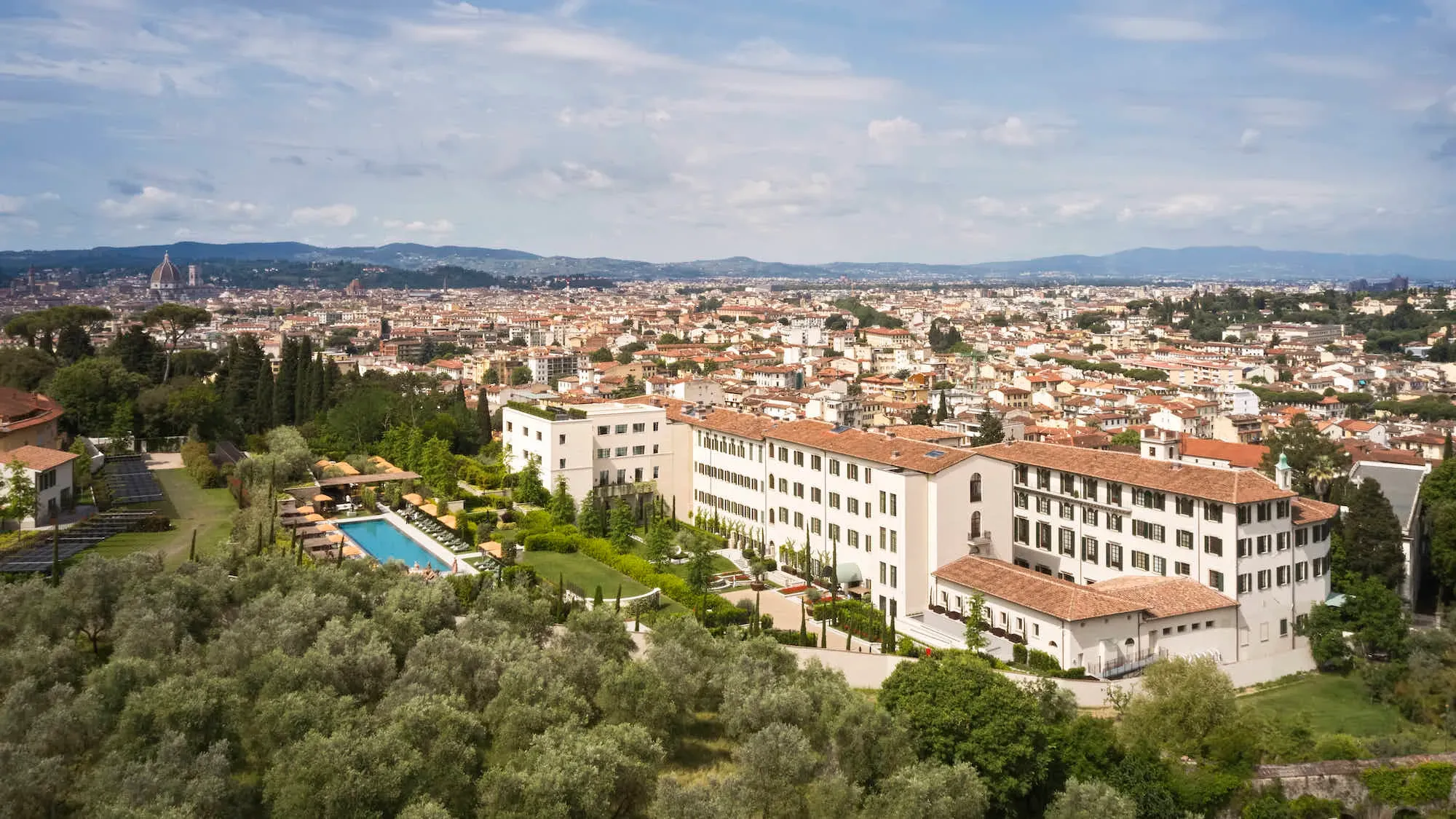
Collegio alla Querce provides the city counterpart to the rural estates. The former school complex sits above Florence and gives travellers access to the city while retaining gardens and views towards the Tuscan countryside. Its main restaurant, La Gamella, uses local ingredients, wines and regional Italian recipes; current dishes include Chianina beef and Mediterranean seafood.
The hotel also has a particularly current autumn hook. Bar Bertelli, occupying the former headmaster's office, is running Il Circolo di Bar Bertelli on 24 September, 29 October and 26 November 2026, combining mixology, live music and traditional Italian social games.
Best for: combining Florence's museums and restaurants with a hotel that maintains a connection to Tuscan produce and wine.
There is no single base that covers Tuscany equally well. Chianti makes sense for wine-focused stays at Vignamaggio; Castello di Vicarello gives direct access to Maremma vineyards; Castelfalfi works particularly well for truffle and harvest activities; Borgo Santo Pietro places Michelin-recognised cooking at the centre of an agricultural estate.
La Posta is the useful choice for Val d'Orcia, Brunello and thermal water, while LA ROQQA connects Maremma produce with the coast. Collegio alla Querce works differently again, providing a Florence base for travellers who want city culture without separating the hotel from the region's food traditions.
That geographic distinction is what makes the best hotels in Tuscany useful as part of an itinerary rather than simply as individual places to stay.