China Luxury Sales Fell More Than 10% in July. Are Wealthy Shoppers Pulling Back?
China luxury sales fell more than 10% in July, as new data point to weaker spending and growing caution among affluent Chinese consumers.
– 2 min read

China luxury sales fell more than 10% in July, as new data point to weaker spending and growing caution among affluent Chinese consumers.
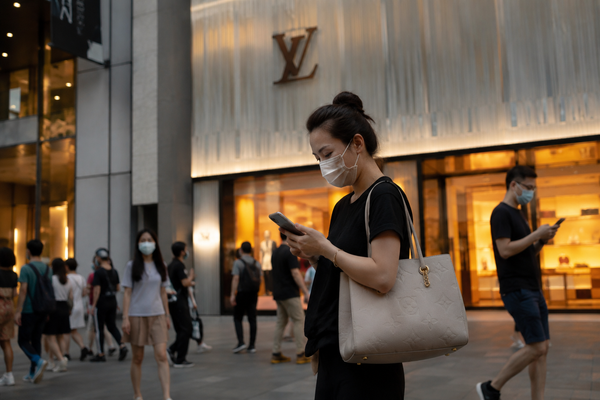
Sales across 25 of the largest luxury labels in mainland China fell by more than 10% in July, according to three research firms surveyed by Bloomberg. The reported decline was steeper than the slowdown in June and interrupted the improvement seen earlier in 2026. More consequential for the sector is where some of the weakness appears to be emerging: among affluent clients, not only the aspirational consumers already pressured by China's economic slowdown.
The research data cited by Bloomberg are industry estimates rather than company-reported results. According to the report, Louis Vuitton and Dior, owned by LVMH, and Kering's Gucci, Bottega Veneta and Balenciaga recorded double-digit declines in July. Hermès moved from growth to a decline, while growth at Chanel and Prada slowed significantly. The maisons have not separately reported these July figures.
That distinction matters because company disclosures through June had pointed in a different direction. LVMH reported strong growth in Asia excluding Japan in the first half, confirming an improvement that began in the second half of 2025. Kering said mainland China remained challenging for Gucci in the second quarter, although trends improved. Hermès reported 2.4% growth at constant exchange rates in Asia-Pacific excluding Japan during the first half, with growth in Greater China. Prada Group's Asia-Pacific retail sales rose 6% organically over the same period. Richemont, meanwhile, reported double-digit growth across China, Hong Kong and Macau combined in its quarter ended 30 June.
July therefore raises the question of whether that recovery was less secure than the first-half figures suggested.
One possible pressure point is China's intensifying scrutiny of offshore wealth. Chinese authorities have stepped up enforcement of taxes on overseas investment income and offshore structures. Reuters reported this month that wealthy investors were reassessing offshore trusts, while tax authorities have clarified that offshore insurance income earned by Chinese residents is subject to domestic taxation. The measures are also being supported by greater cross-border financial information sharing.
The timing coincides with greater caution among high-income consumers, but it does not establish that tax enforcement caused July's luxury decline. Bloomberg also cited weaker equity markets, extreme weather and increased outbound travel as contributing factors.
For the major maisons, the more important test is whether caution persists among VIP clients. As brands compete for a smaller group of high-spending customers, sustained weakness at the top end would carry different implications from the middle-class retrenchment that has already reshaped China's luxury market.