An unapologetically grand South African resort
At Wild Coast Sun, bold architecture meets South Africa’s untamed coastline, with ocean views, championship golf and family entertainment on one sprawling estate.

– 5 min read

At Wild Coast Sun, bold architecture meets South Africa’s untamed coastline, with ocean views, championship golf and family entertainment on one sprawling estate.
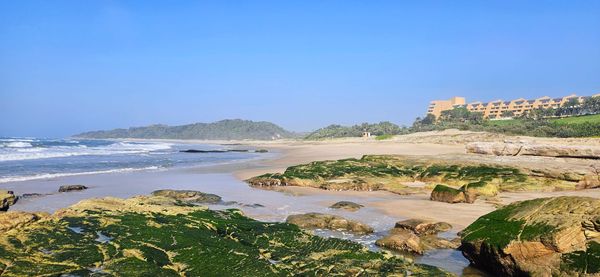
Ask a South African local about their favourite childhood resort, and chances are they'll recount somewhere with a swimming pool, a beach and plenty of friends. The type of holiday built around a resort-style getaway, where there was always something to do, and nobody needed to organise much. For decades, that all-in-one holiday formula, built on scale, entertainment, and sheer convenience, was the gold standard of South African family travel. Long before boutique eco-lodges and curated itineraries became the norm, these sprawling coastal playgrounds were the heartbeat of South African family holidays, and one iconic landmark still carries that torch on the edge of a remarkably wild coastline.
Drive south from Durban, watching the sugar cane plantations dissolve into lush, palm-lined hills, until you cross the steel span of the Umtamvuna River bridge. A kilometre past that provincial line, where KwaZulu-Natal gives way to the Eastern Cape, the manicured coastal towns of the Hibiscus Coast are replaced with Pondoland and the northern reaches of South Africa’s Wild Coast.
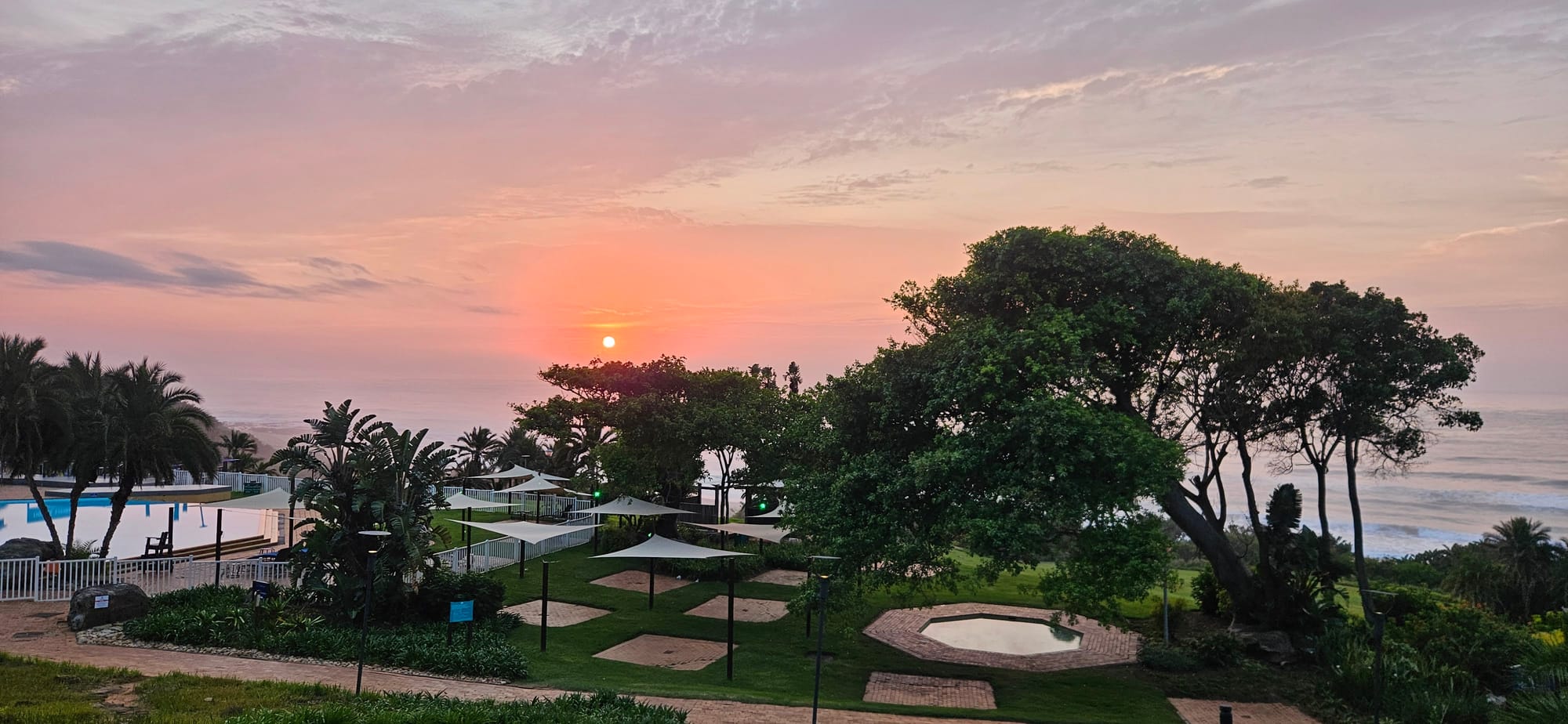
The name "Wild Coast" is a nautical warning rather than a poetic flourish. Here, the warm Mozambique current sweeping south from the tropics collides head-on with colder, turbulent Antarctic systems pushing up from the deep south. The result is consistent trade winds and an enviable surf break. This is also a biodiversity hotspot where tropical species from the north overlap with temperate flora from the south. Ancient cycads, wild orchids, and patches of coastal plateau sourveld found nowhere else on Earth combine to provide a varied habitat for a diverse array of bird species, such as fish eagles and countless kingfishers.
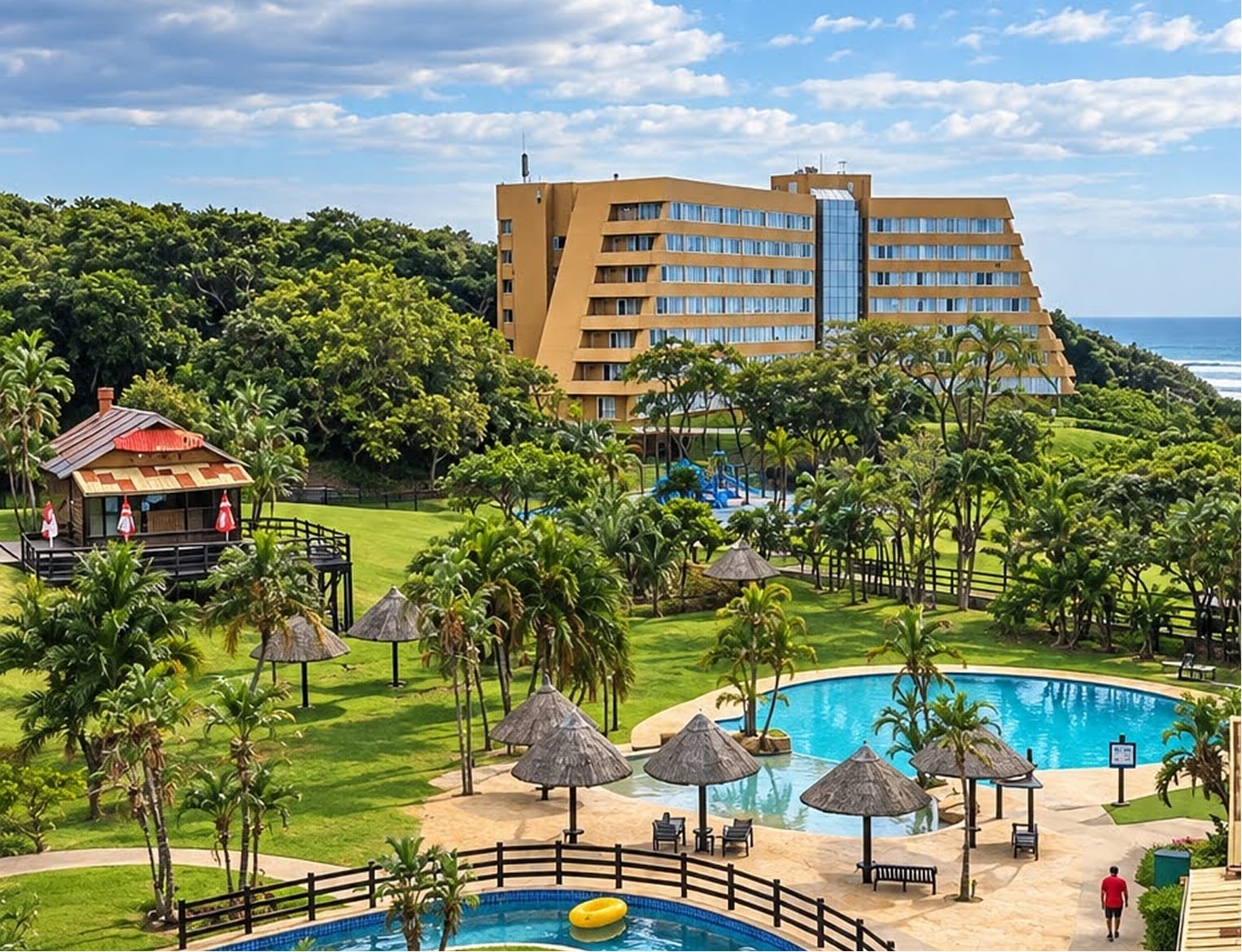
And here, rising out of 750 hectares of dense coastal bush, appears the Wild Coast Sun. In an era when contemporary luxury travel is largely obsessed with disappearance: think villas camouflaged in mud brick and tented camps engineered to leave zero impact, the Wild Coast Sun is unapologetically, monumentally present. Built in 1981 at an initial cost of R25 million, it is a sprawling example of late-20th-century modernism. Five storeys of terraced concrete, pitched roofs, and deep cantilevered balconies hug the shoreline between the Umtamvuna and Mzamba rivers, looking directly out onto the Indian Ocean.
The building opens its arms and its 396 rooms towards the sea, using deep recessed balconies to create pockets of calm shelter while framing the horizon like a cinema screen. And the architecture carries the 80s’ unmistakable DNA, with bold horizontal lines and heavy structural geometry. But over the last forty-five years, the surrounding bush has grown up and around the property’s edges, softening its modernist angles. Milkwood trees, twisted by decades of salt-laden gales, stand beside manicured lawns, and vervet monkeys use the rooflines as an elevated highway between the river gorges.
To the left, the Umtamvuna River cuts through steep sandstone cliffs, best enjoyed on a river cruise. To the right, the coastline stretches south for nearly three hundred kilometres of largely undeveloped rolling hills, hidden coves, and rural Xhosa homesteads where Nguni cattle still wander down to the tideline. Directly in front of you, beyond the whitewater break, there is nothing. Just open ocean.
Yet turn around, walk a hundred paces up from the high-water mark, and you step seamlessly back into a climate-controlled universe that is the Wild Coast Sun. Here, you can watch dolphins play beyond the backline while sipping an espresso on a sun-drenched terrace, knowing all the while that hot water, cold wine, and a crisp bed sit just behind sliding glass doors.
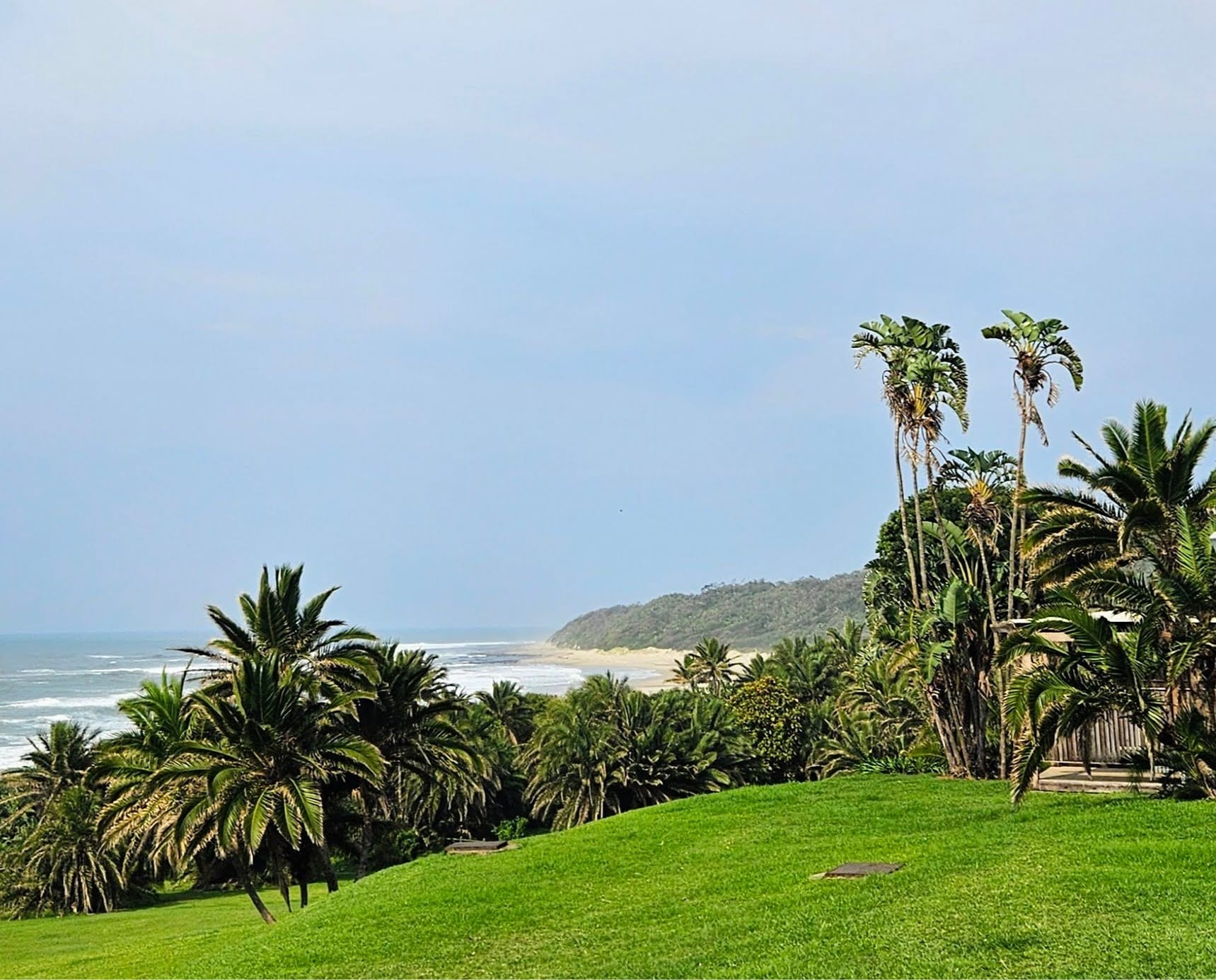
And beyond those formidable buildings, the resort’s 18-hole, par-70 championship golf course, designed in 1983 by Robert Trent Jones Jr., makes great use of the surrounding terrain. It's a coastal obstacle course with steep ravines, indigenous bush so dense that a ball lost two metres off the fairway vanishes into another dimension, natural dams, streams, and elevation changes dramatic enough to make golf carts mandatory.
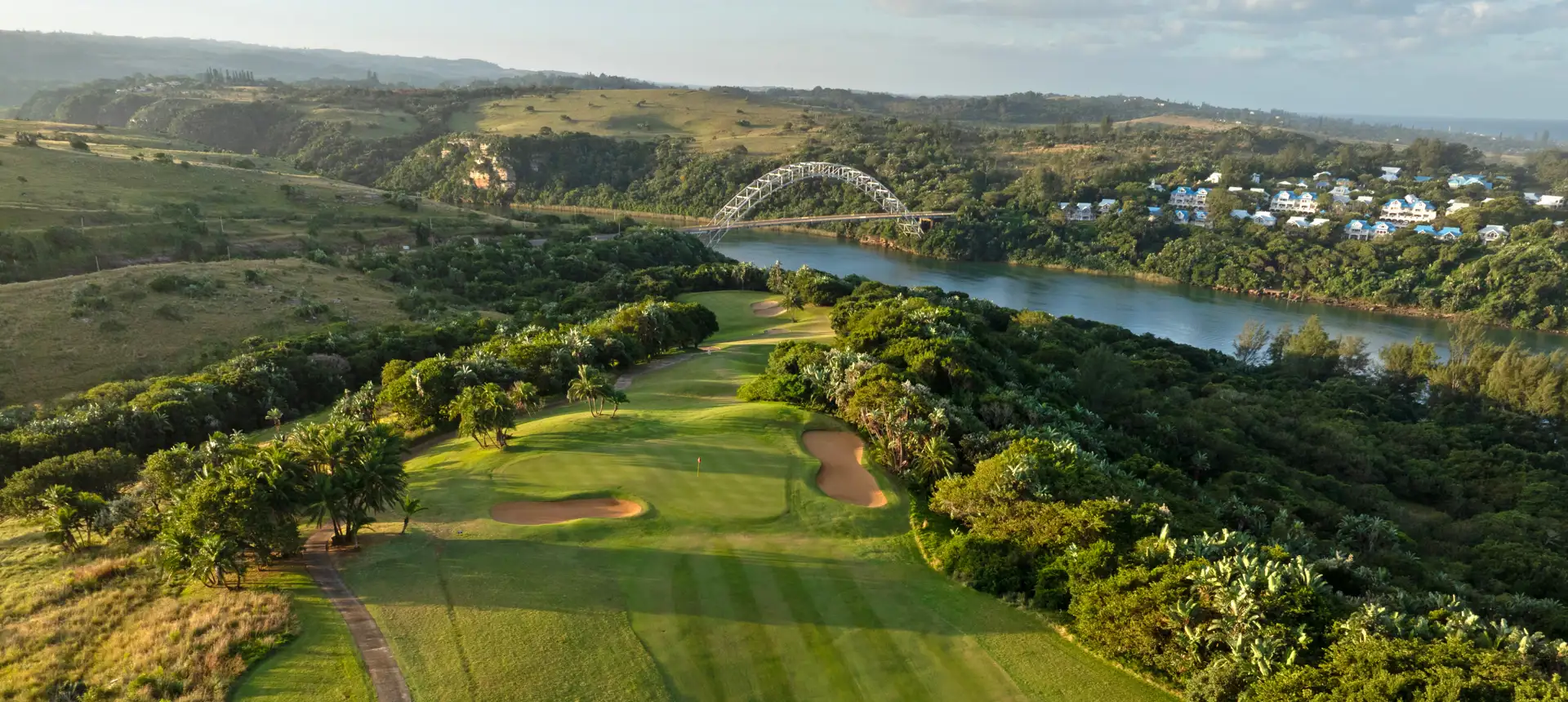
On a calm morning, the Cynodon and Kikuyu fairways look almost pastoral, framed by the river and several water hazards, such as the par-three 13th, known simply as the Waterfall Hole, or the closing 18th, Taipan’s Revenge, where an elevated tee demands a nerve-testing shot over the resort’s main dam before climbing steeply towards the clubhouse green. Here, playing against the elements on the edge of Pondoland reveals who has actually got game.
You may also choose to walk south past the Mzamba River mouth at low tide to discover intertidal rock shelves famous among palaeontologists for their Cretaceous marine fossils, including ammonites, fossilised driftwood, and ancient shellfish embedded in stone laid down when Africa was still tearing itself away from Gondwana. You can stand barefoot on an empty beach, examining an eighty-million-year-old fossilised shell in the wet rock, with not another soul in sight for miles.
In an age when the world’s most celebrated coastlines have been smoothed and curated, it is deeply restorative to visit a place like this. And yet the Wild Coast Sun makes no pretence of being a delicate boutique hideaway. It is bold, architectural, slightly retro, and anchored firmly to one of the most untamed shorelines on the African continent. Its magic lies precisely in that juxtaposition, between concrete and coastal forest, between groomed fairways and wind-weathered shores, between total seclusion and loud, unabashed fun.
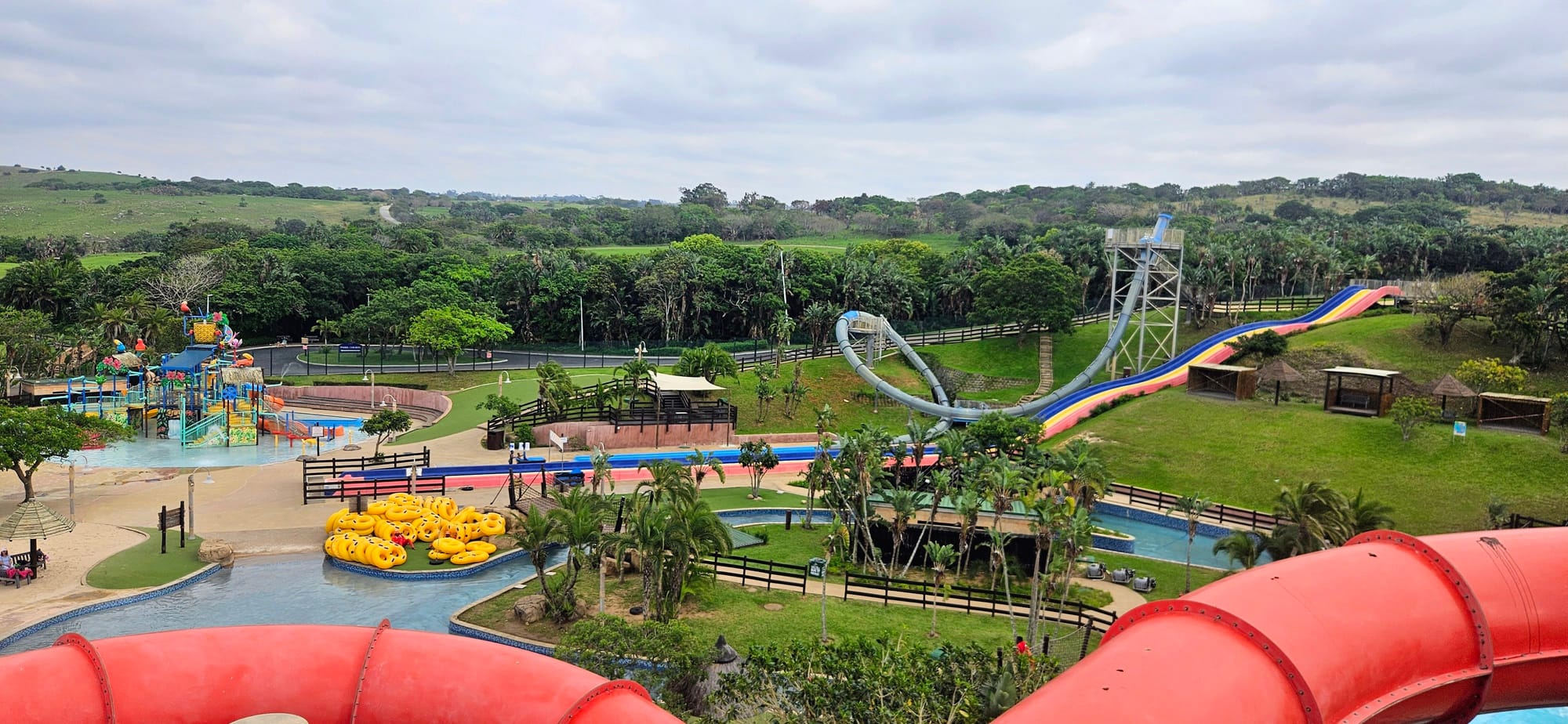
The water park, with its slides, pools and lazy river, brings a more energetic side to the experience, particularly for families. There's a choice of restaurants, from familiar family-friendly options to buffet options and poolside Mediterranean-style dining, while the casino, indoor arcade and bowling alley add another nostalgic layer to the resort's entertainment offering. You can spend the morning exploring the coastline, the afternoon beside a pool and the evening over a buffet dinner without ever having to get in the car.
Perhaps that's part of the Wild Coast Sun's enduring appeal. It belongs to an era when resorts were designed to be destinations in themselves, places where families could settle in for a few days and find enough to keep everyone occupied, rather than treating the hotel as somewhere to sleep between excursions. It isn't trying to compete with the barefoot luxury of a private coastal villa or the understated exclusivity of a boutique lodge. Instead, it offers scale, variety, a little nostalgia and the freedom to have a holiday that can be as active or as lazy as you please. And when you step back outside, the Wild Coast is still there, gloriously untamed and a world away from it all.